Critical PHP Vulnerabilities Threaten Global Web Infrastructure With Unauthenticated Remote Code Execution


The maintainers of the PHP programming language have issued an urgent global advisory and released emergency security updates to address two critical vulnerabilities that allow unauthenticated remote code execution (RCE). The flaws, collectively tracked and heavily discussed under the moniker "PHP2Shell," affect multiple active branches of the widely used scripting language and expose millions of web servers, content management systems, and enterprise applications to immediate compromise.
According to official advisories published on October 20, 2026, the patches are integrated into newly released versions: PHP 8.5.12, PHP 8.4.27, PHP 8.3.36, and PHP 8.2.35. Cybersecurity agencies, hosting providers, and independent researchers have classified the situation as an emergency, emphasizing that updating the PHP runtime is the sole remediation strategy capable of restoring system security.
Scope and Severity of the Vulnerabilities
The threat landscape surrounding these flaws is expansive due to PHP’s foundational role in the modern web ecosystem. PHP powers a vast majority of the world’s websites, including prominent content management systems like WordPress, Drupal, and Magento, as well as custom enterprise applications.
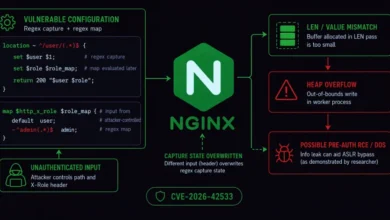
The advisory outlines that all PHP installations configured to serve web requests are potentially at risk. This encompasses a broad spectrum of Server API (SAPI) integrations, including PHP-FPM, Apache with mod_php, php-cgi, FrankenPHP, and LiteSpeed. Security analysts have highlighted that the risk is particularly acute for legacy or standard configurations utilizing Apache with mod_php. In these specific environments, researchers have already demonstrated functional exploit chains where an unauthenticated attacker can trigger the vulnerability through a crafted HTTP request before any application-level code executes.
Because the attack vector requires no prior authentication or administrative privileges, malicious actors can leverage these flaws to gain full control over vulnerable web servers. Successful exploitation could allow attackers to execute arbitrary shell commands, install persistent backdoors, exfiltrate sensitive databases, pivot deeper into internal corporate networks, and deploy ransomware across connected infrastructure.
Chronology of Discovery and Disclosure
The rapid unfolding of the PHP2Shell incident highlights the delicate balance between responsible disclosure and the realities of active exploitation in the wild.
The timeline of events leading up to the emergency patches began earlier in October 2026, when core PHP developers were privately alerted to anomalous behavior involving request handling and memory management within the language’s core interpreter. Rapid internal triage by the PHP security team confirmed the existence of two distinct vulnerabilities capable of bypassing existing security boundaries and leading to unauthenticated RCE.
Recognizing the severity of the flaws, development teams fast-tracked the creation of security patches across all supported active branches. On October 20, 2026, the PHP group officially published the updated versions alongside an urgent security advisory urging all administrators to apply the patches immediately.
By October 22, 2026, major cybersecurity intelligence firms, incident response teams, and industry commentators had analyzed the mechanics of the vulnerabilities. Security blogs and threat intelligence feeds began warning that automated scanning tools and proof-of-concept exploits were actively targeting exposed servers across the public internet. The rapid transition from patch release to active exploitation has placed immense pressure on sysadmins, DevOps teams, and managed hosting providers to execute emergency maintenance cycles outside of normal operating windows.
Technical Context and Attack Mechanics
To understand the gravity of the PHP2Shell vulnerabilities, it is necessary to examine how PHP interfaces with web servers. PHP is rarely deployed in isolation; rather, it relies on interfaces like CGI, FastCGI, or module integrations embedded directly into web server processes (such as Apache’s mod_php) to interpret code and generate dynamic web pages.
The flaws reside deep within the core parsing and request-handling logic of the PHP interpreter. Under certain conditions, incoming HTTP headers or payload structures are processed in a manner that allows memory corruption or improper state handling. In the case of the mod_php vector, the vulnerability manifests at the earliest stages of the request lifecycle. Because the interpreter executes instructions embedded within the web server module prior to application initialization, traditional web application firewalls (WAFs) or application-level authentication checks that rely on frameworks like Laravel or Symfony are completely bypassed.
This characteristic makes the vulnerability exceptionally dangerous. An attacker does not need credentials, nor do they need to exploit a vulnerability in a specific third-party plugin or theme. The attack targets the foundational runtime environment itself, meaning any website running an unpatched version of PHP is inherently vulnerable simply by being accessible via the public internet.
Official Responses and Industry Guidance
The response from the global cybersecurity community has been swift and unified. Major vulnerability management platforms, cloud providers, and open-source advocates have elevated their alert statuses to maximum severity.
In statements accompanying the patch releases, PHP maintainers emphasized that temporary mitigations—such as modifying PHP configuration directives (disable_functions, open_basedir), implementing rate limiting, or deploying generic WAF rules—are insufficient and unreliable defenses against deeply embedded runtime flaws. The official stance remains unambiguous: updating the PHP binary to one of the patched versions (8.5.12, 8.4.27, 8.3.36, or 8.2.35) is the only definitive method to eliminate the risk.
Managed hosting providers and cloud platforms spent the days following the disclosure aggressively updating their underlying operating system repositories, container base images, and managed PHP runtimes. System administrators worldwide were forced to cancel scheduled deployments to focus entirely on patch management, inventory auditing, and log analysis to detect potential indicator-of-compromise (IoC) activity.
Broader Impact and Implications for Web Security
The PHP2Shell incident serves as a stark reminder of the systemic risks inherent in foundational software dependencies. When a critical vulnerability is discovered in a core programming language runtime or operating system kernel, the potential blast radius extends far beyond individual applications, threatening entire segments of the digital economy.
Security analysts have drawn parallels between this event and previous high-profile infrastructural vulnerabilities, such as the Log4j crisis in the Java ecosystem or Heartbleed in OpenSSL. These incidents underscore a recurring challenge in software engineering: the immense difficulty of securing complex, legacy-compatible codebases that process untrusted data at scale.
Furthermore, the incident highlights the critical importance of automated patch management and asset visibility. Organizations that lack a comprehensive inventory of their deployed software assets, or those relying on End-of-Life (EOL) software branches that no longer receive security updates, face an existential threat during zero-day and critical vulnerability disclosures. While the PHP maintainers actively support branches 8.2, 8.3, 8.4, and 8.5, websites running older, unsupported versions of PHP (such as 8.1 and earlier) are left in a precarious position, requiring either immediate migration to a supported branch or the application of costly, custom-built compensating controls.
As the digital landscape absorbs the shock of the PHP2Shell disclosures, attention is expected to shift toward hardening interpreter architectures, improving memory safety practices within core development teams, and accelerating the adoption of automated vulnerability scanning across software supply chains. For now, however, the immediate imperative for every web administrator remains singular and urgent: verify PHP versions, deploy patches, and secure the perimeter before malicious actors can capitalize on the unmitigated infrastructure.