Building Enterprise Resiliency: How Athenahealth, AWS, and HashiCorp Overcame Single-Region Vulnerabilities in Terraform Enterprise

In October 2025, a significant regional service disruption struck Amazon Web Services (AWS) in the us-east-1 Region, exposing a critical architectural vulnerability for North American electronic health record (EHR) provider Athenahealth. The incident rendered the company’s single-Region deployment of HashiCorp Terraform Enterprise (TFE) completely inaccessible to its engineering teams. For a major healthcare technology provider, the inability to modify, deploy, or recover underlying cloud infrastructure during an operational emergency represents a severe business continuity risk. In response, Athenahealth partnered with account teams from both AWS and HashiCorp to engineer, test, and validate a robust multi-Region disaster recovery (DR) architecture. This collaborative undertaking successfully established a failover protocol capable of achieving a 12-to-14-minute Recovery Time Objective (RTO) and a Recovery Point Objective (RPO) of under one minute.
Background and Anatomy of the October 2025 Outage
Prior to the October 2025 disruption, Athenahealth operated its Terraform Enterprise environment exclusively within the us-east-1 Region. While this infrastructure leveraged HashiCorp’s Terraform Enterprise Validated Design (HVD) module and possessed high availability across multiple Availability Zones, it lacked cross-regional redundancy. Consequently, when the regional AWS service event occurred, the company faced a cascade of missing failover safeguards: no cross-Region database replication, zero secondary Region compute capacity, a total absence of out-of-region Terraform state file backups, and DNS routing pointing solely to the impaired primary zone.
During the incident, development teams found themselves completely blocked from managing infrastructure configurations. Because TFE deployments are supported natively by HashiCorp within a single Region, organizations seeking multi-Region resiliency must design, operate, and test custom customer-operated disaster recovery patterns. Recognizing that reacting to an emergency without a pre-tested failover framework severely degrades productivity and enterprise reliability, Athenahealth initiated a comprehensive architectural overhaul. The overarching goal was not merely to protect TFE, but to secure all critical internal dependencies against future localized cloud disruptions.
Designing an Active-Passive Multi-Region Architecture
To bridge the resilience gap, Athenahealth collaborated closely with AWS and HashiCorp engineers over a five-month engagement. The resulting active-passive multi-Region architecture anchors its primary operations in us-east-1 while designating us-west-2 as the secondary disaster recovery Region. Under the classification criteria of the AWS disaster recovery taxonomy, this deployment functions as a pilot light strategy, wherein data continuously replicates to the DR environment while compute capacity remains at zero during normal operations to optimize cost efficiency.
At the core of the network routing strategy is Amazon Route 53, utilizing DNS alias records pointing to an Elastic Load Balancing (ELB) Network Load Balancer. By configuring a low, 60-second time-to-live (TTL) on these alias records, DNS resolvers cache entries for only a brief period, enabling client traffic to migrate toward the DR Region within roughly a minute of a failover event.
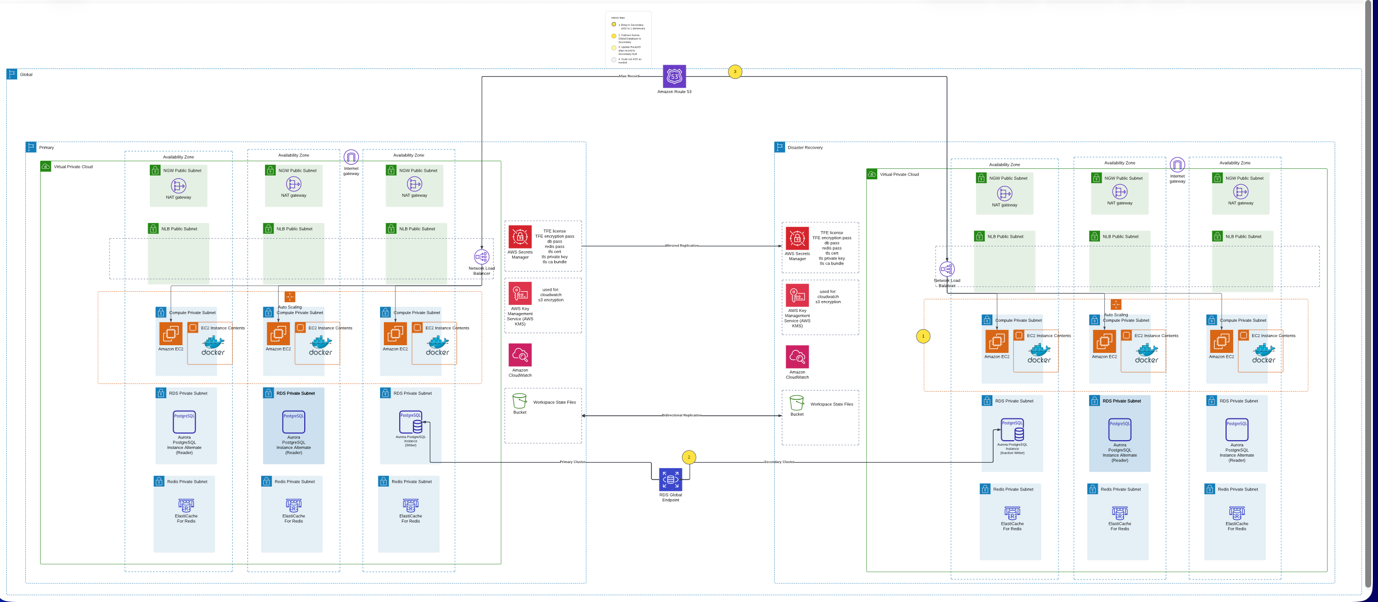
Data layer integrity is maintained through Amazon Aurora PostgreSQL-Compatible global databases, which offer sub-second replication lag and managed failover capabilities. The primary cluster operates with one writer and two readers distributed across three Availability Zones, whereas the secondary cluster maintains a primed, inactive writer awaiting promotion. To prevent state file divergence, Terraform workspace state files undergo continuous bidirectional replication between primary and secondary Amazon S3 buckets via S3 cross-Region replication, establishing a foundation that accommodates seamless failbacks without requiring manual data resynchronization.
Furthermore, credential management and encryption keys are synchronized across regions using AWS Secrets Manager and AWS Key Management Service (AWS KMS). Engineers paid special attention to critical TFE dependencies, such as the internal Vault unseal key and root token protected by the master TFE encryption password. Ensuring this secret is safely mirrored to the DR Region launch configuration is essential for successful application boot sequences.
The Four-Step Failover Sequence and Execution
Executing a rapid and orderly failover requires a disciplined, four-step operational sequence designed to circumvent control-plane bottlenecks:
- Activate DR Auto Scaling Group (2–5 minutes): Scaling compute capacity from zero to one instance while monitoring health check statuses. TFE exposes a dedicated health check endpoint (_health_check) returning a 200 OK response upon successful application startup, which is continuously probed by Network Load Balancer target groups and Route 53 health checks.
- Promote Aurora PostgreSQL-Compatible Global Database (~1 minute): Promoting the DR writer prior to shifting DNS traffic. Executing this step ahead of the traffic migration is vital to preventing a split-brain scenario where both regional databases accept concurrent write operations.
- Confirm Amazon Route 53 DNS Failover (~60 seconds): Utilizing pre-configured failover routing policies that automatically detect unhealthy primary endpoints and shift traffic to the secondary Network Load Balancer without requiring manual control-plane API interventions during an active crisis.
- Scale Out for Production Load (5–10 minutes): Incrementing Auto Scaling group capacity to handle full production workloads while closely observing Amazon CloudWatch telemetry.
By adhering to this playbook, total failover execution times consistently land between 12 and 14 minutes, successfully meeting the organization’s RTO parameters.
Rigorous Validation via AWS Fault Injection Service (AWS FIS)
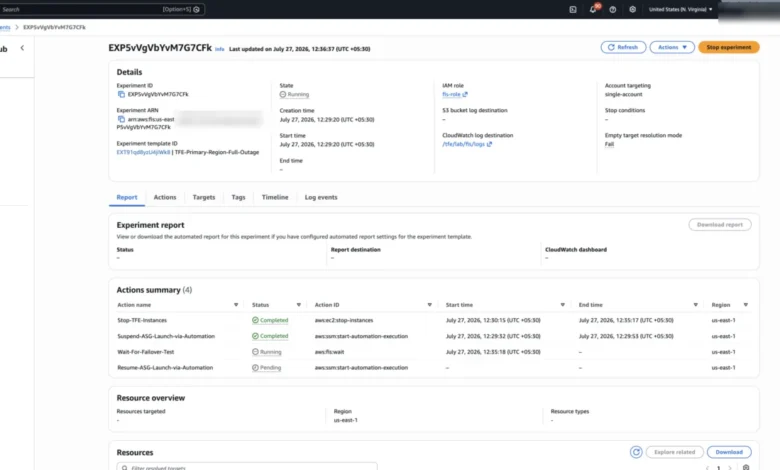
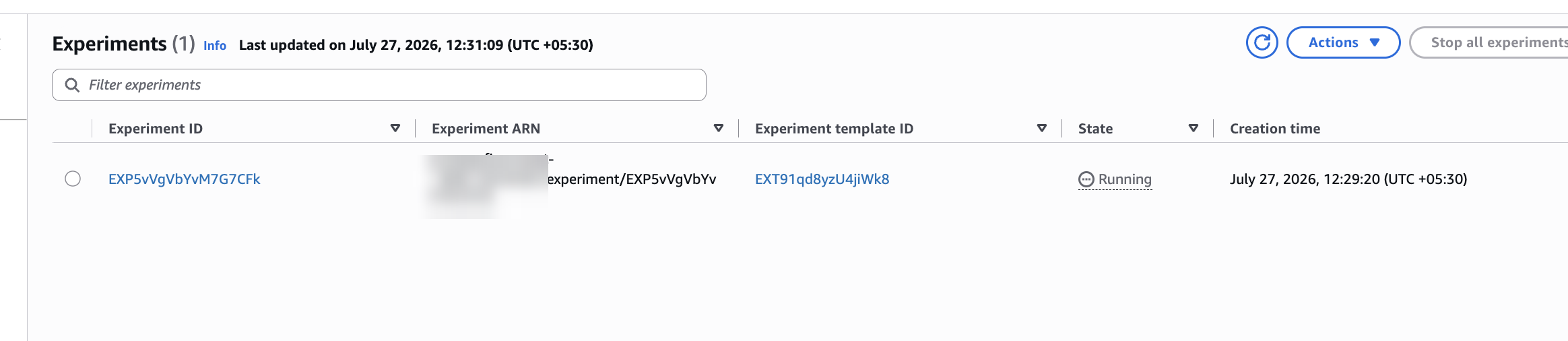
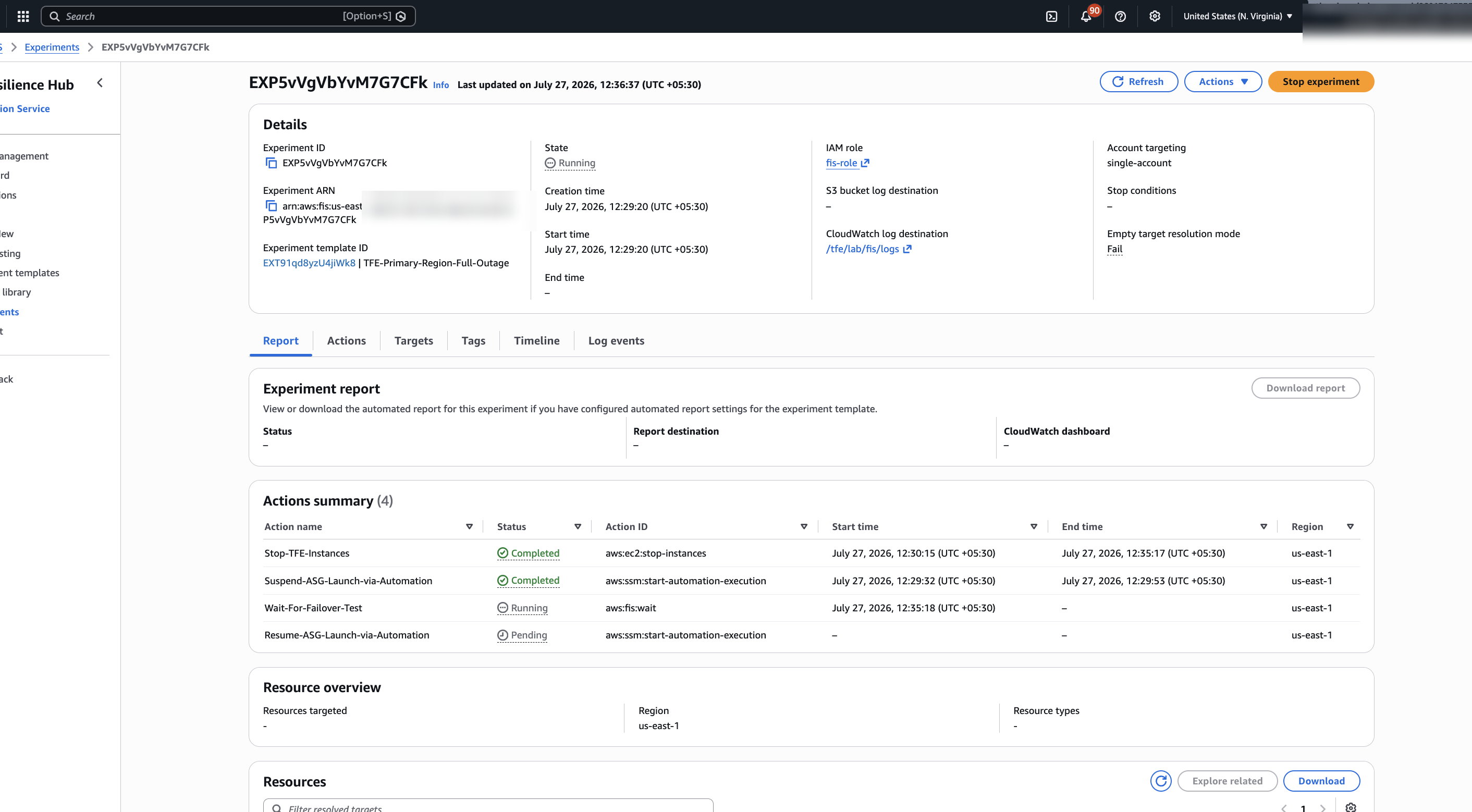
Possessing a disaster recovery architecture on paper is insufficient; organizations must prove its efficacy under adverse conditions. To validate their design, Athenahealth integrated AWS Fault Injection Service (AWS FIS) into their engineering pipeline, running progressive, multi-phase experiments to surface hidden configuration drifts and failure modes before an actual emergency occurred.
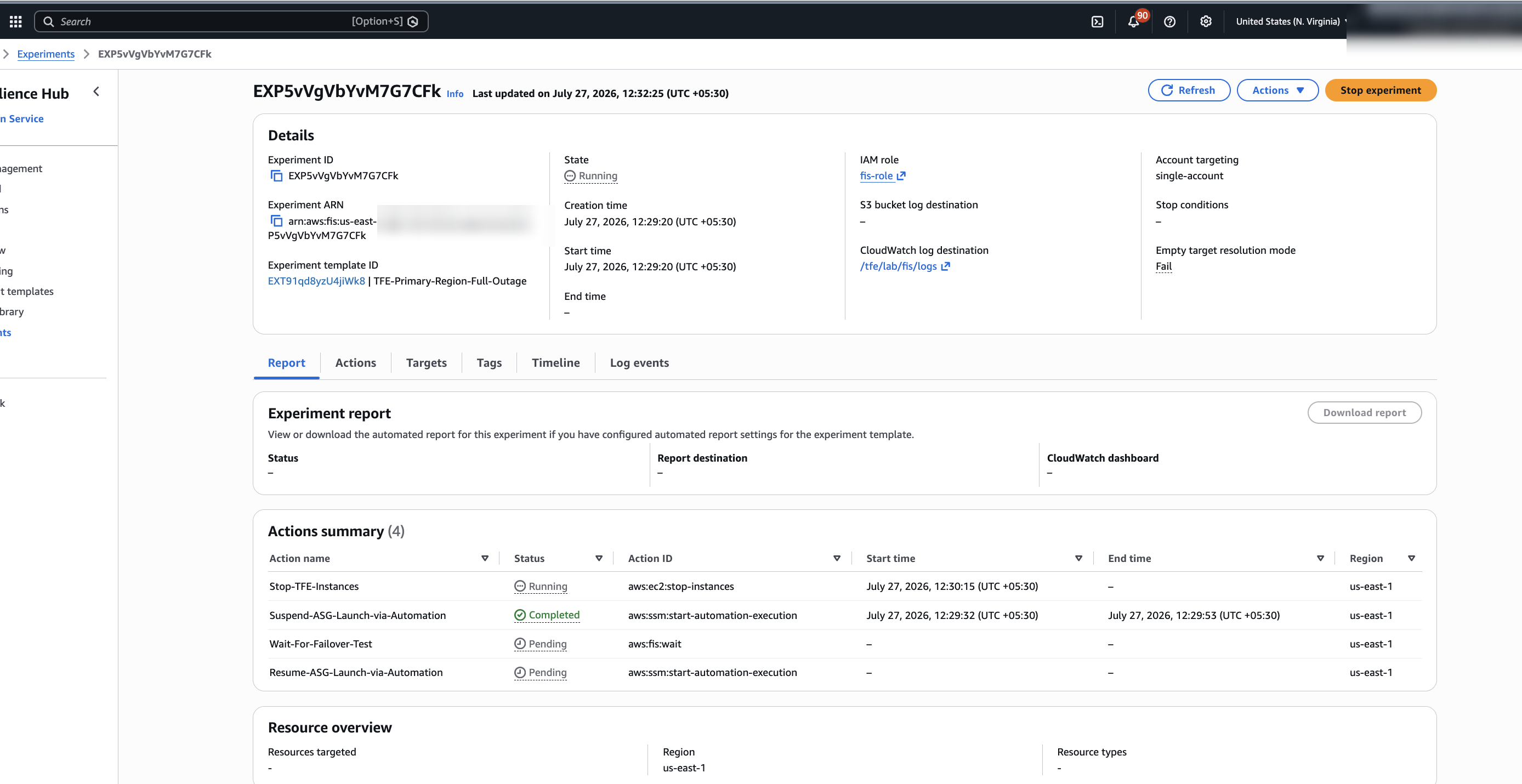
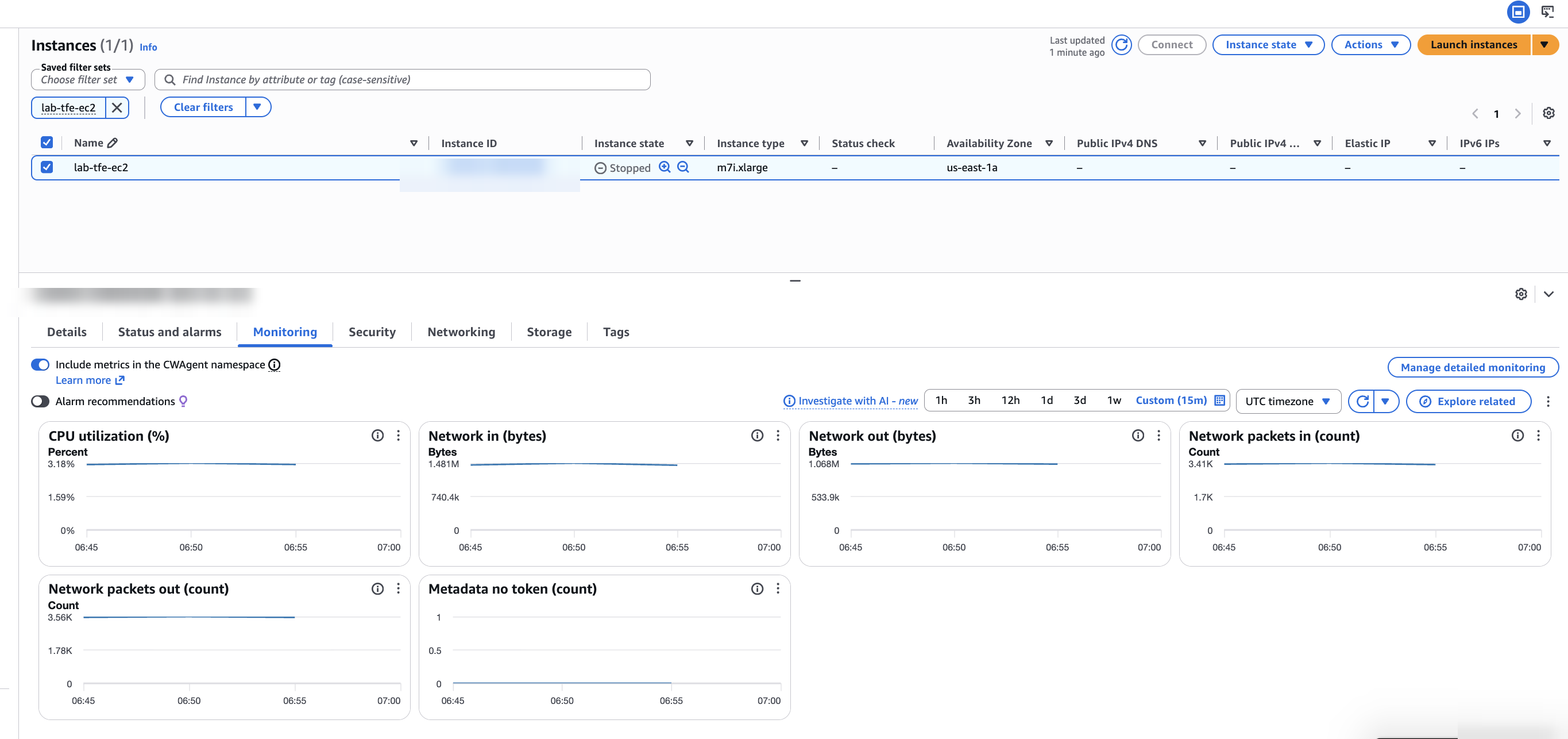
The validation protocol was divided into three distinct phases. Phase A targeted Amazon EC2 instances and Auto Scaling groups by executing explicit fault actions, such as stopping instances and simulating insufficient capacity errors. This testing successfully confirmed that replacement instances launched within two to three minutes; however, it also exposed an unintended configuration drift: the DR Region’s launch template referenced an outdated Amazon Machine Image (AMI), a vulnerability that would have gone unnoticed without fault injection.
Phase B tested the Aurora PostgreSQL-Compatible database cluster failover using the aws:rds:failover-db-cluster action. While Aurora successfully promoted the secondary writer in 58 seconds—incurring a brief 15-second write interruption—initial application connection pooling configurations caused extended reconnection delays. Engineers subsequently resolved this by reducing the connection pool timeout from 60 seconds to 10 seconds.
Phase C evaluated Amazon S3 connectivity disruptions. Because AWS FIS lacks a direct action targeting S3 buckets natively, engineers utilized subnet-level network ACL disruption rules (aws:network:disrupt-connectivity) to block egress traffic to S3 service endpoints. This simulation proved that the DR S3 bucket maintained fully synchronized state files with under 30 seconds of replication lag. However, it also brought to light a critical architectural flaw regarding automation dependencies.
Overcoming the State File Dependency Pitfall
During end-to-end failover testing, Athenahealth identified a circular dependency within their automation scripts. Their original failover and failback runbooks programmatically queried Terraform S3 state file outputs in the primary Region to retrieve essential infrastructure identifiers, such as global cluster IDs and Auto Scaling group names.
When AWS FIS simulated a total S3 connectivity loss or primary Region impairment, these automation scripts failed entirely because they attempted to read configuration data from the very environment they were trying to recover from. This created an operational paradox: the tools required to execute the recovery depended on the availability of the impaired Region.
To eliminate this vulnerability, Athenahealth restructured their automation logic to remove dynamic lookups against remote state files during a crisis. Instead, critical infrastructure identifiers were hardcoded directly into the failover scripts or managed via Region-independent configuration parameters stored outside the primary control plane. To prevent code drift over time, the organization implemented a continuous integration and continuous deployment (CI/CD) pipeline that regularly audits hardcoded variables against active Terraform outputs, generating immediate alerts upon detecting discrepancies.
Implications and Economic Considerations
The collaborative effort between Athenahealth, AWS, and HashiCorp underscores a broader industry realization: high-availability compute environments are vulnerable to localized cloud anomalies, and robust disaster recovery must encompass infrastructure provisioning tools like Terraform Enterprise.
Implementing a multi-Region TFE architecture introduces financial and operational trade-offs. Athenahealth reported an estimated 35% increase in operational infrastructure expenditures compared to their legacy single-Region footprint, driven primarily by continuous cross-Region database replication and S3 storage mirroring. Nevertheless, executive leadership and engineering stakeholders agreed that this cost is fully justified given the mission-critical nature of healthcare infrastructure management.
For enterprises evaluating similar resilience strategies, industry experts recommend establishing rigorous Recovery Time Objective and Recovery Point Objective metrics early in the design phase, conducting progressive fault-injection experiments using AWS FIS, and ensuring that all automation runbooks operate independently of primary regional dependencies. Through systematic preparation and continuous validation, organizations can maintain absolute operational continuity and infrastructure deployment capabilities even in the face of unprecedented regional service events.
Related posts: