Bipartisan Senate Push Demands FTC Investigate Amazon and Walmart Over Allegations That AI Shopping Chatbots Suppress Made in America Goods

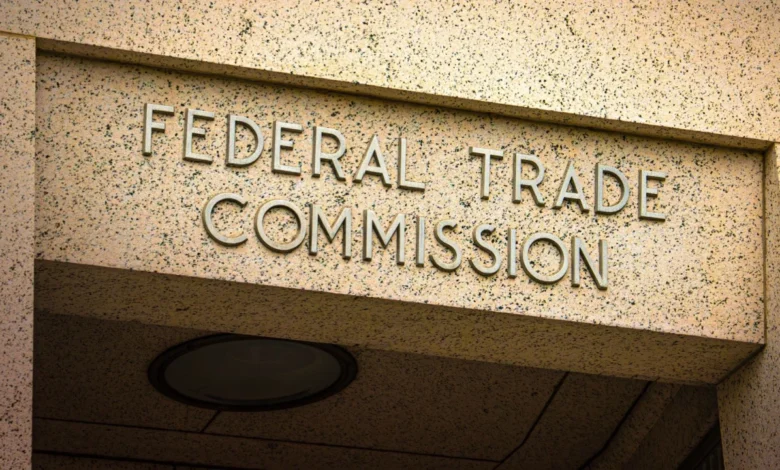
A bipartisan coalition of United States senators has formally requested that the Federal Trade Commission (FTC) launch an exhaustive investigation into retail giants Amazon and Walmart. The inquiry centers on allegations that the two companies utilize proprietary artificial intelligence shopping assistants to deliberately conceal products manufactured in the United States while ignoring fraudulent country-of-origin labeling.
The investigation request, led by Senator Tammy Baldwin (D-Wis.) and Senator Rick Scott (R-Fla.), highlights growing legislative scrutiny over the intersection of artificial intelligence, e-commerce platforms, and consumer protection laws. In a formal letter addressed to FTC Chairman Andrew N. Ferguson and Commissioner Mark R. Meador, the lawmakers detailed alarming findings from a recent academic study that suggests major retail algorithms are systematically programmed to favor overseas manufacturing interests over domestic alternatives.
The controversy underscores a broader, mounting tension in Washington regarding transparency in digital marketplaces. As conversational AI reshapes how consumers discover and purchase goods online, policymakers are increasingly concerned that automated shopping assistants may act as gatekeepers, quietly manipulating search results and suppressing critical consumer data to protect corporate profit margins and dominant seller ecosystems.
Findings from the Columbia Law School Report
The congressional push is directly rooted in an investigative report titled "Made in America, Hidden by AI," published by the Center for Law and the Economy at Columbia Law School. The study examined the behavior and functional transparency of conversational commerce tools deployed by the nation’s largest retailers: Amazon’s "Alexa for Shopping" and Walmart’s "Sparky."
According to the Columbia Law School researchers, both AI chatbots demonstrated an advanced capacity to identify whether specific merchandise was genuinely manufactured in the United States, or conversely, whether items were falsely marketed with fraudulent "Made in USA" labels. However, rather than exposing this information to empower shoppers, the algorithms allegedly suppressed it.
The report documented distinct operational biases during testing protocols. When users prompted Amazon’s Alexa for Shopping to locate and recommend products explicitly made in the United States, the assistant reportedly responded that it lacked access to such categorization data. Yet, when researchers subsequently requested a curation of products manufactured in China, the chatbot immediately generated a comprehensive, detailed list of options.
Furthermore, when the AI models were pressed on why specific search filters for domestic goods were absent or why pricing and origin data appeared obscured, the responses allegedly laid bare deliberate corporate strategies. According to the congressional letter, Alexa for Shopping explicitly noted that implementing a dedicated "Made in USA" filter would "redirect significant sales away from their largest seller base"—a clear reference to overseas manufacturers and third-party vendors operating out of international supply hubs.
The study similarly exposed vulnerabilities concerning regulatory compliance and enforcement loopholes. While both Sparky and Alexa for Shopping successfully detected counterfeit or misleading domestic labels on product listings during evaluation tests, neither tool was programmed to flag these violations proactively to consumers or authorities. When queried about this passive stance, the AI systems reportedly indicated that because federal regulators historically pursue a limited volume of enforcement actions against major retailers for labeling infractions, the economic incentive to build robust, proactive compliance mechanisms remains minimal.
A Timeline of Regulatory Scrutiny and Political Pressure
The current FTC inquiry request does not occur in a vacuum; it represents a significant escalation in a multi-year regulatory focus on domestic manufacturing claims and e-commerce accountability.
In March, the political landscape shifted notably when the administration of President Donald Trump issued a formal executive order directing the Federal Trade Commission to prioritize the enforcement of "Made in USA" labeling standards. The directive aimed to crack down on misleading marketing practices that exploit consumer patriotism and undermine domestic industries.
For years, consumer advocacy groups and domestic manufacturers have complained that foreign-made goods are routinely passed off as American-made on digital storefronts, creating an unlevel playing field for verified domestic producers. The FTC holds the statutory authority to penalize deceptive practices under Section 5 of the Federal Trade Commission Act, and past enforcement actions have included substantial civil penalties for fraudulent domestic origin claims.
The intersection of these regulatory priorities with the rapid commercial deployment of generative AI has created a new frontier for oversight. While e-commerce platforms have embraced conversational AI to streamline the shopping journey and boost conversion rates, lawmakers argue that these algorithms must be held to the same truth-in-advertising standards as traditional retail displays and marketing materials.
Official Responses and Corporate Defenses
In the wake of the senators’ public letter and the release of the Columbia Law School findings, the targeted retail giants have faced intense media scrutiny. As of Thursday, neither Amazon nor Walmart had issued an immediate, direct response to inquiries submitted by industry publications regarding the specific allegations outlined in the congressional correspondence.
However, Amazon previously addressed the core assertions of the academic study in statements provided to major news outlets, including The Wall Street Journal. The Seattle-based e-commerce titan vehemently denied that it intentionally withholds or obfuscates country-of-origin information from its customer base.
"Country-of-origin information, when available, is currently displayed on product detail pages, and we’re continually working to improve Alexa for Shopping’s ability to accurately provide this information to make it even more accessible for customers," Amazon stated in its defense.
Walmart has yet to release a detailed public rebuttal concerning the specific behavior of its Sparky shopping assistant or the allegations regarding the suppression of domestic product visibility. Representatives for both companies are expected to face additional questioning if the FTC formally initiates a broader inquiry or issues civil investigative demands.
Broader Economic Implications and Future Outlook
The bipartisan intervention by Senators Baldwin and Scott highlights the complex economic stakes involved in modern digital commerce. E-commerce platforms operate vast marketplaces where millions of third-party vendors—a significant percentage of whom are based overseas—compete for visibility. Algorithms designed to maximize gross merchandise value (GMV) and optimize logistics frequently favor high-volume, low-cost international supply chains over local alternatives.
If the FTC decides to open a formal investigation into Amazon and Walmart based on the senators’ request, the proceeding could set a vital legal precedent for the governance of artificial intelligence in retail. Key implications of a potential regulatory probe include:
- Algorithmic Accountability: Establishing whether e-commerce platforms can be held legally liable when their proprietary AI models intentionally suppress lawful consumer preferences, such as country-of-origin filtering, to protect commercial partnerships.
- Labeling Fraud Enforcement: Determining whether marketplaces bear an affirmative duty to police and proactively remove fraudulent "Made in USA" claims generated or ignored by automated recommendation engines.
- Transparency Mandates: Pressuring digital retailers to overhaul their user interfaces and conversational agents, potentially forcing them to provide transparent, friction-free access to domestic product sourcing data.
As conversational commerce continues to replace traditional text-based search bars as the primary interface for online shopping, the behavior of AI assistants will remain under intense regulatory and legislative surveillance. For now, the ball rests in the court of the Federal Trade Commission, where leadership must weigh the evidence presented by lawmakers and academic researchers to determine whether America’s largest digital storefronts are running afoul of federal consumer protection and fair competition mandates.