Automattic Appoints Jeremy Klaperman as Interim CFO Following Turbulent Leadership Shufflings and Boardroom Drama


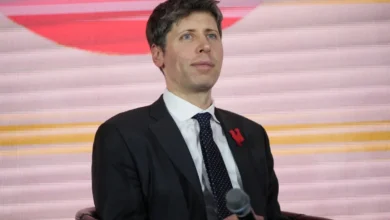
Automattic, the prominent web development and publishing platform company behind WordPress, Tumblr, and WooCommerce, has officially named Jeremy Klaperman as its interim Chief Financial Officer. Klaperman, who previously served as the CFO of the company’s enterprise-focused WordPress VIP business unit, steps into the role following a dramatic week of corporate restructuring, a failed boardroom coup, and the subsequent departure of several high-ranking executives.
The announcement, communicated internally via Slack by Automattic CEO and co-founder Matt Mullenweg on Friday, September 18, 2026, marks the latest development in an unfolding saga that has gripped the tech industry. The leadership turmoil has brought intense scrutiny to the governance of the privately held company, raising questions about internal oversight, executive compensation, and the future strategic direction of one of the internet’s foundational infrastructure providers.
The Main Facts of the Leadership Overhaul
The appointment of Klaperman is a direct consequence of an attempted ouster of CEO Matt Mullenweg by Automattic’s board of directors earlier in the month. The board members who orchestrated the vote—which briefly forced Mullenweg onto a leave of absence—have since exited the company. This power struggle triggered a cascade of executive departures, including former CFO Mark Davies and Chief Legal Officer Andy Missan.
During Mullenweg’s brief absence, Davies had stepped in as interim CEO, while Missan managed the legal facets of the corporate maneuver. However, Mullenweg successfully returned to the helm within days, leading to a swift reversal of fortune for the executives who sought to unseat him.
According to Mullenweg’s internal communications, Klaperman is not entirely unfamiliar with the demands of the top financial seat. He previously stepped in to manage Automattic’s overall financial operations during periods when Davies was on sabbatical. Despite this familiarity, Mullenweg noted that the board—whose newly appointed members have yet to be publicly revealed—will eventually need to evaluate both internal and external candidates before making a permanent CFO appointment.
In addition to the CFO transition, Mullenweg revealed that an unnamed candidate has verbally accepted the position of Chief Legal Officer, stepping into the vacancy left by Missan. This comes on the heels of investigative reporting by TechCrunch, which revealed that Davies and Missan had signed reciprocal severance deals during the brief 33-hour window of Mullenweg’s ouster.
Chronology of Events: From Coup to Stabilization
To understand the current state of affairs at Automattic, it is necessary to examine the rapid sequence of events that unfolded over two intense weeks in September 2026.

- Early September 2026 (The Boardroom Conflict): Tensions between CEO Matt Mullenweg and certain members of Automattic’s board of directors reach a breaking point, centering on strategic execution and corporate governance.
- September 9, 2026: The board forces Matt Mullenweg into a leave of absence, briefly stripping him of his CEO duties. Mark Davies, then serving as CFO, is installed as interim CEO, while Chief Legal Officer Andy Missan assists with the transition.
- September 10–11, 2026: During the 33-hour window of Mullenweg’s removal, Davies and Missan reportedly sign reciprocal severance agreements, safeguarding their financial positions in the event of further upheaval.
- September 12, 2026: Backed by substantial internal and external support, Matt Mullenweg successfully regains control of the company, officially returning as CEO. The board members who engineered his ouster are forced out, and Davies and Missan depart the company.
- September 16, 2026: TechCrunch breaks the news regarding the reciprocal severance deals signed by Davies and Missan during the brief leadership vacuum.
- September 18, 2026: Mullenweg announces via Slack that Jeremy Klaperman has been appointed interim CFO. He also shares that a new Chief Legal Officer has verbally accepted the position and reassures employees of the company’s financial health.
- Upcoming September 23, 2026: Automattic is scheduled to hold its next board meeting, where further announcements regarding permanent board members and governance updates are expected.
Financial Standing and Executive Reassurances
Amidst the governance chaos, maintaining operational stability and market confidence has been a primary objective for Automattic’s leadership. The company commands a massive footprint across the digital ecosystem, powering roughly 43% of the top 10 million websites via the open-source WordPress software, alongside massive commercial ventures like WordPress.com, WooCommerce, and Tumblr. Any instability at the executive level carries potential ripples across the broader web publishing community.
To mitigate anxieties among employees and commercial partners, Mullenweg delivered a strong vote of confidence regarding the company’s balance sheet.
“I have 100% confidence in our cash and financial position,” Mullenweg wrote in his Slack announcement. “There is still work to do, but everything is within our control and depends only on Automattic’s ability to execute.”
By tapping Klaperman—an internal figure intimately familiar with WordPress VIP, the high-revenue enterprise branch of the company—Mullenweg has signaled a desire for operational continuity. WordPress VIP serves elite enterprise clients, including major media outlets, Fortune 500 companies, and global brands that demand rigorous security, scalability, and financial reliability. Placing a seasoned enterprise financial leader at the head of the corporate treasury is intended to reassure these high-value commercial partners that day-to-day operations remain uninterrupted.
Broader Impact and Corporate Governance Implications
The events at Automattic have sparked broader discussions within the tech industry regarding startup governance, founder control, and the relationship between venture-backed boards and visionary chief executives. Private companies structured similarly to Automattic often grant significant leverage to founders, but boards retain fiduciary responsibilities that can trigger dramatic confrontations if stakeholders disagree on growth trajectories, monetization strategies, or management styles.
The failed ouster and subsequent purging of board members illustrate the volatile nature of private equity and corporate governance when a charismatic founder holds deeply rooted influence. Furthermore, the revelation of reciprocal severance deals signed during a 33-hour window highlights the intense legal maneuvering that often accompanies boardroom coups, raising legal and ethical questions about executive self-preservation during corporate crises.
Despite these hurdles, Automattic appears to be systematically closing the gaps in its leadership roster. With Stephen Wolfram—creator of Wolfram|Alpha and a special advisor to the company—retaining his position on the advisory board, and a crucial board meeting scheduled for September 23, the organization is pivoting toward stabilization.
Industry observers will be watching closely to see who fills the remaining vacant board seats and whether the new governance structure can foster long-term harmony between management and oversight bodies. For now, Matt Mullenweg remains firmly in control, steering Automattic through one of the most turbulent chapters in its corporate history.