Amazon integrates advanced AI into Alexa for Shopping to combat the global rise of consumer phishing and scam communications.

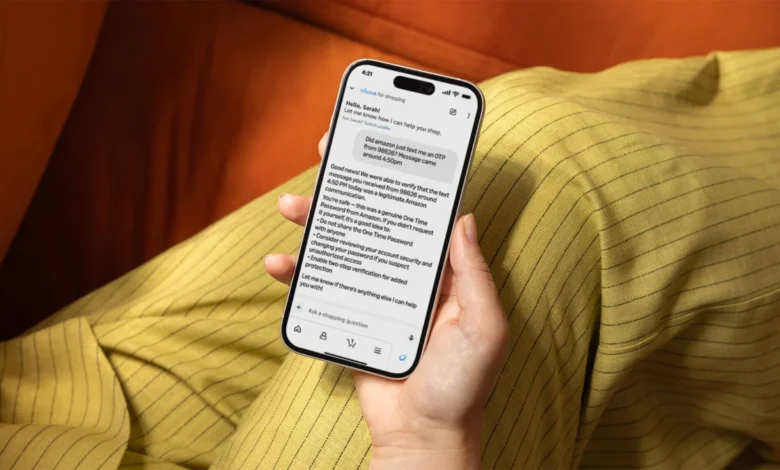
The digital marketplace has become a primary target for sophisticated social engineering tactics, with bad actors frequently impersonating trusted retail brands to extract sensitive financial information. In a strategic move to bolster consumer trust and security, Amazon announced on Wednesday that it is deploying advanced artificial intelligence capabilities within its "Alexa for Shopping" interface to help users verify the legitimacy of incoming communications. This initiative addresses a significant pain point for the retail giant, which reports that approximately 360,000 customers contact its support channels annually solely to authenticate suspicious emails, texts, or notifications purportedly sent by the company.
The Mechanism of AI Authentication
The new feature leverages Amazon’s massive data infrastructure to provide what the company describes as a "definitive" verdict on message authenticity. By analyzing incoming communications against a global database of billions of legitimate messages dispatched by Amazon’s systems, the AI assistant scrutinizes a multifaceted array of data points. This includes, but is not limited to, the sender’s address, the technical metadata of the transmission, the timing of the delivery, and the specific syntax and content of the message itself.
Unlike traditional filtering systems that rely on static blacklists or simple keyword matching, this AI model is designed to evolve. As customers report suspicious messages through the app, the system ingests this data, refining its pattern-recognition capabilities to identify emerging phishing trends in real-time. This creates a proactive loop: the more users engage with the tool, the more robust Amazon’s overall defense perimeter becomes. This functionality is now accessible to users through both the Amazon mobile application and the web-based shopping portal.
Chronology of Amazon’s Anti-Scam Evolution
The integration of AI into the shopping assistant represents the latest milestone in a multi-year effort by Amazon to mitigate the threat of fraud. As the digital landscape has shifted toward mobile-first commerce, so too have the tactics of cybercriminals.
- Pre-2023: Amazon’s primary defense focused on reactive measures, such as providing general security tips on its website and encouraging users to change passwords if they suspected account compromise.
- Early 2024: Recognizing the limitations of manual reporting, the company launched the dedicated email address "[email protected]." This provided a direct channel for users to forward questionable messages for manual or semi-automated review.
- Mid-2024: Amazon expanded its support infrastructure by introducing a web-based form on its customer service portal, allowing users to upload screenshots or forward text transcripts for verification without needing to use an email client.
- September 2024: The current phase of the rollout sees the transition of these verification processes into the AI-driven Alexa for Shopping ecosystem, effectively moving the technology from a background utility to a frontline, user-facing interface.
The Broader Context: The Scourge of Retail Phishing
The rise of sophisticated phishing has created a "trust deficit" in e-commerce. According to data from the Federal Trade Commission (FTC), billions of dollars are lost annually to impersonation scams, with retail-related fraud consistently ranking among the top categories of reported incidents. Common tactics identified by Amazon’s security teams include fake order confirmations, urgent notifications regarding Prime membership renewals, spurious warnings of account suspension, and "missed package" delivery alerts that direct users to malicious websites designed to harvest credit card information.
These scams are not merely nuisances; they represent a significant operational burden for retailers. When customers lose confidence in the legitimacy of communications from a brand, they are less likely to engage with legitimate marketing, transactional updates, or security notifications. By providing a clear, AI-backed answer to the question, "Is this really from Amazon?", the company is attempting to reclaim the integrity of its communication channels.
Strategic Pivot: Alexa’s New Identity
This security-focused update is part of a broader transformation of Alexa’s product strategy. Once primarily associated with smart home controls and music playback, Alexa for Shopping has been repositioned as a proactive, intelligent commerce companion.
In recent months, Amazon has pivoted the assistant’s capabilities to include:
- AI-Driven Product Overviews: Summarizing user reviews and technical specifications to help customers make faster purchase decisions.
- Personalized Shopping Guides: Leveraging purchase history and browsing behavior to curate relevant item lists.
- Handwritten List Transcription: Digitizing physical shopping lists to facilitate easier restocking.
- Proactive Alerting: As of early September 2024, the assistant can now notify users about product launches from favorite brands, upcoming book releases, or new musical drops from preferred artists.
This shift indicates that Amazon is betting on the utility of AI to drive customer retention. By positioning Alexa as an assistant that solves problems—rather than just executing commands—the company is attempting to increase the "stickiness" of its platform.
Analysis of Implications
The decision to utilize AI for message verification is a double-edged sword. On one hand, it significantly lowers the barrier to entry for security hygiene. Many consumers are currently ill-equipped to inspect email headers or analyze URL structures for malicious redirects; an AI assistant that provides a simple "Yes/No" or "Proceed with Caution" is a massive upgrade in terms of usability.
However, the shift also highlights the ongoing "arms race" between tech platforms and malicious actors. As Amazon makes it harder to spoof its emails, scammers will likely pivot to other platforms—such as messaging apps like WhatsApp or SMS—where the "verified sender" metrics are less transparent or harder to control. Furthermore, there is the risk of "automation bias," where users may begin to trust the AI implicitly. If a sophisticated scammer finds a way to bypass the detection logic, the user’s reduced skepticism could lead to even higher rates of successful fraud.
Industry experts note that Amazon’s approach—centralizing verification within an authenticated app environment—is the most effective way to combat these threats. By forcing the interaction to occur within the controlled ecosystem of the Amazon app, the company effectively removes the ambiguity inherent in third-party email clients.
Future Outlook and Industry Standards
Looking forward, the success of Amazon’s AI-driven verification will depend on its transparency and accuracy. If the system produces too many "false positives" (flagging real messages as scams) or "false negatives" (letting scams through), user trust will erode. Amazon has indicated that the system’s performance is tightly coupled with user feedback; thus, the company is effectively crowdsourcing its security research.
As major retailers follow suit—investing in proprietary AI models to handle everything from logistics to fraud detection—we are likely to see the emergence of industry-wide standards for message authentication. While Amazon currently leads in this niche, the broader retail sector will need to adopt similar, high-fidelity verification tools to maintain a secure digital commerce environment.
For now, the integration of this tool into Alexa for Shopping marks a significant step forward in consumer protection. By turning an AI assistant into a security guard, Amazon is not only attempting to reduce the 360,000 annual support inquiries but is also working to ensure that its brand remains synonymous with safety in an increasingly dangerous online landscape. Consumers are encouraged to continue using these verification tools as the first line of defense, maintaining a healthy degree of skepticism toward any communication that requests sensitive data or urgent action.