AI-Powered Structural Biology Initiative Aims to Stockpile Viral Knowledge Against Future Pandemic Threats

When the COVID-19 pandemic paralyzed the global landscape in 2020, the international scientific community benefited from a fortuitous head start: decades of dedicated research into the structural biology of coronaviruses. Because scientists had already mapped the critical proteins of earlier strains, they could identify the "spike" protein that served as the primary target for vaccine development. However, global health experts warn that the next pandemic may not be as forgiving, potentially emerging from viral families that have remained largely unstudied by modern medicine. To bridge this critical knowledge gap, a coalition of world-leading research institutions, led by Google DeepMind and NVIDIA, has launched an ambitious effort to map the 3D structures of thousands of viral protein complexes.
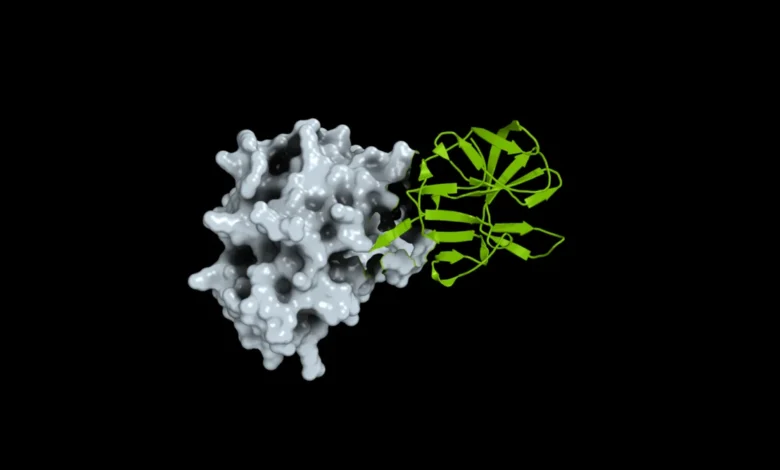
The project, which leverages the power of artificial intelligence to democratize structural biology, has officially released predicted 3D structures for the protein complexes of more than 2,800 viruses. These data are now openly accessible to researchers worldwide through the AlphaFold Database, a resource that has become a cornerstone of modern digital biology. By transitioning from the study of isolated proteins to the analysis of complex, interacting molecular groups, this initiative represents a paradigm shift in how the scientific community prepares for potential zoonotic spillovers and infectious disease outbreaks.
The Technological Engine: Scaling Discovery with BioNeMo
The structural predictions were generated using AlphaFold2, the groundbreaking AI model developed by Google DeepMind. While AlphaFold2 revolutionized the field by predicting how amino acid sequences fold into three-dimensional shapes, scaling this capability to cover thousands of viral proteomes required immense computational efficiency. To meet this challenge, the team utilized the NVIDIA BioNeMo Inference Runtime. By optimizing the inference process for GPUs, the collaboration transformed what was once a multi-year, multi-thousand-dollar experimental task into a process that can be completed in mere minutes.
Beyond the release of the dataset, NVIDIA has made the BioNeMo Structure Prediction Pipeline publicly available via GitHub. This move allows individual labs to run their own structural predictions, effectively handing a powerful, GPU-accelerated toolset to researchers operating in low-resource environments. The ability to move rapidly from a viral genetic sequence to a high-confidence 3D structural model is essential for the design of therapeutics, diagnostics, and, ultimately, vaccines.
A Chronology of Pandemic Preparedness
The necessity for this project is underscored by sobering projections from organizations such as the Center for Global Development, which has estimated a nearly 50% probability of another pandemic of COVID-19-like severity occurring before 2050. The timeline of this initiative reflects a growing recognition that "reactive" medicine is insufficient for modern global health security.
- Pre-2020: Structural biology relied heavily on X-ray crystallography and cryo-electron microscopy, which, while highly accurate, are slow and costly.
- 2021: The launch of the original AlphaFold Database provided access to the structures of nearly all known proteins in the human body and several other organisms, marking a milestone in computational biology.
- 2023-2024: The emergence of specialized AI workflows, such as BioNeMo, allowed for the systematic mapping of protein complexes rather than single proteins.
- September 2024: Coinciding with the United Nations General Assembly meeting in New York, the coalition announced the release of the viral protein complex dataset, providing a critical resource for global pandemic preparedness.
Insights from the Frontlines: The Value of "Dark" Biology
A significant portion of the newly released data—roughly 30% of the protein interactions—represents knowledge entirely new to science. These structures have no precedent in the Protein Data Bank (PDB), which has historically served as the primary repository for experimentally determined structures. For researchers like Joe Grove, a professor of molecular virology at the Medical Research Council-University of Glasgow, this repository acts as a vital insurance policy.
"When I completed my Ph.D., there were virtually no structural data for the proteins we were investigating," Dr. Grove noted in a recent assessment of the project. "We were essentially working in the dark, relying on inference and conjecture. By stockpiling this knowledge now, we are giving the next generation of researchers a foundation that will fundamentally accelerate their ability to respond to future threats."
Scientific Implications and Hypothesis Generation
The transition from studying individual proteins to protein complexes is a critical advancement in biological research. In nature, proteins rarely function in isolation; they organize into complex, dynamic structures to facilitate cellular communication, viral replication, and immune evasion. Understanding these interactions is essential for identifying "druggable" sites where a molecule might be introduced to interrupt the viral life cycle.
Chris Dallago, an applied research science team lead in digital biology at NVIDIA, emphasizes that this database serves as an "engine for hypothesis generation." By providing the global community with high-quality structural data, the initiative enables biologists to move from observation to intervention with unprecedented speed. Whether investigating common-cold viruses or emerging threats such as Mpox, researchers can now use these predictions as a starting point to verify biological mechanisms in the lab.
Global Collaboration and Democratic Access
The scale of this project required a massive international effort, drawing upon the expertise of the Coalition for Epidemic Preparedness Innovations (CEPI), the European Molecular Biology Laboratory’s European Bioinformatics Institute (EMBL-EBI), Seoul National University, Sungkyunkwan University, and the Swiss Institute of Bioinformatics.
The commitment to open science is a defining feature of the initiative. Jo McEntyre, interim director of EMBL-EBI, noted that the inclusion of lesser-studied viruses is particularly vital for scientists working in low-resource settings. In regions where a new outbreak might first be detected, researchers often lack the high-end laboratory infrastructure required for traditional protein crystallography. By providing these predictions via the AlphaFold Database, the coalition lowers the barrier to entry, ensuring that a researcher in a developing nation has access to the same structural insights as a scientist in a top-tier global university.
Fact-Based Analysis: Challenges and Future Directions
While the release of 2,800+ viral protein complexes is a monumental achievement, experts caution that AI predictions are not a substitute for experimental validation. High-confidence predictions provide a high-resolution "map," but scientists must still conduct wet-lab experiments to confirm the biological reality of these interactions.
Furthermore, the "black box" nature of some AI models remains a point of discussion within the structural biology community. As the field advances, researchers are focused on improving the interpretability of these models and ensuring that the data remains accurate even for rapidly mutating viruses. The current dataset is labeled by confidence scores, which help researchers distinguish between highly reliable structures and those that require further investigation.
Ultimately, the synergy between computational power and biological domain expertise is redefining the speed at which medicine can pivot to address novel pathogens. By shifting the focus from reaction to anticipation, the AlphaFold Database and the BioNeMo platform are establishing a new standard for global health preparedness. As the international community continues to navigate the complexities of a highly interconnected world, the ability to "see" the building blocks of the next pandemic before it emerges will likely prove to be the most effective defensive tool available to modern science.
The data is currently available on the AlphaFold Database Pandemic Preparedness Portal. For those interested in utilizing the underlying technology, the BioNeMo Structure Prediction Pipeline is open for public use, signaling a permanent move toward a more collaborative, tech-enabled era of virology.
Related posts: