AWS Elastic Beanstalk Launches New Cluster Mode to Revolutionize Managed Application Infrastructure

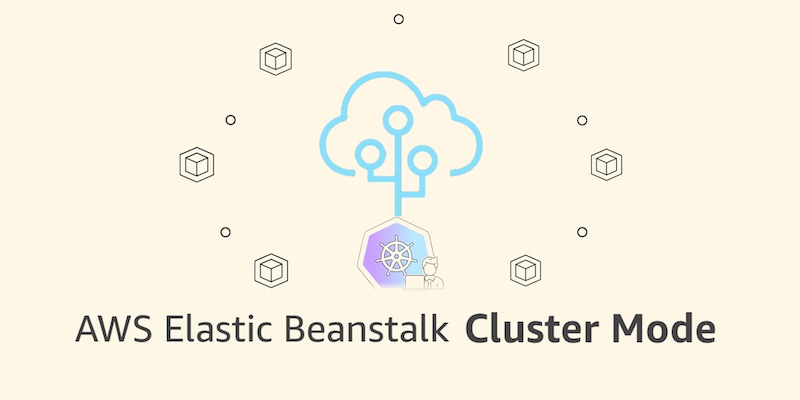
Since its inception in 2011, AWS Elastic Beanstalk has served as a cornerstone of the Amazon Web Services ecosystem, providing a simplified abstraction layer for developers to deploy applications across a variety of languages including Java, .NET, Python, Node.js, PHP, Ruby, and Go. Over the past fifteen years, the service has evolved from a basic deployment tool into a comprehensive application management platform. Today, AWS announced a significant evolution of this platform: the introduction of a fully managed Cluster Mode, designed to leverage the power of Amazon Elastic Kubernetes Service (Amazon EKS) while maintaining the operational simplicity that has defined Elastic Beanstalk for over a decade.
A Decade and a Half of Operational Evolution
The journey of AWS Elastic Beanstalk began in an era where infrastructure management was often a bottleneck for software development teams. By abstracting the complexities of capacity provisioning, load balancing, and health monitoring, Elastic Beanstalk allowed developers to focus primarily on business logic.
Chronologically, the service has undergone several critical transformations:
- 2011: Launch of Elastic Beanstalk, focusing on easy deployment for monolithic web applications.
- 2016-2024: Incremental updates including better integration with Docker, enhanced environment health monitoring, and the introduction of advanced deployment policies like blue/green and canary updates.
- 2026: The current year has seen a rapid acceleration in modernization, with the integration of AI-powered environment analysis, native GitHub Action support for CI/CD pipelines, and the implementation of OpenTelemetry-based observability.
The decision to transition toward a Cluster Mode architecture reflects a broader industry shift. As organizations move from managing single-application environments to operating vast portfolios of microservices, the operational overhead of managing isolated infrastructure has become unsustainable. By consolidating these applications onto a shared, EKS-powered baseline, AWS is addressing the primary challenge of modern scale: maintaining consistent operational standards across hundreds of services without inflating cost or complexity.
Technical Architecture and the Shift to EKS
The new Cluster Mode is not merely a feature update; it represents a fundamental shift in how Elastic Beanstalk interacts with the underlying AWS compute fabric. Previously, Elastic Beanstalk relied primarily on Amazon EC2 auto-scaling groups. While robust, this model often resulted in "infrastructure sprawl," where each application environment required its own set of load balancers, security groups, and scaling policies.
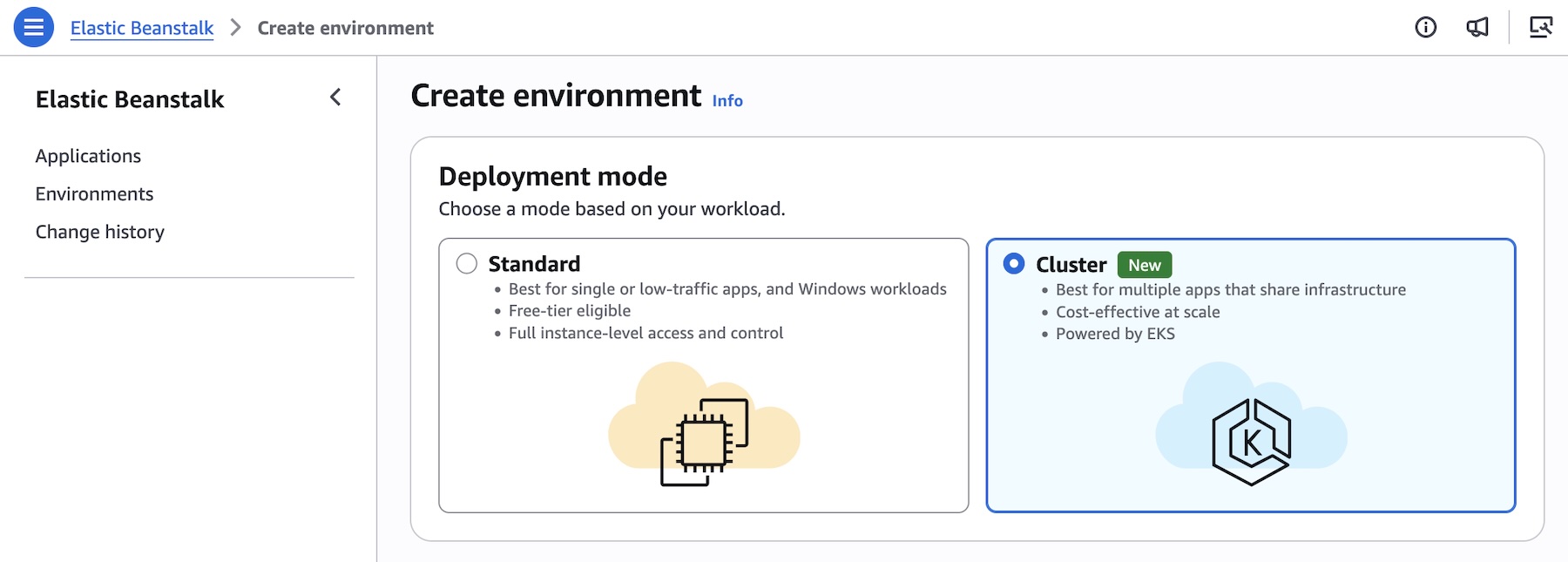
In the new architecture, the EKS control plane serves as the orchestration engine. When a developer selects "Cluster" in the deployment type, Elastic Beanstalk provisions the necessary EKS infrastructure. This provides several technical advantages:
- Resource Density: Multiple microservices can share the same node pool, significantly reducing the cost per application.
- Operational Uniformity: A single configuration baseline applies to all services within the cluster, ensuring that security patches, observability agents, and compliance settings are consistent.
- Advanced Traffic Management: By utilizing Kubernetes-native networking, developers gain access to sophisticated traffic-splitting capabilities, enabling seamless rolling updates and automated rollbacks if health checks fail.
Supporting Data and Efficiency Metrics
Industry analysis suggests that organizations moving to container-orchestrated environments can see an improvement in resource utilization of between 20% and 40%. By leveraging EKS Auto Mode, Elastic Beanstalk Cluster Mode automates the provisioning of compute resources, ensuring that the cluster size dynamically adjusts to the aggregate demand of all hosted applications.

For a mid-sized enterprise running 50 microservices, the transition from legacy, isolated Beanstalk environments to the new Cluster Mode is projected to reduce the "management tax"—the time spent by DevOps engineers on infrastructure patching and maintenance—by approximately 60%. These gains are driven by the removal of redundant load balancer provisioning and the consolidation of monitoring and logging pipelines.
Implications for the Developer Workflow
The transition to Cluster Mode is designed to be non-disruptive. AWS has explicitly stated that Elastic Beanstalk Standard (EC2-based) remains fully supported. This dual-mode strategy allows organizations to pursue a "migrate-at-your-own-pace" strategy.
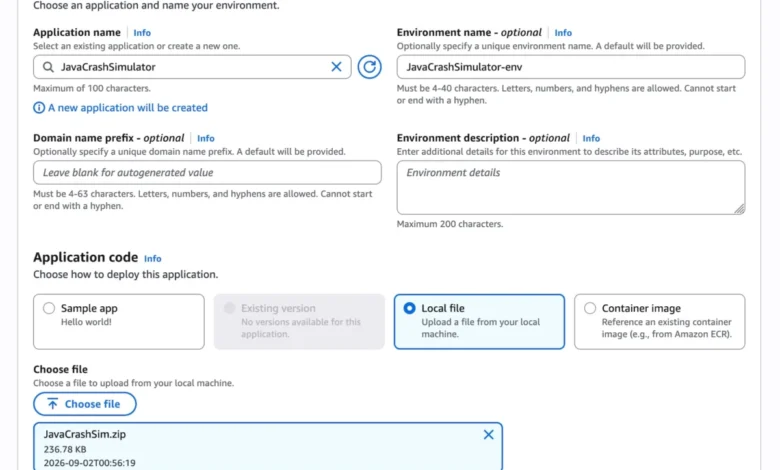
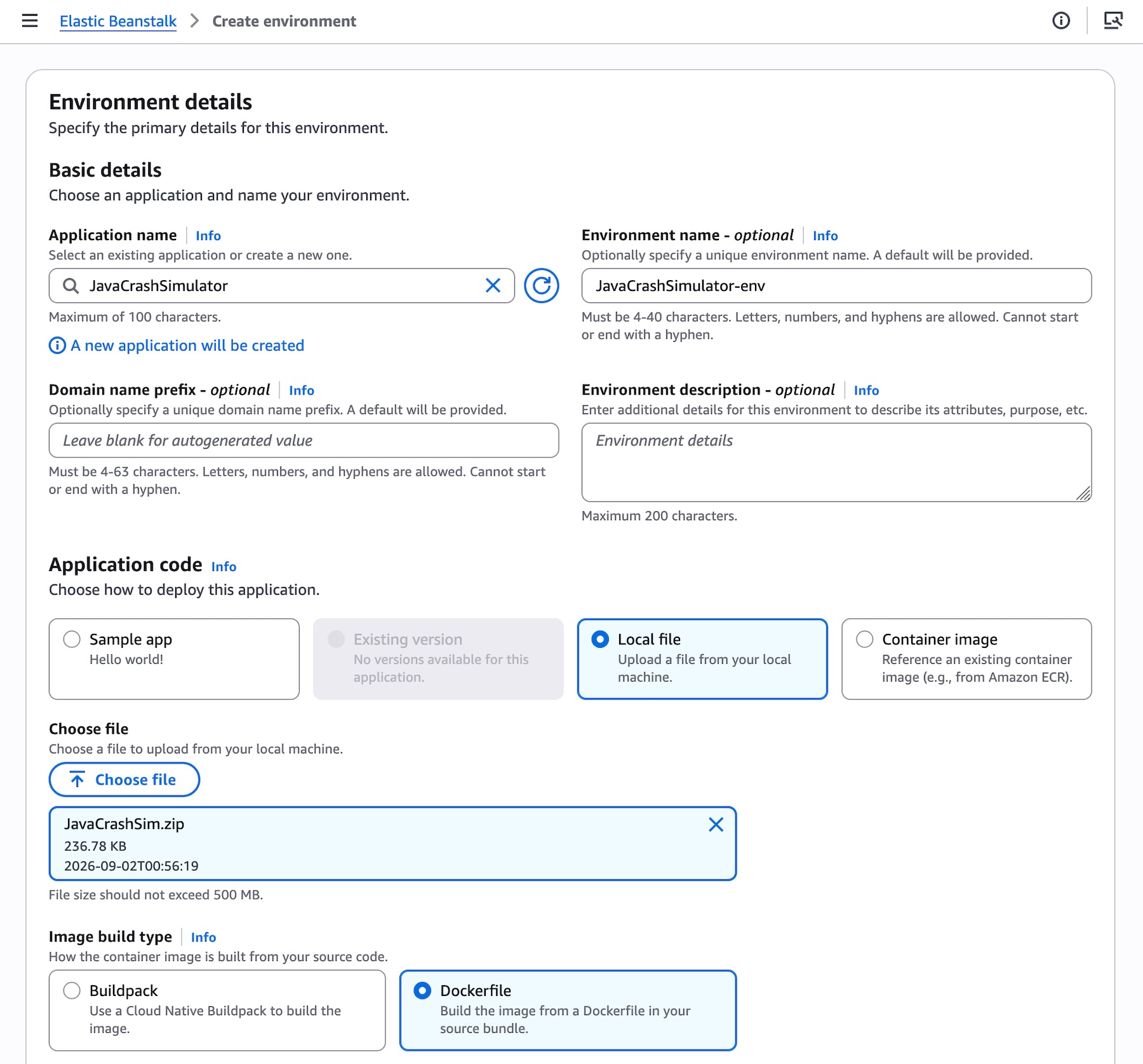
For developers, the interaction remains largely familiar. The service continues to accept source code, Dockerfiles, or pre-built container images. The key change lies in the deployment configuration. Using the AWS CLI or the Elastic Beanstalk console, teams can now define environment-specific variables—such as CPU allocation, memory limits, and replica counts—within a centralized JSON configuration format. This is a departure from the previous model where configuration was often hidden within the environment console, moving instead toward an "Infrastructure as Code" (IaC) approach that aligns with modern GitOps practices.
Security and Observability: The Default Standard
A critical component of this release is the focus on security-by-default. The integration with AWS Secrets Manager ensures that sensitive configuration data is never stored in plaintext within the environment. Furthermore, the mandatory use of AWS Certificate Manager for HTTPS termination ensures that traffic between the client and the application is encrypted from the moment of deployment.
Observability has also been elevated. By baking OpenTelemetry support directly into the cluster baseline, AWS eliminates the need for manual agent installation. Developers gain immediate access to distributed tracing, metrics, and logs, which are vital for debugging microservice architectures where requests often traverse multiple network boundaries.
Industry Context and Strategic Positioning
The launch of Cluster Mode places AWS in a unique position within the competitive landscape of Platform-as-a-Service (PaaS). While competitors like Heroku or Google Cloud Run have long offered simplified container deployment, AWS Elastic Beanstalk now offers a "best-of-both-worlds" scenario: the simplicity of a PaaS combined with the flexibility and power of the Kubernetes ecosystem.
Market analysts note that this move is a strategic attempt to capture the "middle market"—teams that have outgrown simple web hosting but are not yet ready to manage the full complexity of raw EKS. By "hiding" the complexity of Kubernetes behind the familiar Elastic Beanstalk interface, AWS is effectively democratizing access to high-scale, containerized infrastructure.
Economic Considerations
From a pricing perspective, AWS has opted for a transparent model. There is no premium for using the Cluster Mode itself. Costs are derived strictly from the underlying infrastructure usage: the EKS control plane fee, the compute resources (EC2 or Fargate), and supporting services like ECR and CloudWatch. While the service is not eligible for the AWS Free Tier, the improved resource density is expected to lower the total cost of ownership for most high-scale deployments.
Conclusion and Future Outlook
The introduction of Cluster Mode marks the most significant architectural overhaul in the history of AWS Elastic Beanstalk. By pivoting toward an EKS-native foundation, AWS has effectively future-proofed one of its longest-running services.
For the enterprise, the message is clear: infrastructure is becoming a commodity, and the value lies in the operational consistency that services like Elastic Beanstalk provide. As organizations continue to decompose monolithic applications into microservices, the ability to manage these services at scale, with automated patching, integrated security, and unified observability, will be the deciding factor in their competitive agility.
For those looking to adopt the new model, the path is open. The service is generally available in all regions where Elastic Beanstalk is currently offered. Teams are encouraged to start with a non-critical workload to evaluate the performance and management benefits of the new EKS-backed architecture. As the ecosystem continues to evolve, the integration of AI-driven diagnostics and automated infrastructure management will likely remain the focal point of the Elastic Beanstalk roadmap, continuing the service’s legacy of shielding developers from the complexities of the cloud.