Amazon is revolutionizing the streaming experience by turning Prime Video into a seamless digital storefront for viewers

The intersection of entertainment and e-commerce has reached a new milestone as Amazon unveils a comprehensive suite of shopping features designed to integrate retail directly into the living room. By leveraging its proprietary X-Ray technology and advanced visual recognition software, the retail giant is transforming how consumers engage with movies, television series, and live sports. These updates represent a significant pivot from passive viewing to an active, commerce-driven experience, aiming to capture consumer intent at the precise moment of discovery.
A New Era of Integrated Retail
Amazon’s latest initiative centers on removing the friction between watching content and purchasing the products featured within it. Historically, the process of finding an item seen on screen required viewers to exit their streaming environment, open a search engine, and attempt to describe the object, often with limited success. With the introduction of the "Shop the Scene" feature and enhanced X-Ray capabilities, Amazon is effectively shortening this path to purchase.
By utilizing Amazon Lens—the company’s sophisticated visual search technology—viewers can now identify products that mirror the outfits, accessories, or home decor seen in specific scenes. While the technology does not guarantee an exact match for high-end designer pieces or bespoke theatrical costumes, it provides a curated selection of similar items available within the Amazon marketplace. This shift is designed to capitalize on the "I want that" impulse that frequently occurs during high-fashion or home-design-centric programming.
Chronology of the Shoppable TV Evolution
The path to this current announcement began years ago as Amazon sought to maximize the utility of its Prime Video ecosystem.
- 2020–2021: Amazon began refining its X-Ray feature, which initially provided information regarding cast members, soundtracks, and trivia. During this period, the company recognized the potential to transition from informational metadata to transactional data.
- 2023: The launch of "Shop the Show" served as a foundational, albeit secondary, experience. It required users to manually engage with their mobile devices to access product lists associated with specific titles, a process that proved cumbersome for the average viewer.
- Late 2023–Early 2024: Industry competitors, including Peacock, Roku, and Disney, accelerated their own shoppable ad initiatives. Peacock introduced "Must ShopTV," while Roku partnered with Shopify to allow remote-based purchasing. These moves signaled a broader industry trend toward monetization through direct response advertising.
- September 2026: Amazon announced the major integration of "Shop the Scene" and the expansion of its "Shop the Show" footprint to over 8,000 titles, marking the most aggressive push into interactive video commerce to date.
Strategic Expansion and Market Context
The expansion of these features is not an isolated development but rather a calculated move within the broader streaming war. According to market research from eMarketer and various industry analysts, the "shoppable TV" sector is projected to reach multi-billion dollar valuations as advertisers demand more measurable ROI from their investments in connected TV (CTV) platforms.
Amazon is uniquely positioned to dominate this space due to its closed-loop ecosystem. Unlike third-party platforms that must negotiate complex partnerships with retailers, Amazon owns the entire funnel: the content (Prime Video), the delivery mechanism (Fire TV/Prime Video app), the search/discovery engine (Amazon app), and the transaction layer (Amazon Pay). This vertical integration provides a distinct competitive advantage in tracking user behavior from the initial impression on a television screen to the final checkout process.
Functional Mechanics: How It Works
The user experience has been redesigned to favor ease of use. For those watching via Fire TV, the process is streamlined:

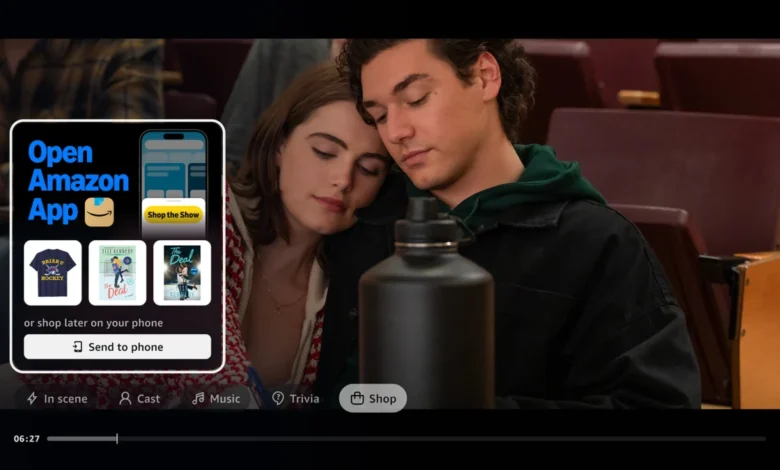
- Engagement: A viewer hits the "Up" button on their Fire TV remote to trigger the X-Ray overlay.
- Navigation: The user selects the new "Shop" tab, which automatically populates with items relevant to the current scene or the title as a whole.
- Completion: The viewer opens the Amazon Shopping app on their mobile device. The app’s synchronization capabilities instantly recognize the title being played on the TV and present a tailored feed of products, allowing for a seamless transition from the television screen to the smartphone’s purchase interface.
For mobile-only viewers, the experience is even more direct. Simply opening the Amazon Shopping app while a title is playing in the background or on another screen allows the app to surface a dedicated storefront for that specific piece of content, eliminating the need for manual text-based search queries.
Industry Implications and the "Creator Economy"
The move into shoppable content creates a new paradigm for content creators and brands alike. With over 8,000 titles now eligible for these features—ranging from Prime Originals to live sports broadcasts—the potential for brands to place products in front of highly engaged audiences is immense.
Industry analysts observe that this strategy mirrors the evolution of social commerce, where platforms like TikTok and Instagram have successfully converted views into sales. By bringing this model to long-form, high-production-value video, Amazon is challenging traditional linear television advertising models. Where traditional ads interrupt the viewer, these new tools are positioned as "value-add" experiences, potentially reducing ad-skipping behaviors by offering the viewer something they may actually want to acquire.
Official Stance and Market Reaction
While Amazon has not released specific internal performance metrics regarding the conversion rates of these new features, company spokespeople have consistently highlighted the focus on "viewer experience and relevance." The underlying logic is that by providing curated, relevant product suggestions, the shopping experience becomes an extension of the entertainment rather than a distraction from it.
Competitors have largely responded by doubling down on their own proprietary ad-tech. The consensus among digital media experts is that the "shoppable TV" category is no longer an experimental "nice-to-have" but a required pillar for any streaming service looking to bolster its Average Revenue Per User (ARPU).
Future Outlook: AI and Beyond
Looking ahead, the integration of generative AI is the next logical frontier. As Amazon continues to refine its "Lens" technology and its "Rufus" shopping assistant, it is likely that the "Shop the Scene" feature will move beyond static product matching. Future iterations could theoretically allow for "dynamic scene alteration," where specific products shown on screen are updated in real-time based on the viewer’s location, past purchase history, or current seasonal trends.
Furthermore, the expansion into live sports presents a massive opportunity. During high-traffic events, the ability to purchase team merchandise or sponsored goods in real-time as they appear on the sidelines or are worn by players could redefine sports marketing.
As the lines between digital storefronts and living room entertainment continue to blur, Amazon’s strategy signals a long-term commitment to the "Total Commerce" model. By capturing the consumer at the height of their interest—when they are actively engaged with the content they love—Amazon is betting that the future of retail is not in a store, but in the story itself. With over 600 titles currently supporting the advanced "Shop the Scene" features on iOS and Android in the U.S., the company is laying the groundwork for a retail environment that is as persistent and ubiquitous as the content we consume every day.