PrePass and Kodiak AI Team Up to Streamline Autonomous Truck Inspections and Weigh Station Bypass in Texas and Louisiana

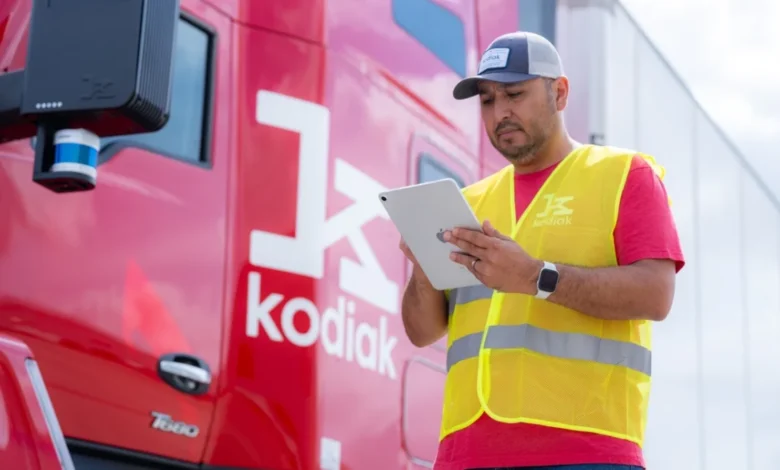
The landscape of American freight transportation is undergoing a profound structural evolution, and the infrastructure supporting it is rapidly adapting to keep pace. In a significant operational milestone for the autonomous vehicle sector, weigh station bypass platform PrePass and autonomous driving technology developer Kodiak AI announced a strategic collaboration designed to integrate safety inspection records directly into state roadside screening and enforcement networks. Operational rollout for the partnership officially commenced in Texas and Louisiana, providing a critical framework for driverless commercial vehicles navigating public highways.
As the commercial trucking industry moves closer to widespread driverless operations, regulatory bodies and technology developers face unique operational hurdles. Chief among them is the absence of a human driver during roadside encounters. Traditional commercial vehicle enforcement relies heavily on face-to-face interactions between human drivers and state troopers or safety inspectors. Without a driver in the cab to present documentation, answer questions, or respond to verbal commands, state agencies require alternative, highly secure digital pathways to verify compliance. The partnership between PrePass and Kodiak AI directly addresses this infrastructure gap, ensuring that automated trucks can seamlessly communicate their safety credentials to law enforcement without disrupting freight velocity.
Mechanics of the Integration: How the PrePass and Kodiak System Operates
The newly deployed system leverages the established PrePass platform, a digital network already widely utilized by commercial fleets across North America for automated weigh station bypass and electronic toll payment. Under the new protocol, compliance and safety inspection records generated by a Kodiak autonomous semi-truck are transmitted in real time to state enforcement personnel via the PrePass infrastructure.
Upon receiving the data, roadside enforcement officers review the digital records. If the data meets all regulatory standards, the system authorizes the vehicle to bypass the weigh station. However, the ultimate regulatory authority remains firmly in the hands of state officials. The framework allows enforcement personnel not only to verify credentials and grant clearance automatically but also to issue additional instructions or direct the vehicle to pull in for a physical inspection whenever deemed necessary.
This digital bridge effectively allows states to manage autonomous commercial vehicles within the exact same software architectures and administrative workflows they currently use for human-driven fleets, eliminating the need to construct costly, specialized roadside infrastructure specifically for driverless trucks.
Meeting Rigorous Standards: The CVSA Enhanced Inspection Program
At the core of this data-sharing initiative is the Commercial Vehicle Safety Alliance’s (CVSA) Enhanced Commercial Motor Vehicle Inspection Program. Specifically formulated for commercial motor vehicles equipped with automated driving systems (ADS), the program establishes a standardized protocol to ensure that driverless trucks meet stringent safety criteria before entering public roadways.
Under this protocol, a CVSA-trained inspector conducts a thorough examination to certify that an autonomous truck is completely free of mechanical or software-related safety defects prior to the commencement of a driverless run. Once successfully cleared, this official certification holds validity for up to 24 hours, granting the vehicle legal authorization to operate continuously within that designated timeframe.
The integration of CVSA-backed data into the PrePass ecosystem marks a maturation of previous industry trials. Kodiak previously piloted a similar technological framework in Texas in 2023 in collaboration with Drivewyze, a primary competitor to PrePass. By transitioning these pilot concepts into formal, active commercial deployments with PrePass in Texas and Louisiana, Kodiak is systematically standardizing how regulatory compliance is verified across multiple jurisdictions.
Corporate Milestones and the Push Toward 2026 Commercialization
The timing of this infrastructure rollout aligns closely with Kodiak’s broader corporate timeline. Kodiak (Nasdaq: KDK), which officially transitioned into a publicly traded entity in 2025 following a de-SPAC business combination with Ares Acquisition Corp. II, has maintained an aggressive schedule toward full commercialization.
During its first-quarter earnings disclosures in May, executive leadership reaffirmed the company’s strategic objective to launch fully driverless commercial trucking operations on public highways by the end of the year. This late-2026 target represents a pivotal inflection point for the company, shifting its business model from supervised autonomous testing to uncrewed, revenue-generating long-haul operations.
Industry observers note that while autonomous driving software developers have made remarkable strides in solving complex navigation, perception, and path-planning challenges, the true bottleneck to widespread adoption has shifted from software capabilities to regulatory integration and physical-digital infrastructure.
Chas Wurster, chief technology officer of PrePass, underscored this sentiment in the joint announcement, noting that the primary barrier to scaling driverless trucking no longer resides inside the vehicle itself, but rather in the surrounding ecosystem. By partnering with Kodiak, PrePass is helping to operationalize a scalable blueprint that successfully unites state regulators, roadside infrastructure, and trusted data networks.
Industry and Regulatory Reactions
The collaboration has drawn widespread praise from regulatory bodies and industry stakeholders alike, who view the initiative as a model for future public-private cooperation in transportation technology.
Collin Mooney, executive director of the CVSA, emphasized the necessity for enforcement methodologies to adapt alongside rapid technological advancements in the commercial sector. Mooney stated that the organization warmly welcomes the collaboration between PrePass and Kodiak AI, noting that it effectively supports the implementation of the CVSA’s Enhanced Commercial Motor Vehicle Inspection Program while upholding an uncompromising commitment to highway safety.
Don Burnette, founder and chief executive officer of Kodiak AI, echoed these thoughts, emphasizing that achieving scalable driverless service requires more than just advanced engineering; it demands a practical, real-world operational solution. According to Burnette, the ability to securely route critical compliance data to state enforcement agencies ensures that Kodiak can maintain rigorous safety adherence while scaling the deployment of the proprietary Kodiak Driver across the United States.
A Growing Footprint and Broad Commercial Partnerships
The initial deployment in Texas and Louisiana serves as a foundational launchpad, but the underlying architecture possesses the capacity for rapid national expansion. The PrePass bypass network currently spans 581 operational sites across North America, offering an expansive geographic footprint that can readily accommodate autonomous trucks as state legislatures and departments of transportation greenlight driverless operations.
Kodiak’s technology, known as the Kodiak Driver, is engineered for versatility, finding applications across long-haul freight transport, industrial logistics, and defense sectors. The company achieved a major milestone in 2024 by successfully deploying its autonomous driving technology directly into customer-owned semi-trucks, proving the hardware-agnostic nature of its software stack.
Kodiak’s impressive roster of publicly announced commercial partners and customers includes major names in logistics, manufacturing, and supply chain operations, such as Werner Enterprises, C.R. England, Roehl Transport, Atlas Energy Solutions, Bridgestone, General Dynamics Land Systems, and multinational retail giant IKEA. As these enterprises increasingly seek out efficiency gains through automation, the establishment of streamlined regulatory pathways via PrePass ensures that their freight can move uninterrupted across state lines.
Broader Economic and Logistical Implications
The integration of autonomous compliance systems into existing weigh station networks carries profound implications for the future of North American supply chains. Efficiency is the lifeblood of the freight sector, and traditional mandatory weigh station stops can introduce significant delays into transit schedules. For human-driven trucks, these stops are a standard part of compliance. For uncrewed autonomous trucks, unexpected delays or structural enforcement stops without human mediation could introduce severe logistical bottlenecks.
By utilizing the PrePass platform to automate the transmission of CVSA-verified inspection data, Texas and Louisiana are establishing a proactive template for how states can manage automated freight. This system preserves the integrity of state regulatory oversight while maximizing freight velocity, ensuring that automated supply chains can operate on continuous, 24-hour schedules without unnecessary human intervention.
As the industry looks toward the remainder of the decade, the success of the PrePass and Kodiak AI partnership will likely serve as a benchmark for other states looking to integrate autonomous vehicles into their commercial corridors. By bridging the gap between cutting-edge artificial intelligence and state-level administrative infrastructure, this collaboration lays the essential groundwork for a fully realized, nationwide autonomous trucking economy.