Michaels accelerates retail dominance with significant expansion of Knit & Sew Shop and national programming

The landscape of American specialty retail is undergoing a profound transformation as Michaels, the nation’s largest arts and crafts retailer, aggressively maneuvers to capture market share left vacant by the high-profile bankruptcies of its primary competitors. Following its strategic acquisition of Joann’s intellectual property and private-label assets in mid-2025, Michaels has officially moved into a new phase of its growth strategy, announcing a substantial expansion of its "Knit & Sew Shop" in-store concept. This expansion, timed to coincide with National Sewing Month in September 2026, signals a long-term commitment to integrating specialized textile crafts into the broader Michaels ecosystem.
The expansion is not merely a merchandising shift but a calculated response to the consolidation of the hobby and craft sector. By folding the brand identity and product lines of former competitors into its own floor plans, Michaels is attempting to consolidate the fragmented customer base that once relied on Joann and Party City for their specialized creative needs.
A Chronology of Strategic Consolidation
The path to this expansion began in the early months of 2024, a period characterized by significant instability in the specialty retail sector. In early 2024, Party City filed for Chapter 11 bankruptcy protection, creating an immediate gap in the market for party supplies and seasonal event goods. Shortly thereafter, in early 2025, Joann—the titan of the fabric and sewing industry—also succumbed to the pressures of a shifting consumer landscape and rising operational costs, filing for Chapter 11.
Michaels acted with unprecedented speed to capitalize on these disruptions. By June 2025, the company had finalized its acquisition of Joann’s intellectual property and private-label brands. This was not a passive acquisition; rather, it was the foundation for a complete store-reimagining process. By the fall of 2025, the first co-branded "Knit & Sew" shops began appearing within existing Michaels locations. Parallel to this, the retailer introduced "The Party Shop," a direct response to the void left by Party City, ensuring that Michaels remained a one-stop destination for both creative hobbyists and event planners.

Market Dynamics and Retail Strategy
The rationale behind this rapid expansion was articulated clearly by Michaels CEO David Boone during the ICR Conference in January 2026. Boone characterized the state of the market as one of "tremendous disruption," noting that the company’s primary objective was to act as the primary beneficiary of that volatility. By absorbing the customer loyalty previously directed toward Joann and Party City, Michaels has effectively insulated itself from the direct competition that had pressured its margins for years.
The current expansion of the Knit & Sew shops is a logical next step in this strategy. According to the company, fabric and sewing supplies are now available in the vast majority of their retail footprint. This accessibility is key to their strategy of "democratizing" crafts. By making high-quality materials more readily available in the same stores where customers already shop for general arts and crafts, Michaels is lowering the barrier to entry for novice creators.
Enhancing the In-Store Experience
Beyond the mere availability of inventory, Michaels is investing heavily in the "shop-in-shop" model. The current expansion includes dedicated zones for Big Twist yarns and DMC Embroidery Threads. These are not merely shelf displays; they are branded environments designed to provide an immersive experience for the shopper.
This shift is complemented by the debut of "next-gen" store formats. These redesigned locations feature:
- Revamped Department Layouts: Designed to improve navigation and cross-merchandising potential.
- Personalization Services: Integrating on-site assistance that mimics the boutique feel of smaller, independent craft shops.
- Exclusive Rewards Tech: A self-checkout queue reserved specifically for members of the Michaels rewards program, incentivizing data capture and long-term customer retention.
Official Perspectives on Growth
Stacey Shively, the chief merchandising officer at Michaels, emphasized that the expansion is rooted in consumer demand. "We’re investing in The Knit & Sew Shop to give today’s shoppers more of what they love, while making these crafts more approachable for anyone who wants to learn," Shively stated. This sentiment underscores a move away from the "big-box" sterility that characterized retail in the early 2010s, favoring instead a model that prioritizes community engagement and education.

By hosting events throughout September to celebrate National Sewing Month, Michaels is signaling that it intends to act as a community hub. By providing workshops and interactive demonstrations, the company is attempting to build the kind of brand loyalty that transcends price-point competition, turning casual shoppers into dedicated participants in the Michaels ecosystem.
Fact-Based Analysis of Market Implications
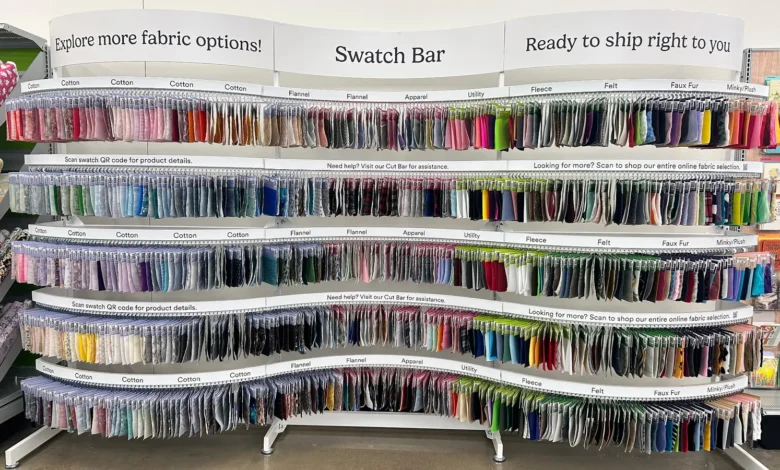
The expansion of the Knit & Sew shops has significant implications for the broader retail industry. Firstly, the "shop-in-shop" model is an effective hedge against the rise of e-commerce. While online retailers can offer lower prices, they struggle to replicate the tactile experience of selecting fabric swatches or testing the weight of different yarns—a process Michaels has formalized with its "Swatch Bar."
Secondly, the acquisition and integration of private labels from defunct competitors provide Michaels with a unique competitive moat. Because these labels (formerly associated with Joann) carry established brand equity, customers who were displaced by store closures are more likely to return to a familiar product line, even if the retailer has changed.
However, the strategy is not without risks. Managing a significantly expanded inventory and incorporating complex, specialized product categories requires operational precision. If the company fails to maintain the depth and breadth of the inventory that Joann previously provided, it could face pushback from the core sewing community, who are notoriously particular about material quality and color consistency.
Furthermore, the integration of physical stores requires significant capital expenditure. The move toward "next-gen" store formats and the roll-out of exclusive self-checkout systems suggest that Michaels is betting heavily on the long-term viability of the physical retail experience. As the company continues to open additional concept stores throughout the remainder of 2026, the retail sector will be watching closely to see if this consolidation model can translate into sustainable, long-term profitability.

The Path Forward: A New Retail Paradigm
As Michaels moves into the final quarter of 2026, the company stands in a unique position. It has effectively absorbed the market share of two major competitors, rebranded its store layouts to suit a more modern, convenience-oriented shopper, and solidified its status as the singular destination for the American craft market.
The success of the Knit & Sew expansion will likely serve as a barometer for the company’s future endeavors. If the integration of these specialized departments continues to yield high traffic and increased loyalty among rewards members, it is probable that Michaels will apply this same model to other niche creative categories. For now, the retailer remains focused on its immediate goal: ensuring that in the wake of significant industry turmoil, it remains the definitive leader in the craft space, providing both the tools and the inspiration for a new generation of makers. By blending the heritage of acquired brands with a modernized retail infrastructure, Michaels is not just filling a void; it is defining the future of the American hobbyist experience.