Beyond the Ring Light: How Expertise, Evolution, and Strategy Are Redefining the Creator Economy in Fashion and Beauty

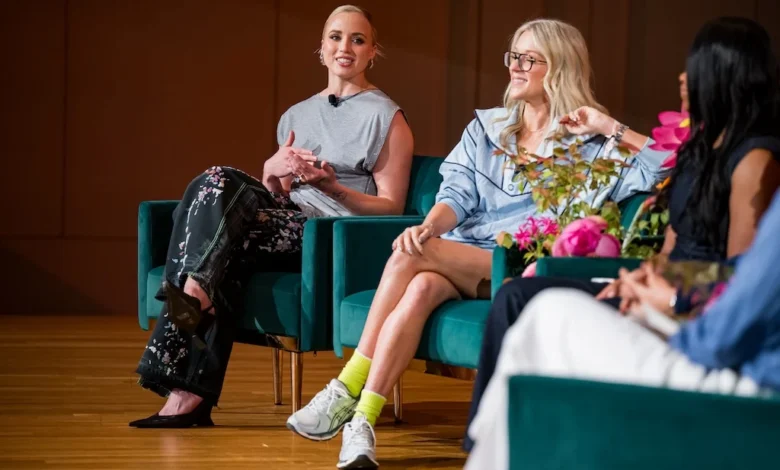
The modern fashion and beauty landscapes are undergoing a profound structural shift, moving away from hyper-saturated digital noise toward a premium on real-world credentials, deep consumer engagement, and cross-industry collaboration. At Glossy Pop NYC, industry veterans, top-tier content creators, professional athletes, and brand executives converged to dissect the rapidly maturing creator economy. As artificial intelligence, shifting social media algorithms, and market saturation fundamentally alter how brands allocate budgets, the core question facing the industry is no longer just who has the most followers, but who holds genuine authority and influence.
The event, which served as a focal point for discussions on digital marketing, product development, and brand partnerships, underscored a broader realization: the era of the generic internet personality reading a script is rapidly giving way to a more sophisticated ecosystem defined by strategic collaboration, specialized knowledge, and cross-vertical talent.
The Evolution of the Digital Creator: From Niche Beginnings to Lifestyle Brands
To understand where the creator economy is heading, one must look at how veteran digital publishers have adapted to changing consumer behaviors. Over the past decade, the barrier to entry for content creation has dropped dramatically. High-definition cameras, affordable lighting setups, and democratized editing software mean that millions of users can broadcast to a global audience. However, longevity in the space requires a transition from basic content generation to comprehensive brand-building.
Take, for example, content creator Abby Baffoe. Beginning her digital journey in 2019 primarily focused on hair tutorials, Baffoe has since broadened her scope to encompass a holistic lifestyle brand. Speaking on a panel at the event, she noted that while maintaining a strict niche is a common entry strategy, it ultimately proved restricting for her creative growth. Despite pivoting to a lifestyle-centric model, Baffoe has successfully sustained long-term relationships with legacy beauty giants like TRESemmé and L’Oréal. Her success illustrates a vital lesson for modern creators: authenticity relies on organic alignment rather than forced, episodic product placements. Brands are increasingly looking for partners whose everyday lives genuinely reflect the ethos of the products they endorse.
This evolution is not limited to digital-native creators. The intersection of sports marketing and the creator economy has introduced a powerful new demographic of brand ambassadors: professional athletes. Historically treated as walking billboards for athletic apparel, modern sports stars are demanding active roles in the creative and developmental processes of the brands they represent.
WNBA star Hailey Van Lith addressed this paradigm shift during the conference, explaining that her approach to brand partnerships goes far beyond a transactional endorsement. While some athletes view commercial partnerships merely as a financial supplement to their athletic careers, Van Lith emphasized her desire to collaborate directly on product development and visual storytelling. By influencing everything from the creative direction of a photo shoot to the nuances of product design, athletes are redefining themselves as multi-hyphenate creators who command distinct commercial pull outside of their respective sports.
The Tension Between Strict Brand Guidelines and Authenticity
Despite brands endlessly championing "authenticity" in marketing briefs, a fundamental tension persists between corporate control and creative freedom, particularly when navigating different tiers of the market.
Tessa Brooks, a prominent creator, dancer, and actress boasting a combined following of over 25 million users across Instagram and TikTok, highlighted the stark contrast between executing campaigns for mass-market brands versus luxury fashion houses. According to Brooks, mass-market and non-luxury campaigns frequently prioritize algorithmic virality and broad consumer appeal, allowing creators greater flexibility to experiment with trends and casual formats.
Conversely, high-fashion and luxury houses operate under a different set of rules. Because heritage luxury brands are fiercely protective of their brand equity, aesthetic, and global positioning, they typically enforce rigid content guidelines. Creators working with high-end houses must navigate strict ad reads, pre-approved styling, and tightly controlled messaging. This dynamic illustrates that as creators climb the socioeconomic ladder of brand partnerships, creative autonomy is frequently traded for association with elite prestige.
The Death of the Generic Influencer: Why Real-World Skills Reign Supreme
While digital metrics such as follower counts and engagement rates remain standard KPIs for marketing departments, industry veterans argue that the term "influencer" has been hollowed out of meaningful value.
Prominent fashion PR veteran Kelly Cutrone offered a blunt assessment of the current landscape, stating that the sheer democratization of platforms has diluted the definition of expertise. Cutrone pointed out that the low barrier to entry—obtaining a microphone, a ring light, and setting up an account—has created a sea of self-proclaimed experts and fashion critics who lack foundational industry experience.
"There is a difference between an opinion and experience," Cutrone emphasized, arguing that true authority cannot be synthesized through viral moments or algorithmic luck.
This sentiment was strongly reinforced by industry professionals who successfully transitioned from behind-the-scenes execution to front-facing entrepreneurship. Mary Phillips, renowned makeup artist and founder of the cosmetics brand M.ph by Mary Phillips, shared how her decades-long career provided the ultimate credibility when courting major retail partners.
When Phillips and her team pitched their business concept to Sephora prior to manufacturing any physical inventory, the major retailer immediately greenlit the partnership. According to Phillips, the decades of hands-on expertise, technical knowledge, and industry reputation she built over a lifetime outpaced any digital metrics. Sephora invested not in an algorithm, but in proven, real-world mastery.
Cutrone offered a sobering piece of advice for those looking to build lasting careers in fashion and beauty: understanding the industry requires recognizing that it is an immersive lifestyle rather than a digital hobby. Those who treat the sector as a quick path to digital notoriety often find themselves ill-equipped for the grueling realities of corporate partnerships, product development, and supply chain logistics.
Background Context and Market Dynamics of the Creator Economy
The discussions at Glossy Pop NYC take place against a backdrop of explosive financial growth tempered by severe market saturation. According to recent industry estimates, the global creator economy is valued in the hundreds of billions of dollars, with brand investments in influencer marketing continuing to scale upward year-over-year. However, return on investment (ROI) has become a primary pain point for Chief Marketing Officers (CMOs).
As consumers grow increasingly wary of overt advertising—frequently referred to as "ad fatigue"—brands are pivoting away from top-of-funnel reach metrics in favor of performance-driven influencer marketing, community building, and long-term ambassadorships. The market is witnessing a distinct polarization: at one end, micro-influencers and nano-influencers offer hyper-targeted, localized trust; at the other end, elite creators and industry veterans leverage multi-platform footprints to build direct-to-consumer (DTC) empires.
Furthermore, the integration of artificial intelligence into content creation and digital marketing is accelerating the commoditization of basic digital content. AI-generated avatars, automated copywriting, and programmatic campaign matching mean that easily replicable content holds less and less value for discerning consumers. Consequently, human expertise, tactile skills, and authentic personal history have emerged as the ultimate defensive moats for creators attempting to stand out in a crowded marketplace.
Broader Implications and Future Outlook
The trajectory of the fashion and beauty creator economy points toward increased professionalization and accountability. As brands mature in their digital strategies, the era of paying exorbitant fees for vanity metrics is drawing to a close.
Several key implications define the current transition:
- Rise of the Co-Creator: Brands are increasingly abandoning traditional endorsement models in favor of collaborative product development, leveraging the direct consumer feedback loops that creators and athletes possess.
- Credibility as Currency: In a market flooded by AI-generated media and low-barrier digital content, professional experience and accredited skills (such as those demonstrated by veteran makeup artists and established industry PR figures) are becoming mandatory prerequisites for long-term retail success.
- Polarization of Quality Control: Mass-market brands will continue to chase algorithmic virality and high-volume top-of-funnel engagement, while luxury houses will maintain hyper-curated, tightly controlled brand ecosystems that require elite creators to conform to strict legacy standards.
- Shift from Transactional to Holistic Partnerships: Creators who survive industry consolidation will be those who transcend single-campaign monetization to build sustainable, multi-vertical lifestyle businesses deeply integrated into the commercial supply chain.
Ultimately, the convergence of talent, brands, and executives at events like Glossy Pop NYC signals that the creator economy has graduated from its "Wild West" phase. Survival and success in the modern fashion and beauty sectors no longer depend on who can shout the loudest into a camera, but who possesses the knowledge, grit, and strategic vision to withstand a shifting economic landscape.
Related posts: