The Dark Forest of AI: Why World Model Pioneers Are Keeping Their Cards Close to Their Chest

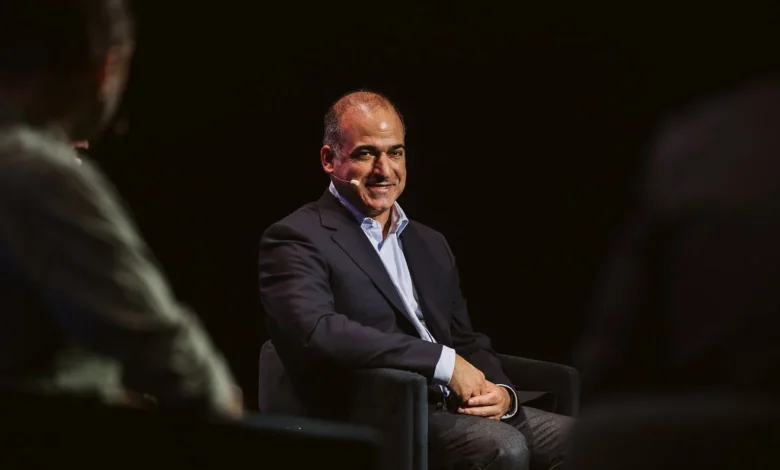
The artificial intelligence sector is currently fixated on a singular, enigmatic frontier: world models. This week, industry leaders, researchers, and venture capitalists gathered at the All-In conference, where panel discussions frequently gravitated toward the mechanical and theoretical limits of spatial intelligence. Among the most anticipated sessions was a deep-dive panel moderated to dissect the mysterious momentum behind world models—systems designed not merely to predict the next text token or pixel, but to understand the fundamental physics, geometry, and dynamics of the physical environment.
Despite commanding massive valuations and heavy inflows of venture capital, the leading entities in this space—most notably Yann LeCun’s AMI Labs and Fei-Fei Li’s World Labs—rank remarkably low on traditional monetization metrics. They are long-term scientific bets masquerading as startups, heavily funded yet stubbornly reticent about their immediate commercial trajectories. As the race to automate spatial intelligence accelerates, the industry finds itself operating under a shroud of intense secrecy, driven by competitive paranoia and the unique economic realities of contemporary AI research.
The Promise and Ambiguity of Spatial Intelligence
At their technical core, world models represent an ambitious leap beyond traditional large language models (LLMs). While text-based models process strings of words, world models attempt to simulate the rules of reality. Proponents argue this technology is the missing link required to bridge digital intelligence with physical utility. By mastering spatial intelligence, artificial intelligence could theoretically power a wide array of advanced applications, ranging from sophisticated humanoid robotics and interactive video generation to safer, more adaptive autonomous driving systems.
Yet, translating these theoretical capabilities into commercial products has proven exceptionally difficult to pin down. During the All-In conference panel, Michael Rabbat—a co-founder of AMI Labs and the company’s vice president of world models—faced direct inquiries regarding the firm’s commercial roadmap. His responses reflected the industry-wide penchant for opacity.
"We’ll talk about it when we’re ready to talk about it," Rabbat stated during the panel. Expanding on the timeline via subsequent correspondence, he clarified, "We’re still in a research and building phase, so we’re not talking publicly about any product plans or timeline."
While AMI Labs is less than a year old—making a defensive posture entirely standard for an early-stage deep-tech enterprise—this caginess is endemic to the entire world-modeling ecosystem. World Labs, another prominent player, has showcased its Marble platform, which generates explorable environments, media assets, and CGI effects. While impressive from a technical standpoint, demonstrations of this caliber often function more as capability proofs than clearly defined enterprise products.
The Downstream Impact on Supply Chains and Partners
The shroud of secrecy surrounding world model development extends far beyond the boardroom, rippling outward to affect foundational suppliers and data providers. Building models that understand physical dynamics requires vast, highly specialized datasets, forcing labs to rely on third-party data collection agencies.
On the sidelines of the All-In conference, Alex de Vigan, CEO of data supplier Physicl, addressed the operational friction caused by this information vacuum. De Vigan confirmed that his firm’s data has been actively utilized by major world-modeling labs, yet he remains entirely in the dark regarding the specific applications for which the data is being optimized.
"I wish they would tell us more," de Vigan noted. "We could build more useful data if we knew what they were working on."
This disconnect highlights a systemic inefficiency in the current AI supply chain. Data providers are expected to supply raw material for black-box architectures without understanding the target parameters, forcing them to cast a wide net rather than precision-engineer datasets for specific commercial outcomes.
The Versatility Paradox: A Blessing and a Curse
The underlying cause of this secrecy lies in the extreme versatility of world models. Unlike traditional software startups that target a single vertical from inception, a foundational world model can theoretically pivot across dozens of disparate industries.
A generalized spatial intelligence model capable of helping an autonomous vehicle navigate unpredictable pedestrian traffic can theoretically be repurposed to help a humanoid warehouse robot manipulate fragile packages, transform static video footage into fully interactive 3D simulations, or analyze complex biomedical imagery. AMI Labs, for instance, has already explored intersections with manufacturing, biomedicine, robotics, and clinical software through partnerships such as its collaboration with Nabia.
For venture-backed startups, this broad applicability is a tremendous fundraising asset. Investors are eager to back teams that address multiple multi-billion-dollar total addressable markets (TAMs) simultaneously. However, it creates a strategic dilemma: committing publicly to a single vertical too early could alienate investors, while keeping options open indefinitely prevents focused product development.
Furthermore, announcing a definitive product direction risks waking sleeping giants. If a leading world model lab were to publicly announce a breakthrough in humanoid robotics or next-generation cinematic rendering, it would immediately signal its strategic intentions to well-capitalized competitors, ranging from specialized neolabs to hyperscale giants like OpenAI and Anthropic.
The Dark Forest Strategy in Modern AI
In corporate strategy, this phenomenon increasingly mirrors what science fiction fans recognize as the "dark forest" hypothesis, popularized by author Cixin Liu in his acclaimed novel The Death’s End. In a dark forest ecosystem, every civilization is an armed hunter stalking through the trees like a ghost. Because other hunters may be hostile, the wisest survival strategy is to maintain absolute silence, leaving no trace that might attract the attention of a rival.
In the context of the current AI boom, abundant venture capital is a double-edged sword. While easy fundraising allows early-stage labs to conduct foundational research away from public scrutiny, it simultaneously ensures that potential competitors are equally well-financed. Once a clear, profitable path to market is illuminated by a pioneer, well-funded rivals can quickly pivot to occupy that same space.
Consequently, delaying the exposure of commercial intentions serves as a rational defense mechanism. By keeping quiet about specific applications, timelines, and product architectures, world-model pioneers hope to extend their technological lead before entering the fray of open market competition.
As the industry matures past its exploratory research phase, the pressure to demonstrate concrete commercial value will inevitably mount. Until then, the world model sector will likely remain shrouded in mystery—a high-stakes game of shadows where the most advanced intelligence systems in the world are built in profound silence.