Retail Giants Amazon and Walmart Redefine Digital Security as Fraud Moves Upstream Before the Point of Sale

The modern retail battlefield is no longer confined to the final seconds of a checkout page or the speed of last-mile delivery trucks. Instead, the most critical skirmish line in modern commerce now exists in the ambiguous space between a consumer receiving an unexpected digital notification and making the fateful decision to click a link, surrender credentials, or authorize a funds transfer. As e-commerce ecosystems sprawl across an increasingly complex matrix of smartphone applications, social commerce channels, voice-activated assistants, and nascent autonomous shopping agents, retail powerhouses are forced to rethink fraud prevention from the ground up.
In this high-stakes environment, industry titans Amazon and Walmart are pioneering fundamentally different yet converging strategies to combat sophisticated impersonation scams, account takeovers, and cross-channel fraud. While Amazon is pushing verification directly into the hands of consumers through conversational artificial intelligence, Walmart is weaving together disparate behavioral, transactional, and operational datasets to preemptively flag malicious activity. Together, these initiatives signal a profound industry-wide transition: security is no longer treated merely as a backend operational cost, but as an indispensable component of the consumer-facing trust infrastructure.
The Evolution of Amazon Alexa Verification for Shopping
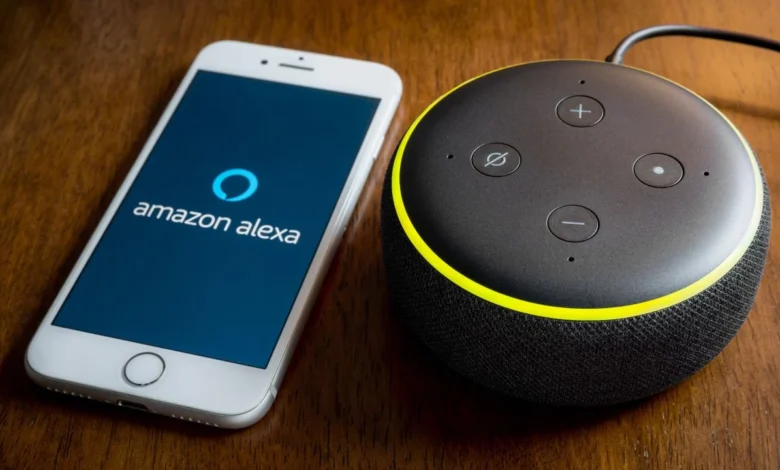
The escalation of retail security challenges prompted Amazon to introduce a transformative verification feature integrated directly into Alexa for Shopping. Designed specifically to assist United States consumers, the tool allows shoppers to query the voice assistant regarding the authenticity of suspicious emails, text messages, phone calls, or digital notifications purporting to originate from the retail giant.
Historically, consumer protection agencies have reported staggering losses stemming from business impersonation scams. According to data compiled by the Federal Trade Commission, consumers reported more than $660 million in direct losses to business impersonation schemes in a single recent calendar year, with federal regulators repeatedly emphasizing that official figures represent only a fraction of total illicit damages due to underreporting. Within Amazon’s own ecosystem, the scale of consumer confusion is immense: company records indicate that approximately 360,000 customers contact customer service operations annually simply to ask whether a specific communication is genuine.
The new Alexa capability seeks to dismantle this uncertainty at its inception. When a shopper encounters a dubious shipping notification, a fake refund notice, or an unauthorized customer service call, they can verbally describe the message to Alexa for Shopping. Consumers provide contextual details, including the purported sender, the time of arrival, and the exact textual content.
Behind the scenes, Amazon’s infrastructure evaluates the reported data against a repository of billions of historical communications. The system analyzes sender credentials, formatting nuances, linguistic patterns, and delivery timing before returning one of three definitive verdicts: the message genuinely originated from Amazon, the details definitively did not match Amazon records, or the system was unable to conclusively verify the communication.
Closing the Loop: Turning Consumer Inquiries Into Threat Intelligence
A particularly innovative element of Amazon’s new security architecture is its automated feedback loop. Every time a consumer queries Alexa regarding a suspicious message, the system routes the inquiry directly to Amazon’s dedicated customer protection and enforcement teams.
This process transforms everyday shoppers into an active intelligence-gathering network. By aggregating these real-time inquiries, Amazon can rapidly identify emerging phishing campaigns, map out evolving scam tactics, and pursue the malicious actors or organized criminal syndicates orchestrating the attacks.
This voice-activated feature complements Amazon’s existing multi-channel verification infrastructure. Globally, consumers can forward suspicious communications to a dedicated verification email address or submit details through an online portal, regardless of whether they hold an active Amazon account. These synchronized enforcement mechanisms form a formidable defense; Amazon’s 2025 Trustworthy Shopping Experience Report noted that the company’s broader technological and legal countermeasures successfully intercepted and prevented millions of suspected scam calls and fraudulent messages from ever reaching consumers.
Walmart’s Enterprise Strategy: Unifying Cross-Channel Fraud Signals
While Amazon focuses heavily on empowering the consumer at the point of communication, Walmart is addressing the threat matrix by synthesizing data across the entire customer journey. Rather than viewing fraud as an isolated financial event occurring exclusively during payment processing, Walmart’s enterprise strategy treats fraudulent behavior as a continuous pattern spanning identity verification, transaction decisions, returns abuse, and post-purchase customer interactions.
Recent recruitment initiatives within Walmart Global Tech and corporate leadership divisions highlight a heavy corporate investment in advanced machine learning models. These algorithms are designed to evaluate behavioral, transactional, and operational data simultaneously. By tearing down the organizational silos that historically separated payment fraud analysis from returns monitoring and customer service logs, Walmart aims to spot emerging threats much earlier in the retail funnel.
Furthermore, Walmart maintains a centralized consumer fraud alert center dedicated to educating the public on prevalent threats, including gift card scams, prepaid card fraud, cryptocurrency schemes, and unauthorized money transfers. To combat sophisticated recall scams—where bad actors exploit legitimate product recalls to steal sensitive consumer data—Walmart actively encourages shoppers to forward suspicious screenshots to dedicated abuse-reporting channels.
The Advent of Agentic Retail and the Threat of Multi-Interface Impersonation
The strategic pivot by both Amazon and Walmart is fundamentally driven by the structural evolution of digital commerce. As the industry transitions further into the era of agentic retail—characterized by artificial intelligence shopping assistants, conversational interfaces, and autonomous purchasing agents—the surface area available for criminal exploitation expands exponentially.
Traditional retail fraud prevention was largely transactional. Historically, merchants relied on post-entry security layers: scoring payments, monitoring chargeback rates, reviewing accounts, and investigating suspicious return requests only after a consumer had already entered the conversion funnel. Impersonation scams completely shatter this traditional model because the point of attack occurs long before the victim ever visits an official retail website or application.
Every fraudulent shipping update, forged return confirmation, or counterfeit customer service inquiry forces the consumer to pause and question the safety of the transaction. In an omnichannel marketplace where commerce transcends traditional web browsers and mobile apps to inhabit messaging platforms, voice interfaces, and autonomous devices, consumer hesitation directly threatens conversion rates and brand loyalty. The more operational interfaces a retailer utilizes to engage its customer base, the more digital vectors malicious actors possess to mimic trusted brands.
Broader Industry Implications and the Commodification of Trust
The escalating race between Amazon and Walmart to secure the digital shopping journey underscores a profound philosophical shift in modern retail economics: trust is rapidly transforming from an intangible corporate value into a core retail product feature.
As digital fraud grows increasingly sophisticated, driven by generative artificial intelligence and automated social engineering tools, the retailers that successfully minimize consumer anxiety will capture disproportionate market share. Amazon’s strategy seeks to commodify security by embedding verification directly into conversational artificial intelligence, turning a defensive necessity into a seamless, user-friendly service. Conversely, Walmart’s approach relies on strengthening the invisible administrative machinery behind transaction decisions, linking disparate operational signals to build an impenetrable corporate shield.
Ultimately, both corporate titans are arriving at the same strategic destination. The competitive advantage in modern retail no longer belongs solely to the merchant with the lowest prices or the fastest delivery logistics, but to the ecosystem that can successfully eliminate the moment of consumer doubt before a single penny changes hands.
Related posts: