The digital advertising landscape continues to evolve rapidly, placing a premium on storytelling and audience retention. Among the myriad tools available to modern marketers, Google Ads video ad sequence campaigns stand out as a uniquely powerful mechanism for delivering multi-part narratives to individual viewers in a predetermined order. While standard YouTube ad formats excel at broad reach and immediate impact, sequence campaigns offer a sophisticated framework designed to guide potential customers through a deliberate journey from initial brand discovery to final conversion.
Understanding the mechanics, strategic setup, and analytical evaluation of these campaigns is critical for brands seeking to maximize their return on investment within the competitive video ecosystem. Unlike other YouTube campaign types that may utilize multiple videos without enforcing a strict viewing order, sequence campaigns guarantee that the creative elements unfold sequentially. This structural rigidity allows advertisers to build compelling narratives, gradually introducing products, addressing consumer pain points, and culminating in targeted calls to action.
Strategic Foundations and Campaign Setup Architecture
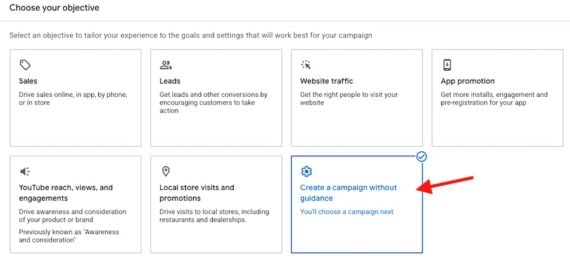
Building a successful video ad sequence campaign requires navigating specific architectural choices within the Google Ads platform. Advertisers cannot access the necessary sequence options by selecting standard overarching objectives such as "YouTube reach, views, and engagements." Instead, the campaign creation process must begin by choosing the "Create a campaign without guidance" pathway, followed by the selection of the "Video" campaign type. From there, marketers can designate the specific "Ad sequence" subtype to unlock the appropriate campaign settings.

Once the foundational campaign structure is established, advertisers encounter distinct parameters regarding bidding and frequency capping. Video sequence campaigns operate exclusively on a "target CPM" (cost-per-mille) bidding model, requiring marketers to focus on impressions and budgetary efficiency over direct cost-per-view metrics. Furthermore, mandatory frequency capping must be implemented to regulate how frequently an individual viewer encounters the sequence. Marketers are restricted to choosing a capping frequency of either once every 7 days or once every 30 days, a safeguard designed to prevent ad fatigue and maintain a positive user experience across the platform.
Constructing the Narrative: Sequence Setup and Ad Groups
Within a video ad sequence campaign, each individual step corresponds to a dedicated ad group. A four-step sequence, for example, is built upon four distinct ad groups, each housing specific creative assets, bidding parameters, and targeting criteria. The true power of the format lies in the management of step transitions. For the initial video, no transition criteria are necessary; however, for the second video and all subsequent clips, advertisers must establish precise trigger conditions based on three available interactions: "impression," "view," or "skip."
These conditional transitions empower marketers to tailor the narrative dynamically based on audience behavior. For instance, an advertiser can configure the second video to display exclusively to users who received an impression of the first video, or conversely, restrict the subsequent clip to users who actively watched the second video to completion. This level of conditional logic ensures that messaging remains relevant to the consumer’s current stage in the funnel.
To streamline the asset creation process, marketers frequently utilize native platform tools such as Google’s Asset Studio. The platform’s "Trim videos" functionality enables teams to efficiently shorten existing long-form video assets, adapting them into concise, impactful clips suitable for sequential delivery across various formats and durations. While Asset Studio also offers artificial intelligence video generation capabilities, many seasoned media buyers recommend exercising caution with AI-generated sequences, preferring human-crafted narratives that maintain authenticity and emotional resonance.
Practical Application: A Case Study in Robotic Lawn Care
To visualize the practical deployment of a video ad sequence, consider the strategic approach a brand like Yarbo, a manufacturer of advanced robotic lawn mowers, might employ. Suppose the marketing team elects to utilize an "Introduce and reinforce" sequence template. The campaign could begin with a comprehensive product demonstration video, strategically edited and trimmed into two distinct components using platform tools.
The first video in the sequence might feature the headline "Save Time" paired with a "Learn more" call to action that directs interested viewers to the company’s main website. This initial touchpoint is designed to establish baseline product awareness and educate the consumer on the core utility of the robotic system. Following this introductory phase, the second video introduces a targeted promotional angle, featuring a headline such as "Labor Day Sale" alongside a direct "Buy now" call to action linked to the primary product purchase page. By structuring the campaign this way, the brand effectively transitions the consumer from cognitive awareness to transactional intent.
Alternatively, marketing teams can leverage the same demonstration assets to execute a four-part "Engage and differentiate" sequence consisting of concise, 15-second clips. Each clip highlights a unique product feature—such as obstacle avoidance, battery life, modular attachment capabilities, or weather resistance—allowing the brand to systematically address potential consumer hesitations while reinforcing overall value proposition through targeted headline and landing page testing.
Interpreting Performance Metrics and Campaign Optimization
Evaluating the success of a video ad sequence campaign requires a shift in analytical perspective. While traditional lower-funnel metrics such as direct clicks and final conversions remain vital for tracking bottom-line ROI, the primary objective of a sequence campaign is demand generation and deep audience engagement.

Google provides comprehensive reporting metrics tailored to sequential video delivery, including unique reach, average impression frequency per user, and completion rates for each step in the sequence. Monitoring these indicators allows media buyers to diagnose structural or creative friction within the funnel. For example, if performance data reveals that a significant drop-off occurs between the first and second videos—such that only 10% of viewers reach the final video—the creative team must evaluate the pacing, messaging, or transition logic of the preceding asset.
Ultimately, video ad sequence campaigns represent a sophisticated evolution in digital video marketing. By combining rigorous platform parameters, conditional narrative transitions, and data-driven performance analysis, brands can cut through the noise of traditional media environments, delivering structured, memorable stories that resonate deeply with targeted consumer segments and drive sustainable long-term growth.
Related posts: