SpaceX Navigates Complex Path with Starship’s 13th Test Flight: Starlink V3 Deployment Success Amidst Super Heavy Booster Failure

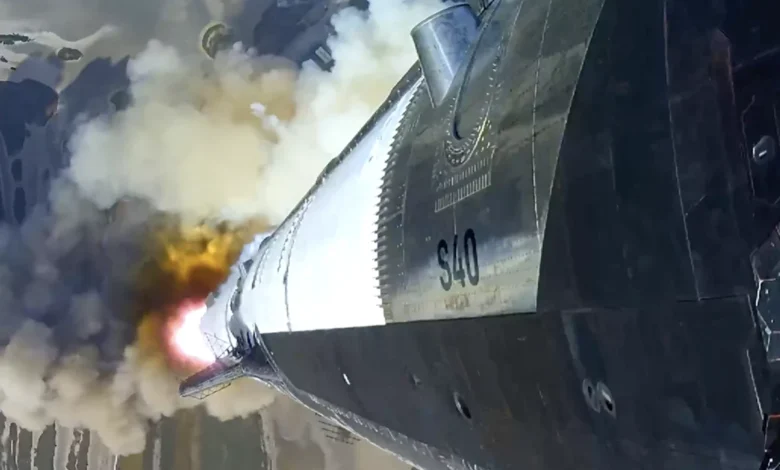
SpaceX successfully deployed its first third-generation Starlink satellites on Friday, marking a significant step forward for its burgeoning satellite internet constellation, even as the company grappled with another setback involving the Super Heavy booster during the 13th test flight of its colossal Starship system. The mission, utilizing an upgraded version of the prototype Starship, saw the upper stage flawlessly deliver its payload, but the accompanying Super Heavy booster experienced a failure during its planned simulated landing attempt in the Gulf of Mexico, highlighting the persistent challenges in developing a fully reusable super-heavy-lift launch vehicle.
A Mission of Contrasts: Incremental Progress and Persistent Hurdles
The recent flight represented a crucial milestone for SpaceX, particularly in the context of its ambitious Starlink project, which is currently the only profitable segment of the company’s diverse operations. The successful deployment of the more capable V3 Starlink satellites promises to significantly enhance the network’s capacity and economic viability. SpaceX has indicated that launching 60 of these advanced satellites on Starship could yield a potential "twenty-fold increase" in downlink capacity deployed compared to a single Falcon 9 mission, underscoring Starship’s transformative potential for Starlink’s expansion and global reach.
However, the jubilation over the upper stage’s performance was tempered by the Super Heavy booster’s inability to execute a successful simulated landing. This marks the second consecutive occasion on a V3 Starship flight where the Super Heavy booster has encountered issues during critical flight phases. During the inaugural Starship V3 flight in May, the booster experienced a failure shortly after separating from the upper stage. In Friday’s incident, while the booster progressed further into its flight profile, it failed to properly ignite all engines required for its simulated landing burn, culminating in a faster-than-expected impact with the water and subsequent explosion. This pattern of booster failures underscores the formidable engineering challenges inherent in achieving full reusability for a vehicle of Starship’s unprecedented scale.
Chronology of a Pivotal Launch Attempt
The journey to Friday’s successful, albeit mixed-result, launch was not without its own preceding drama. Just over a week prior, an earlier attempt to conduct what would have been the 13th Starship launch was abruptly aborted immediately after engine ignition. This abort was attributed to a number of rocket engine failures, prompting a swift response from SpaceX engineers. In line with its iterative "fly, fail, fix" development philosophy, SpaceX promptly replaced six engines on the Super Heavy booster, demonstrating its commitment to rapid prototyping and real-world testing over lengthy, ground-based simulations.
On Friday, the revised launch sequence unfolded with meticulous precision from SpaceX’s Starbase facility in Boca Chica, Texas. Following a thunderous liftoff, the Starship system soared skyward, propelled by the immense thrust of the Super Heavy’s 33 Raptor engines, generating over 16 million pounds of thrust. The critical stage separation, where the Super Heavy booster detaches from the Starship upper stage, appeared nominal. The upper stage, now designated as "Ship," continued its ascent towards its designated trajectory for satellite deployment.
Meanwhile, the Super Heavy booster began its descent back towards the Gulf of Mexico, initiating maneuvers for its simulated landing. However, telemetry data and visual observations indicated that not all engines fired as planned for the crucial landing burn. This deficiency in thrust control meant the booster could not adequately decelerate or orient itself for a controlled splashdown, leading to its destructive impact. The precise cause of the engine non-ignition or failure to sustain burn will be a key focus of SpaceX’s post-flight analysis, drawing parallels to previous booster landing challenges faced during Falcon 9 development.
Concurrently, the Starship upper stage proceeded with its primary mission. Approximately 20 minutes after reaching its deployment altitude – though not yet a stable Earth orbit, as Starship is still in its suborbital testing phase – the V3 Starlink satellites were successfully released. SpaceX confirmed that it was able to establish communication with all the deployed satellites while they were in space, validating their functionality and design. These satellites, after completing their brief test window, were designed to deorbit and burn up harmlessly in the atmosphere, as the Starship itself was not yet capable of inserting them into a stable orbital trajectory.
Following the satellite deployment, the Ship embarked on its most successful demonstration to date. Unlike the May V3 launch where the upper stage lost an engine during its flight, Friday’s Ship encountered no issues during its journey. It successfully navigated the harsh forces of atmospheric reentry, a critical test for the integrity of its heat shield and structural design. Roughly an hour after liftoff, the Ship performed a simulated landing in the Indian Ocean. Notably, and departing from previous test missions, the Ship did not explode upon tipping over into the water. Instead, it remained largely intact, floating on the surface. This unprecedented survival allowed SpaceX to deploy a drone for close-up examination of the heat shield tiles on its belly, gathering invaluable data for future design iterations and reusability efforts, particularly for eventual orbital and deep-space missions.
The Super Heavy Conundrum: A Hurdle to Full Reusability
The recurring issues with the Super Heavy booster present a significant engineering and economic challenge for SpaceX. The booster, powered by an array of powerful Raptor engines, is designed for rapid and precise vertical landing, enabling its reuse, a cornerstone of SpaceX’s long-term vision for dramatically reducing launch costs. The "fly, fail, fix" methodology, while effective for iterative development, underscores the inherent difficulty in perfecting such a complex system. Each failure provides crucial data points, but also highlights the intricate dance of engine performance, thrust vectoring, and flight control algorithms required for successful recovery.
The May incident, where the booster failed during separation, pointed to issues in the staging process or immediate post-separation maneuvers. The current failure, occurring during the landing burn, suggests challenges in re-igniting and throttling multiple engines simultaneously with the precision needed for a controlled descent. Achieving full reusability for both stages of Starship is not merely an engineering aspiration; it is fundamental to the economic model underpinning SpaceX’s ambitions. The company’s S-1 filing, submitted during its recent public offering, explicitly stated that without a fully-reusable Starship, progress on Starlink "would be at a slower pace and higher cost." This reiterates that every booster failure represents a financial expenditure not just in the lost hardware, but in the delayed realization of Starship’s full economic potential and the company’s long-term profitability.
Starship’s Upper Stage: Glimmers of Promise and Innovation
In stark contrast to the booster’s struggles, the Starship upper stage, or "Ship," demonstrated remarkable progress. Its ability to successfully deploy the V3 Starlink satellites and then endure reentry to perform a controlled, albeit simulated, splashdown without destruction marks a significant achievement. The survival of the Ship, allowing for post-flight inspection of its heat shield, provides an unprecedented opportunity for engineers to directly assess the efficacy of its thermal protection system. This data is vital for validating aerodynamic models, identifying wear and tear, and refining designs for future operational flights, particularly those involving crewed missions or sensitive cargo to lunar or Martian destinations. The Ship’s improved performance compared to the May flight, where it lost an engine, suggests that SpaceX is effectively addressing identified issues in its upper stage design and operational procedures, showcasing the tangible benefits of its rapid development cycle.
The Starlink Imperative: Fueling SpaceX’s Growth and Global Connectivity
The deployment of third-generation Starlink satellites is a critical strategic move for SpaceX. Starlink, with its rapidly expanding constellation of over 7,000 operational satellites, aims to provide high-speed, low-latency broadband internet globally, particularly to underserved and remote areas where traditional terrestrial infrastructure is lacking or uneconomical. The V3 satellites are designed to be significantly more capable than their predecessors, likely incorporating advanced antenna technology, enhanced processing power, and improved inter-satellite laser links, which are crucial for reducing latency and increasing overall network throughput.
The "twenty-fold increase" in downlink capacity per Starship launch is not just an impressive statistic; it is an economic necessity for achieving global coverage and meeting subscriber demand. Building out a global broadband network requires a colossal number of satellites. Starship, with its unprecedented payload capacity (projected to be over 100-150 metric tons to Low Earth Orbit, compared to Falcon 9’s ~22 metric tons), is envisioned as the primary workhorse for rapidly deploying Starlink’s future generations. The ability to launch more capable satellites in larger batches accelerates the network’s deployment, improves service quality, and ultimately enhances Starlink’s competitive position in the burgeoning satellite internet market. This accelerated deployment, however, is heavily contingent on Starship achieving full reusability, as the current model of expending the Super Heavy booster adds substantial cost to each mission, potentially eroding the economic advantages of increased payload capacity.
Financial Market Repercussions and IPO Context
The recent Starship test flight unfolded against the backdrop of SpaceX’s significant entry into the public market. The company went public in June through what was described as "the largest IPO in history," a landmark event for the aerospace sector and the broader financial landscape. The IPO provided an opportunity for investors to directly participate in SpaceX’s audacious endeavors, including Starship development, Starlink expansion, and lucrative contracts with NASA. The initial public offering was a testament to investor confidence in SpaceX’s long-term vision and technological prowess.
However, the "fly, fail, fix" approach, while crucial for rapid engineering progress, can present volatility in the public market. Following the aborted launch attempt a week prior, SpaceX’s stock experienced a decline. This dip contributed to a larger downward trend observed since its IPO, with shares falling from a peak of over $200 per share to $115 at the close of trading on Friday. The news of the Super Heavy booster failure further impacted investor sentiment, with SpaceX shares falling an additional 2% in after-hours trading, before paring some of those losses. This market reaction underscores the financial community’s close scrutiny of Starship’s development progress, as its success is deeply intertwined with SpaceX’s long-term profitability and valuation. While investors are generally aware of the inherent risks in aerospace development, sustained setbacks can test their patience and confidence, highlighting the delicate balance between rapid innovation and market stability.
Broader Implications: The Vision for Deep Space and Beyond
Starship is not merely a launch vehicle for Starlink satellites; it is the cornerstone of SpaceX’s audacious vision for humanity’s future in space. Envisioned as a fully reusable transportation system, Starship is designed to carry both cargo and humans to the Moon, Mars, and potentially beyond. It is central to NASA’s Artemis program, with Starship selected as the Human Landing System (HLS) to return astronauts to the lunar surface. The successful performance of the upper stage, particularly its reentry and controlled splashdown, is directly relevant to these future deep-space missions, validating critical technologies needed for returning from extraterrestrial environments, which is a prerequisite for any sustained lunar or Martian presence.
The challenges encountered with the Super Heavy booster, while frustrating, are an expected part of developing a system of this unprecedented scale and complexity. Traditional aerospace programs often spend decades in ground testing before a single flight. SpaceX’s accelerated, iterative approach aims to compress this timeline, accepting the risk of flight failures as learning opportunities. This philosophy, championed by Elon Musk, posits that real-world flight data is invaluable and far surpasses the fidelity of simulations, despite the public nature of these test failures. The Federal Aviation Administration (FAA) oversees these launches, requiring detailed incident investigations and corrective actions before subsequent flights, ensuring public safety and environmental compliance.
The Path Forward: Reusability as the Ultimate Goal
The imperative for SpaceX remains the achievement of full and rapid reusability for both stages of Starship. This is the lynchpin for truly revolutionary space access, enabling costs per launch to plummet to an unprecedented degree, potentially to mere millions of dollars per flight once fully operational. The ability to quickly refuel and relaunch both the booster and the Ship is critical for establishing a sustained human presence on other planets and for making space travel economically viable for a wider range of applications, from satellite deployment to space tourism.
Each test flight, despite its mixed results, provides invaluable data that fuels the next iteration of design and operational improvements. The current trajectory suggests a continuous cycle of launches, data analysis, modifications, and re-launches, with SpaceX pushing the boundaries of engineering and manufacturing to achieve its ambitious goals. While the path is demonstrably challenging, the incremental successes, particularly with the Starship upper stage and the deployment of advanced Starlink satellites, offer compelling evidence of the system’s burgeoning potential and the company’s unwavering commitment to its long-term vision for transforming space exploration and access. Industry analysts continue to watch closely, balancing the enormous potential of Starship against the engineering realities of its development, as SpaceX navigates these complex waters, balancing the ambition of its goals with the harsh realities of rocket science.
With assistance from Tim Fernholz.
When you purchase through links in our articles, we may earn a small commission. This doesn’t affect our editorial independence.
Sean O’Kane is a reporter who has spent a decade covering the rapidly-evolving business and technology of the transportation industry, including Tesla and the many startups chasing Elon Musk. Most recently, he was a reporter at Bloomberg News where he helped break stories about some of the most notorious EV SPAC flops. He previously worked at The Verge, where he also covered consumer technology, hosted many short- and long-form videos, performed product and editorial photography, and once nearly passed out in a Red Bull Air Race plane.
You can contact or verify outreach from Sean by emailing [email protected] or via encrypted message at okane.01 on Signal.
Related posts: