TechCrunch Disrupt 2026 to Unveil Groundbreaking Smart Money Stage, Charting the Future of Finance Through Fintech, Payments, and AI Convergence.

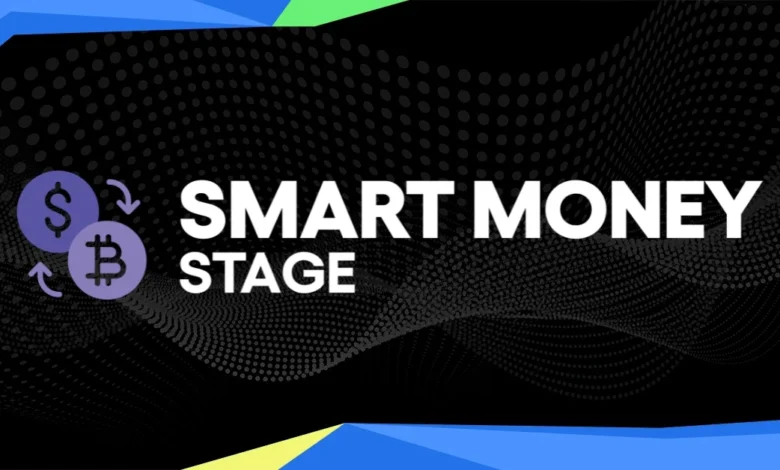
The landscape of global finance is undergoing a profound transformation, evolving far beyond traditional cash and bank accounts into a complex, interconnected ecosystem driven by technological innovation. Recognizing this monumental shift, TechCrunch Disrupt 2026 is set to debut its highly anticipated Smart Money Stage, a dedicated forum designed to explore the collision of fintech, payments, and artificial intelligence. From October 13th to 15th, at San Francisco’s iconic Moscone Center, this new stage will convene an unparalleled assembly of industry leaders, innovators, and visionaries from companies such as Circle, Robinhood, American Express, Plaid, and Airwallex, to dissect the intricate forces reshaping how money moves, is managed, and is perceived in the 21st century.
TechCrunch Disrupt has long stood as a preeminent global platform for showcasing emerging technologies, fostering startup ecosystems, and identifying the next wave of innovation. For over a decade, it has been the launchpad for countless groundbreaking companies and a critical nexus for investors, entrepreneurs, and tech enthusiasts. The introduction of the Smart Money Stage for Disrupt 2026 marks a strategic and timely expansion of the conference’s thematic scope, underscoring the undeniable centrality of financial technology in driving economic progress and societal change. This move reflects a broader industry recognition that fintech is no longer a niche sector but a foundational element of the global economy, profoundly impacting everything from individual consumer behavior to multinational corporate operations.
The decision to dedicate an entire stage to "Smart Money" is a testament to the rapid pace of change within finance. Historically, financial innovation moved at a glacial pace, dictated by legacy infrastructure and stringent regulatory frameworks. However, the last decade has witnessed an unprecedented acceleration, fueled by digital native generations, the ubiquity of smartphones, advancements in data science, and the emergence of blockchain technology. This convergence has created an imperative for a dedicated space where these complex, often intertwined, topics can be thoroughly examined, debated, and projected into the future. Attendees will gain critical insights into how stablecoins and instant payment networks are redefining transactional efficiency, how AI agents are increasingly influencing—and being entrusted with—financial decisions, and the formidable challenges and opportunities involved in constructing regulated financial infrastructure fit for a truly globalized market. The stage aims to provide actionable intelligence and foster discussions that move beyond superficial trends, offering a deep dive into the technical, operational, and regulatory intricacies defining the future of finance.
Thematic Deep Dive: The Evolution of Money and Its Catalysts
The concept of money has undergone numerous metamorphoses throughout history, from bartering and commodity money to metallic coins, fiat currency, and now, its increasingly digital and programmable forms. The current era is characterized by a rapid shift towards a "smart money" paradigm, where transactions are not just exchanges of value but also carriers of data, capable of executing complex logic, and often settled in real-time across borders. This evolution is driven by several key factors:
- Technological Advancements: The proliferation of blockchain technology, distributed ledger systems, advanced cryptography, and artificial intelligence has provided the foundational layers for new financial products and services. Stablecoins, for instance, leverage blockchain’s immutability and transparency while aiming to mitigate the volatility often associated with other cryptocurrencies by pegging their value to stable assets like the US dollar.
- Changing Consumer Behavior: Digital natives and a globally connected populace demand instant, seamless, and transparent financial services. They expect to manage their finances, invest, and make payments with the same ease and speed as they stream content or communicate online. This expectation has pressured traditional financial institutions to innovate and created fertile ground for fintech startups.
- Globalization and Cross-Border Commerce: The rise of e-commerce and interconnected global supply chains necessitates financial infrastructure that can facilitate fast, cost-effective, and compliant cross-border transactions. Traditional correspondent banking networks, often slow and expensive, are being challenged by innovative payment rails and digital currencies.
- Regulatory Adaptation (and Lag): Regulators worldwide are grappling with how to oversee these rapidly evolving financial instruments and technologies. While some jurisdictions are adopting forward-looking frameworks (e.g., for digital assets or open banking), others are still developing their approaches, creating a complex and often fragmented global regulatory environment.
The Smart Money Stage at Disrupt 2026 is poised to dissect these drivers, offering a comprehensive overview of the current state and future trajectory of finance.
Key Sessions and Their Profound Implications
The Smart Money Stage’s programming is meticulously curated to address the most pressing questions and emerging trends in fintech. Each session features leading experts who are at the forefront of these transformations.
The Future of Money Movement: Stablecoins, Instant Payments & What’s Next
This pivotal session will delve into the revolutionary impact of stablecoins and instant payment systems on the global financial architecture. Stablecoins, with a global market capitalization that has seen exponential growth in recent years, offer a bridge between the traditional financial system and the burgeoning world of digital assets. They promise faster, cheaper, and more transparent cross-border payments, reducing reliance on costly intermediaries. The session will explore how these new digital payment rails compare against legacy banking infrastructure, which often involves multiple layers of banks and takes days to settle international transactions.
Furthermore, the discussion will encompass the rise of instant payment networks, such as the Federal Reserve’s FedNow Service in the United States, Europe’s SEPA Instant Credit Transfer, and India’s Unified Payments Interface (UPI). These systems enable real-time gross settlement (RTGS) for retail payments, profoundly altering consumer and business expectations for transaction speed and finality. The panelists, including Nikhil Chandhok, Chief Product & Technology Officer at Circle (a major issuer of USDC, one of the leading stablecoins), Rodney Robinson, Co-founder and CEO of TabaPay, Inc. (a prominent payments processor), and Lotti Siniscalco, General Partner at Emergence (a venture capital firm with significant fintech investments), are uniquely positioned to illuminate where these new systems are gaining traction and the significant regulatory and market challenges that persist. Discussions are expected to cover interoperability, cybersecurity, and the evolving role of central banks in a world of digital currencies. The implications for financial inclusion, particularly in developing economies, where access to traditional banking services is limited, will also likely be a critical talking point.
Winning the Modern Financial Consumer
The financial habits and expectations of consumers have dramatically shifted, driven by technological fluency and a demand for personalized, on-demand services. This session will explore how fintech companies are adapting to and shaping these evolving consumer preferences. Robinhood, a company that has famously disrupted the brokerage industry, serves as a prime example. With a market capitalization that soared to over $90 billion at its peak and remains significant, Robinhood has successfully expanded from a commission-free trading app to a comprehensive financial platform encompassing investing, banking services, credit products, cryptocurrency trading, and even prediction markets.
Abhishek Fatehpuria, Head of Product at Robinhood, will share invaluable insights into how technology and changing consumer expectations are fundamentally reshaping financial services. His presentation is expected to cover strategies for building trusted financial products that can withstand immense growth and regulatory scrutiny, while maintaining an intuitive user experience. The discussion will likely touch upon the importance of gamification, social features, and personalized financial advice in engaging modern consumers. Furthermore, the session will address the delicate balance between innovation and regulatory compliance, particularly as companies like Robinhood venture into more traditional banking and credit domains, which are subject to rigorous oversight. The ability to scale infrastructure, manage risk, and maintain customer trust during periods of rapid expansion will be central themes.
AI, Trust & Verification in Financial Services
Artificial intelligence is rapidly moving beyond its initial applications in data analysis and content generation to becoming an active agent in financial workflows, capable of executing complex decisions. This profound shift necessitates a re-evaluation of trust, oversight, and security within financial services. The session will bring together experts to explore how AI agents are transforming processes ranging from loan origination and risk assessment to fraud detection and customer service.
Panelists, including Hannah Bozian, VP, Agentic Partnerships & Strategy at American Express; Pedro Sanzovo, Head of Fraud and Identity at Plaid; and Victoria Zuo, Partner at QED Investors, will delve into critical questions surrounding transparency and human judgment in an AI-powered world. As AI systems become more autonomous, ensuring their decisions are fair, unbiased, and explainable becomes paramount. The discussion will likely address the "black box" problem of certain AI models and the imperative for robust governance frameworks. Specific areas of focus will include how financial companies are currently approaching privacy (e.g., anonymization techniques, secure multi-party computation), sophisticated fraud prevention (e.g., real-time anomaly detection, behavioral biometrics), and identity verification (e.g., AI-powered KYC/AML solutions, biometric authentication). The ethical implications of AI, potential for algorithmic bias, and the need for human-in-the-loop oversight will also be central to this crucial conversation, as the industry navigates the complexities of delegating financial authority to intelligent machines.
Building the Infrastructure for Global Commerce
Traditional financial systems, often characterized by their nationalistic focus and reliance on outdated SWIFT messaging protocols, were never designed for the speed, scale, and interconnectedness of today’s global businesses. This session will highlight companies that are building the next generation of financial infrastructure to support seamless cross-border commerce. Airwallex, an exemplar in this space, having achieved a valuation of $11 billion from its investors, is developing an "AI-native financial operating system." This platform empowers companies to manage global finances, execute cross-border payments efficiently, and embed financial products directly into their own platforms.
Jack Zhang, Founder & CEO of Airwallex, will provide an inside look at how AI is fundamentally reshaping global payments. His insights are expected to cover the application of AI in optimizing foreign exchange rates, automating compliance checks across diverse regulatory environments, and streamlining reconciliation processes. The session will also address the immense challenges of building regulated financial infrastructure that can operate across multiple jurisdictions, adhering to varying legal, compliance, and taxation requirements while providing a consistent and reliable service for millions of businesses worldwide. The ability to offer "local" payment methods in dozens of countries, manage multi-currency accounts, and provide integrated financial services like virtual cards and treasury management, all powered by intelligent automation, represents a significant leap forward from legacy systems. This infrastructure is not just about payments; it’s about enabling businesses of all sizes to operate globally with the same ease as they do domestically, fostering unprecedented levels of international trade and economic integration.
Broader Impact and Implications for the Future of Finance
The insights gleaned from the Smart Money Stage at TechCrunch Disrupt 2026 will have far-reaching implications for the entire financial ecosystem. The convergence of fintech, payments, and AI signals a future characterized by:
- Increased Efficiency and Speed: Real-time payments and AI-driven automation will drastically reduce transaction times and operational costs, benefiting both businesses and consumers.
- Greater Financial Inclusion: Digital financial services and accessible payment rails have the potential to bring billions of unbanked and underbanked individuals into the formal financial system, fostering economic empowerment globally.
- New Business Models and Competition: The rapid pace of innovation will continue to spawn new fintech startups and challenge traditional financial institutions to adapt or risk obsolescence. Embedded finance, where financial services are seamlessly integrated into non-financial platforms, will become increasingly prevalent.
- Heightened Regulatory Scrutiny and Evolution: Regulators will face continued pressure to develop comprehensive frameworks that balance innovation with consumer protection, systemic stability, and anti-money laundering (AML) efforts. International cooperation on regulatory standards will become even more critical.
- Data-Driven Personalization: AI will enable increasingly sophisticated personalized financial advice, risk assessment, and product offerings, tailored to individual needs and behaviors.
For founders and operators navigating this complex landscape, the Smart Money Stage is designed to cut through the hype and deliver concrete, actionable insights. It provides a crucial signal amidst the noise, offering perspectives directly from those building and investing in the next generation of financial technology.
Beyond the rich content of the Smart Money Stage, attendees at Disrupt 2026 will gain unparalleled access to a wealth of networking opportunities, vibrant side events, and the broader extensive lineup of speakers across all stages. It is a three-day intensive experience at the very heart of the global startup community, meticulously crafted to equip participants with the knowledge, connections, and inspiration needed to navigate the challenges and seize the opportunities of the coming year of innovation. The current pricing window for tickets is drawing to a close, offering the best available rates for this transformative event. Interested parties are encouraged to secure their registration without delay to be part of this seminal discussion on the future of money.
Related posts: