FedEx Unveils Substantial 2026 Peak Season Surcharges Amid Strategic Shift Towards Profitability

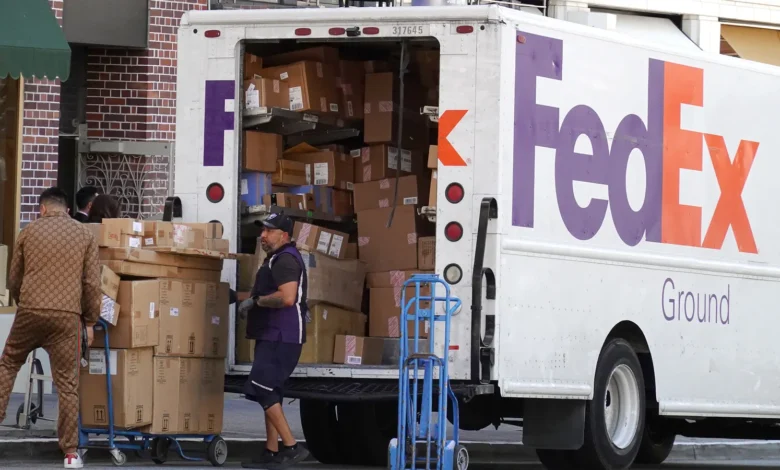
Memphis, TN – FedEx has officially announced its peak season surcharges for 2026, revealing significant increases, particularly for its high-volume, lower-cost services like Ground Residential and Ground Economy shipments. These adjustments underscore the carrier’s continued strategic pivot towards enhancing profitability and selectively managing its e-commerce parcel volume, a trend observed across the logistics industry as carriers grapple with escalating operational costs and unprecedented demand. The new surcharges are set to take effect starting September 28, 2026, and will extend through January 17, 2027, impacting a wide array of U.S. and international package services during the critical holiday shopping period.
Detailed Breakdown of 2026 Surcharges
The core of FedEx’s 2026 peak season strategy revolves around a tiered system of demand-based pricing, designed to manage the surge in package volume typically experienced between late September and mid-January. Shippers across various service levels will face a range of additional fees, with some categories seeing double-digit percentage increases compared to the previous year.
One of the most notable changes is the Additional Handling Surcharge, applicable to U.S. Package Services and FedEx International Ground shipments. This fee, ranging from $8.80 to $11.85 per package, targets items requiring special handling due to their size, weight, or packaging, and will be effective from September 28 through January 17, 2027. Similarly, the Oversize Charge for the same service categories will see a substantial range of $95.75 to $117.25, reflecting the higher costs associated with transporting unusually large items. The Ground Unauthorized Package Charge, levied on non-compliant shipments within FedEx Ground, FedEx Home Delivery, and FedEx International Ground services, stands out with a steep range of $535 to $595, emphasizing the carrier’s efforts to streamline its network and penalize non-standard freight. These charges, too, begin on September 28.
For other demand-based surcharges, the effective period commences later, from October 26, 2026, extending to January 17, 2027. Demand Surcharges for expedited services like FedEx First Overnight, Priority Overnight, and Standard Overnight (excluding FedEx One Rate packages) will range from $1.30 to $2.55. Slightly lower, but still significant, are the demand surcharges for FedEx 2Day A.M., FedEx 2Day, and FedEx Express Saver (excluding FedEx One Rate packages), priced between $1.20 and $2.35.
The most impactful increases, however, are concentrated in the residential delivery segments, which are intrinsically linked to e-commerce activity. Demand Surcharges for FedEx Ground residential shipments and FedEx Home Delivery residential shipments will range from $0.50 to $0.80. This might seem modest in isolation, but as industry analysts point out, these fees "compound quickly across e-commerce parcel volume." For context, the peak for Ground Residential demand surcharges last year was $0.65, meaning the new $0.80 peak represents a 23% increase year-over-year. Similarly, FedEx Ground Economy Package Services will incur a demand surcharge ranging from $2.55 to $4.05.
A specific and potentially costly fee is the Demand – Residential Delivery Charge, ranging from $1.70 to $9.35. This particular surcharge applies exclusively to enterprise-level customers who ship more than 20,000 residential and Ground Economy packages. The precise price within this range will be determined by how much their volume deviates from their typical shipping activity during the baseline period of June 1 to June 28. This tiered approach suggests FedEx is aiming to manage the largest volume fluctuations from its most significant clients, who contribute substantially to the holiday rush.
FedEx’s Strategic Pivot: Prioritizing Profitability Over General E-commerce Volume
The aggressive pricing strategy for the 2026 peak season is not an isolated event but rather a clear manifestation of FedEx’s broader strategic repositioning. The company has been increasingly vocal about its decreased interest in pursuing general e-commerce volume, which, while abundant, often operates on thinner profit margins. Instead, FedEx is deliberately shifting its focus towards more profitable segments, such as healthcare logistics, specialized freight, and higher-value express services.
This strategic recalibration was a key theme during FedEx’s 2026 Investor Day, where executives outlined plans to optimize its network for profitability and efficiency rather than simply maximizing parcel count. E-commerce volumes typically surge dramatically during the holidays, creating immense pressure on carrier networks, labor, and infrastructure. By implementing higher surcharges in these high-volume, lower-margin segments, FedEx aims to either offset the increased operational costs or, implicitly, encourage some of this volume to shift to other carriers or alternative shipping methods.
Despite this strategic pivot, the holiday season remains an undeniably crucial period for FedEx and the vast ecosystem of retail and e-commerce shippers it serves. The company reported its 2025 peak season as its "most profitable peak season ever," signaling that these surcharges, when managed effectively, can significantly boost the carrier’s financial performance. Brie Carere, FedEx’s Executive Vice President and Chief Customer Officer, articulated this perspective during the company’s 2026 Investor Day, describing peak season surcharges as a "win-win." From FedEx’s vantage point, these fees enable them to profitably scale up the necessary resources – including additional personnel, expanded sorting capacity, and increased last-mile delivery capabilities – to handle the holiday deluge. For shippers, the ability to continue selling and delivering products during the busiest shopping period, even with added costs, is often viewed as a necessary component of their business model.
The Broader Landscape of Climbing Shipping Costs
FedEx’s latest announcement comes amidst a broader trend of escalating shipping costs that have been impacting both FedEx and UPS customers for several years. A confluence of factors, including persistent inflationary pressures, a tight labor market for logistics professionals, and volatile fuel prices, has contributed to this environment. Elevated fuel surcharges, in particular, have been a significant concern, adding substantial costs to already rising base rates and other accessorial fees. The ongoing expansion of logistics networks by major players like Amazon, which is increasingly handling its own deliveries, also adds a layer of competitive pressure and complexity to the parcel delivery market.
For businesses, especially those heavily reliant on e-commerce, these climbing costs represent a direct hit to their margins. Retailers often face the difficult decision of absorbing these increased shipping expenses, thereby reducing their profitability, or passing them on to consumers, which could impact sales volumes and customer loyalty. The cumulative effect of general rate increases, fuel surcharges, and now intensified peak season fees, creates a challenging environment for budgeting and logistics planning.
Implications for Shippers and E-commerce Businesses
The significant increases in FedEx’s 2026 peak season surcharges carry substantial implications for shippers, particularly those in the e-commerce sector. The "compounding quickly" effect across millions of packages means that even seemingly small per-package increases can translate into millions of dollars in additional shipping costs for high-volume retailers.
Small and medium-sized businesses (SMBs) may feel the pinch more acutely than large enterprises. While enterprise-level customers shipping over 20,000 residential and Ground Economy packages face the variable Demand – Residential Delivery Charge, smaller shippers may have less leverage to negotiate favorable terms or absorb the additional costs without impacting their retail pricing. This could put SMBs at a disadvantage, potentially leading to higher prices for consumers or reduced competitiveness in the crowded e-commerce landscape.
From an operational standpoint, businesses will need to re-evaluate their shipping strategies, pricing models, and fulfillment processes well in advance of the 2026 holiday season. This includes re-forecasting logistics budgets, adjusting product pricing to account for higher delivery costs, and potentially exploring new shipping partners or methods. The shift in costs could also influence consumer behavior, as increased shipping fees might lead to higher cart abandonment rates or a preference for retailers offering free or subsidized shipping.
Strategies for Mitigating Surcharge Impact
In light of these escalating costs, parcel pricing experts and supply chain consultants offer several strategies for shippers to mitigate the "sting" of holiday surcharges:
- Negotiate for Discounts: Larger volume shippers often have the leverage to negotiate customized contracts and discounts with carriers. Regular review and renegotiation of these agreements can help offset some of the surcharge impact. This requires proactive engagement with FedEx account representatives.
- Incentivize Earlier Purchases: Encouraging consumers to complete their holiday shopping earlier in the season can help distribute demand and potentially reduce reliance on expedited shipping services that carry higher demand surcharges. Early bird promotions, staggered sales events, and clear communication about shipping deadlines can be effective tactics.
- Explore Alternative Carrier Options: Diversifying carrier portfolios is a crucial strategy. Regional carriers, postal services (USPS), and even third-party logistics (3PL) providers can offer competitive rates for certain types of shipments or specific geographic regions. This can reduce dependence on FedEx and UPS, giving shippers more flexibility and bargaining power.
- Optimize Packaging and Dimensions: Avoiding additional handling and oversize charges requires meticulous attention to packaging. Shippers should ensure packages conform to standard dimensions and weight limits whenever possible. Investing in dimensioning equipment and training fulfillment staff on proper packaging techniques can yield significant savings.
- Utilize Fulfillment Centers Strategically: Distributing inventory across multiple fulfillment centers closer to customer bases can reduce transit distances and potentially lower shipping costs, especially for ground services. This also improves delivery speed, enhancing customer satisfaction.
- Leverage Technology and Data Analytics: Advanced parcel spend management platforms can help shippers analyze their shipping data, identify areas of high surcharge exposure, and optimize carrier selection based on cost and service level for each shipment.
Industry Comparison: UPS and the Competitive Landscape
FedEx’s announcement inevitably draws comparisons with its primary competitor, UPS. UPS has also consistently implemented peak season fees over the past several years, following a similar rationale of managing demand and covering increased operational costs during the holidays. However, as of Thursday, UPS had not yet unveiled its 2026 holiday surcharges. The timing of these announcements often involves a strategic dance between the two giants, with one carrier’s move potentially influencing the other’s pricing decisions. Shippers will be keenly awaiting UPS’s announcement to fully assess the logistics cost landscape for the upcoming holiday season.
The broader competitive environment also plays a role. While FedEx and UPS dominate the express and ground parcel markets, the emergence of Amazon’s internal logistics network, the continued relevance of the USPS, and the growth of regional carriers provide some alternatives. However, for many businesses requiring the reliability and extensive reach of national carriers, FedEx and UPS remain indispensable, underscoring the significance of their pricing decisions.
Chronology and Historical Context of Peak Surcharges
The concept of peak season surcharges, initially introduced as temporary measures to manage extraordinary demand, has evolved into an established, recurring feature of the logistics industry. Prior to the significant e-commerce boom exacerbated by the COVID-19 pandemic, such surcharges were less common or less impactful. However, the massive surge in online shopping volumes, particularly during the 2020 and 2021 holiday seasons, strained carrier networks to their breaking point, necessitating additional investments in infrastructure, labor, and technology.
In response, both FedEx and UPS formalized and expanded their peak season surcharge programs. What began as temporary fees for specific services quickly became an annual expectation, with carriers using these surcharges to ensure network fluidity, incentivize efficient shipping practices, and recover the higher costs associated with operating at maximum capacity. FedEx’s 2026 announcement, occurring well in advance of the holiday period, provides shippers with ample time to plan, reflecting a mature approach to managing peak season expectations and costs.
Conclusion and Outlook
FedEx’s unveiling of its 2026 peak season surcharges signals a clear continuation of its strategy to enhance profitability and selectively manage its parcel volume. The substantial increases, particularly in the high-activity residential and economy segments, highlight the escalating costs of e-commerce fulfillment and the carrier’s commitment to prioritizing higher-margin business. For shippers, this translates into an imperative for proactive planning, strategic negotiation, and diversified logistics approaches to navigate the complex and costly landscape of holiday shipping. As the industry awaits UPS’s corresponding announcement, the overarching trend indicates that managing shipping costs will remain a critical challenge for businesses well into the future, requiring adaptability and innovation to maintain competitiveness in the dynamic world of e-commerce.
Related posts: