Garrett Langley to Address the Intersection of AI Surveillance and Public Safety at TechCrunch Disrupt 2026

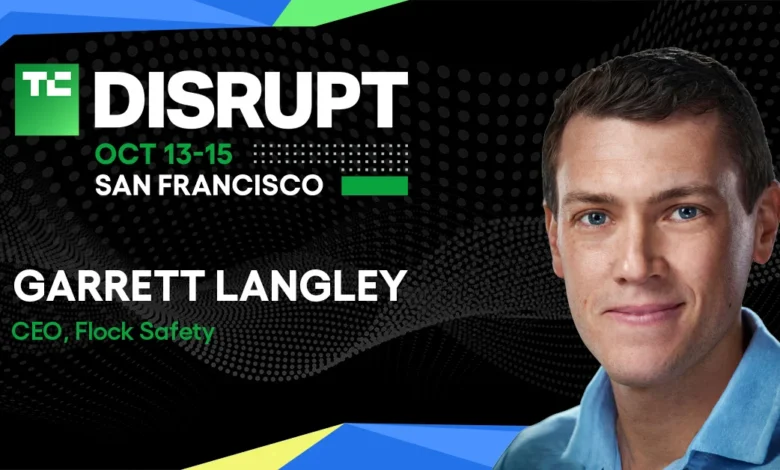
The evolving landscape of urban security and digital privacy will take center stage at TechCrunch Disrupt 2026 as Garrett Langley, the founder and CEO of Flock Safety, joins the speaker lineup to discuss the controversial and rapidly expanding role of artificial intelligence in law enforcement. Scheduled to take place from October 13-15 at the Moscone Center in San Francisco, the event arrives at a pivotal moment for the surveillance industry, which has seen unprecedented capital investment alongside a mounting wave of regulatory and public scrutiny. Langley’s appearance is expected to address the core tension of the modern era: the trade-off between the promise of reduced crime through high-tech monitoring and the fundamental right to privacy in public spaces.
As the chief executive of one of the most polarizing startups in the United States, Langley will provide insights into how Flock Safety navigated its transition from a niche provider of license plate readers to a multibillion-dollar powerhouse in the "public safety as a service" sector. The discussion is set against a backdrop of significant institutional shifts, including the termination of major partnerships and a growing movement among civil liberties advocates to curb the reach of pervasive AI-driven monitoring networks. For the 10,000 founders, investors, and technologists expected to attend Disrupt 2026, the session promises a deep dive into the ethics of computer vision, the future of autonomous policing, and the fiscal realities of scaling a company that operates at the edge of constitutional law.
The Genesis and Rapid Scaling of Flock Safety
Garrett Langley’s journey to the helm of a $7.5 billion surveillance giant began far from the world of law enforcement. An entrepreneur with a track record in the Atlanta startup ecosystem, Langley previously served in leadership roles at the car subscription service Clutch and the fan experience platform Experience. The latter, where Langley oversaw engineering and design, was sold to Cox Enterprises for $200 million in 2014, providing him with the capital and credibility to launch more ambitious ventures. In 2017, Langley partnered with co-founders Matt Feury and Paige Todd to launch Flock Safety, initially focusing on a specific problem: the lack of actionable evidence in residential property crimes.
The company’s early success was rooted in its Automatic License Plate Recognition (ALPR) technology. Unlike traditional CCTV, which often provides grainy, unusable footage, Flock’s cameras were designed to capture high-speed images of license plates and vehicle characteristics, which were then searchable by law enforcement and neighborhood associations. After graduating from the prestigious Y Combinator accelerator, Flock Safety experienced a meteoric rise. By 2023, the company had established a presence in thousands of cities across the United States, positioning its technology as a force multiplier for understaffed police departments.
The scope of Flock’s ambitions expanded significantly in 2024 with the acquisition of Aerodome, a 17-month-old startup specializing in "Drone-as-a-First-Responder" (DFR) technology. This $300 million acquisition signaled a shift in strategy; Flock was no longer just a camera company but an end-to-end provider of autonomous surveillance infrastructure. The integration of Aerodome’s software allows drones to be dispatched automatically to the scene of a 911 call or a detected gunshot, often arriving before human officers to provide real-time aerial intelligence.
A Timeline of Financial Growth and Market Dominance
The financial trajectory of Flock Safety reflects the high demand for AI-driven security solutions among both private and public sectors. The company’s valuation has seen a series of sharp escalations that underscore investor confidence in the scalability of surveillance tech.
- 2017-2020: Flock Safety establishes its foothold in the Atlanta market and expands to several hundred municipalities, raising early-stage capital to refine its ALPR algorithms.
- 2021-2022: The company secures a $150 million Series E round, bringing its valuation to approximately $3.5 billion. This period marks the widespread adoption of Flock cameras by homeowners’ associations (HOAs).
- 2023: A significant funding round of $275 million propels the company’s valuation to $4.8 billion. Flock begins diversifying its product line beyond static cameras.
- 2024-2025: Following the Aerodome acquisition, Flock Safety raises another $275 million in a late-stage round, reaching a $7.5 billion valuation. To date, the company has secured a total of $950 million in venture funding.
This influx of capital has allowed Flock to build a massive, interconnected database. While the company maintains that the data is owned by the individual customers (such as police departments or HOAs), the ability to track a vehicle across multiple jurisdictions using a unified software interface has become one of its most potent—and criticized—features.
The Friction of Innovation: Privacy Concerns and Public Backlash
The expansion of Flock Safety has not occurred without significant resistance. Privacy advocates, led by the American Civil Liberties Union (ACLU), have argued that the company is building a "mass surveillance dragnet" that operates with little oversight. The primary concern is the creation of a "perpetual tracking" system where a person’s movements can be logged and stored for 30 days or longer, even if they are not suspected of a crime.
The controversy intensified in early 2026 following reports that Flock Safety continued to offer its cameras and databases to U.S. Immigration and Customs Enforcement (ICE). Critics argue that using license plate data for immigration enforcement transforms local crime-fighting tools into instruments of federal deportation policy, potentially eroding trust between immigrant communities and local police.
This tension has manifested in physical and institutional ways:
- Vandalism and Destruction: In several metropolitan areas, activists have targeted Flock cameras, leading to reports of equipment being destroyed or spray-painted to disable the AI sensors.
- The Amazon Ring Breakup: In February 2026, Amazon’s Ring—once a close partner in the residential security space—ended its partnership with Flock. While official statements were guarded, industry analysts suggest the move was a response to the increasing legal and PR risks associated with Flock’s federal law enforcement contracts.
- The LAPD Contract Lapse: Perhaps the most significant blow came in July 2026, when the Los Angeles Police Department (LAPD) allowed its contract with Flock Safety to expire. Citing "serious concerns over civil liberties and privacy," city officials decided to pause the expansion of the ALPR network, signaling a potential cooling of the relationship between major metropolitan agencies and private surveillance firms.
Technical Analysis of AI in Public Safety
At TechCrunch Disrupt 2026, Langley is expected to defend the technical and ethical framework of his company. Flock Safety’s core argument is that AI removes human bias from the initial stages of an investigation. Instead of an officer stopping a vehicle based on a subjective "suspicion," the AI flags a vehicle based on objective criteria: a stolen plate, a link to a Silver Alert, or a vehicle identified in a felony warrant.
However, the "black box" nature of AI algorithms remains a point of contention. Data scientists have raised questions about the error rates of ALPR technology in low-light conditions or with obscured plates, noting that a "false positive" can lead to high-stakes police confrontations. Furthermore, the integration of Aerodome’s drone technology introduces new questions about the fourth amendment and the expectation of privacy from aerial observation.
The "Drone-as-a-First-Responder" model relies on AI to navigate urban environments and identify specific targets autonomously. Langley has frequently stated that these systems are designed to provide "transparency and objective evidence," but the broader impact on the "surveillance state" remains a central theme of the upcoming Disrupt session.
Broader Implications for the Tech Industry and Governance
The debate surrounding Flock Safety is a microcosm of the larger challenges facing the AI industry in 2026. As machine learning becomes more integrated into the physical world—through cameras, drones, and automated sensors—the boundaries of the "public square" are being redefined.
Impact on Municipal Budgets:
For many cities, the appeal of Flock Safety lies in its cost-effectiveness. A subscription to a camera network is often cheaper than hiring additional patrol officers. However, the lapse of the LAPD contract suggests that the "subscription model" for policing may face a ceiling if the social costs are deemed too high.
Regulatory Trends:
Legislatures in several states are currently debating "Transparency in Surveillance" bills that would require police departments to hold public hearings before deploying AI-driven tech. Langley’s discussion at Disrupt will likely touch upon how Flock plans to navigate this tightening regulatory environment while maintaining its growth trajectory.
The Future of the "Safe City":
The ultimate question Langley faces is whether a city can be truly safe if its citizens feel constantly watched. Supporters point to successful cases where Flock cameras helped recover kidnapped children or solve homicides within hours. Critics point to the potential for abuse by authoritarian regimes or the gradual normalization of a society where anonymity no longer exists.
TechCrunch Disrupt as a Forum for Hard Conversations
TechCrunch Disrupt has a long-standing reputation for hosting difficult conversations that go beyond product launches and venture capital rounds. The inclusion of Garrett Langley in the 2026 program reflects the event’s commitment to addressing the most pressing issues at the intersection of technology and society.
The San Francisco Moscone Center, located in a city that has itself been a primary battleground for surveillance ordinances, provides a symbolic backdrop for this discussion. As Langley takes the stage in October, the audience will be looking for more than just financial projections; they will be seeking a vision of how AI can serve the public interest without compromising the democratic values of privacy and freedom.
With over 10,000 attendees ranging from early-stage founders to global policy experts, the dialogue at Disrupt 2026 will likely influence the next generation of "GovTech" and "SafetyTech" startups. Whether Flock Safety remains the industry standard or becomes a cautionary tale of overreach remains to be seen, but Langley’s insights will undoubtedly provide the roadmap for the industry’s path forward in the AI era.
Related posts: