The AI Era’s Infrastructure Takes Root in Texas: Wistron Inaugurates Fort Worth Superchip Manufacturing Facility

The relentless march of artificial intelligence is fundamentally reshaping economies and societies, and at the core of this transformation lies a critical, yet often unseen, foundation: AI infrastructure. Texas, a state increasingly recognized as a hub for technological innovation and advanced manufacturing, is playing a pivotal role in building this essential backbone. Today, this burgeoning role was significantly amplified with the grand opening of Wistron’s first United States manufacturing facility in Fort Worth. This sprawling 324,000-square-foot greenfield plant is poised to become a cornerstone in the production of superchips, the powerful engines driving some of the world’s most sophisticated AI systems.
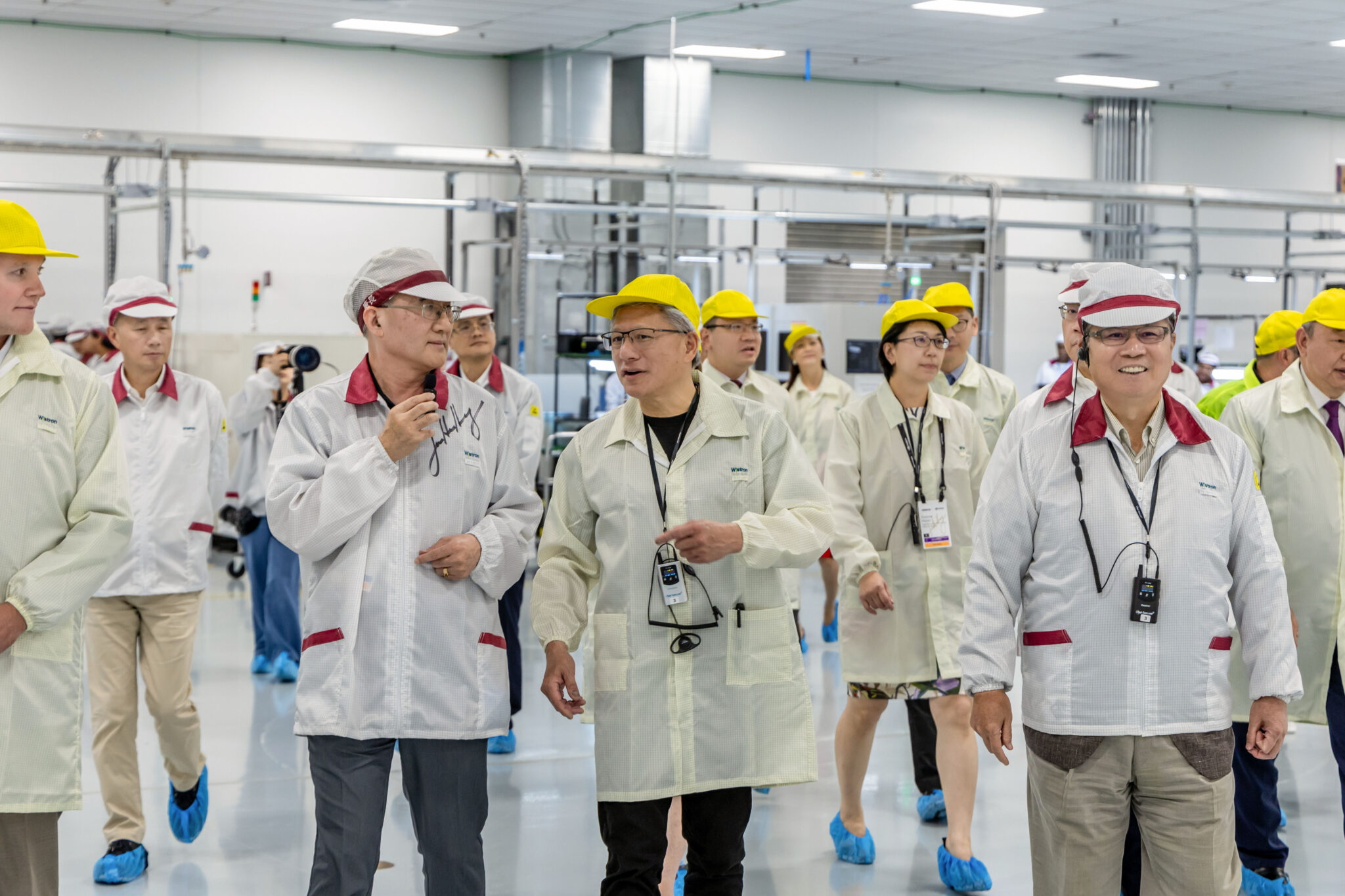
The inauguration ceremony was a significant event, drawing a distinguished audience that included Wistron executives, representatives from the Taiwanese government, and local Fort Worth leaders. The highlight of the proceedings was the joint appearance of Jensen Huang, the visionary founder and CEO of NVIDIA, and Simon Lin, Chairman of Wistron. Their presence underscored the strategic importance of this new facility and provided a platform to articulate the profound implications of manufacturing AI infrastructure domestically within the United States.
"Manufacturing is an essential pillar for every economy and every country," Huang stated, emphasizing the broad economic significance of such endeavors. He further elaborated on the national imperative, asserting, "Building chip plants, packaging plants, computer system plants like this, and AI factories all over the United States, has allowed the United States to really reindustrialize for the first time in a long time." This sentiment reflects a broader trend of reshoring and strengthening domestic manufacturing capabilities, particularly in sectors deemed critical for national competitiveness and technological advancement.
The newly christened D1 facility at Wistron represents a substantial investment in the future of AI production. It is currently equipped with two advanced manufacturing cells. One cell is dedicated to the production of the NVIDIA GB300 Grace Blackwell Ultra Superchip, a component designed for high-performance AI computing. The second cell will focus on manufacturing the NVIDIA Vera Rubin Superchip, another key piece of hardware in the AI ecosystem. Wistron has outlined aggressive scaling plans for the D1 facility, aiming to produce tens of thousands of boards per month of these cutting-edge technologies by the end of this year, positioning it as a significant contributor to the global AI supply chain.
The development of AI at the scale demanded by today’s technological landscape extends far beyond the design of chips and the writing of code. It necessitates robust physical infrastructure, resilient supply chains, and a skilled workforce capable of executing complex manufacturing processes. The Fort Worth plant embodies this comprehensive approach, aiming to establish a domestic manufacturing base that can not only build at volume but also adapt rapidly to the accelerating pace of technological evolution in the AI sector.
A Landmark $700 Million Commitment to American Manufacturing
The establishment of Wistron’s D1 facility represents a significant economic commitment to advanced manufacturing in the United States, with an investment totaling $700 million. This substantial capital infusion is already translating into job creation, with over 500 new positions established at the Texas facility. The company has ambitious plans to further expand its workforce, targeting a total of 1,000 employees by the end of the current year.
The economic impact of this investment is multifaceted, extending beyond the direct creation of manufacturing jobs. As Jensen Huang noted, the project stimulates employment across a wide spectrum of trades. "It’s creating jobs in plumbing, construction, manufacturing and electricians," he remarked, highlighting the ripple effect that such large-scale industrial projects have on local economies. This diverse job creation signifies a tangible contribution to the reindustrialization efforts in the United States, fostering a broader base of skilled labor and economic activity.
Wistron Chairman Simon Lin articulated a vision that aligns with the broader goals of technological advancement and societal well-being. "From the macro view of the whole AI world, down to community and country – it’s a great vision," Lin stated. He expressed optimism for the future, adding, "I think we’re going to enjoy the next era of AI life. I hope that we will be happier and healthier." This perspective underscores the belief that advancements in AI infrastructure can lead to positive societal outcomes, driven by innovation and domestic production capabilities.
This Fort Worth facility is a tangible manifestation of NVIDIA’s broader strategic commitment to bolstering AI development and manufacturing within the United States. The company has pledged to manufacture up to $500 billion in advanced AI platforms in the U.S., a monumental undertaking that Wistron’s new plant is actively contributing to realizing. This commitment aims to ensure greater supply chain security, foster domestic innovation, and create high-value jobs across the nation.
Pioneering Design and Simulation: The Digital Twin Advantage
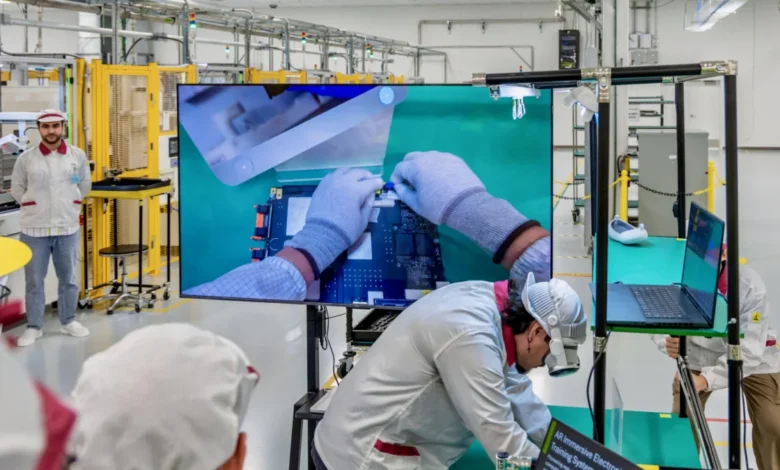
A critical factor in the efficient and timely establishment of the Wistron D1 facility was the innovative application of digital twin technology. Before the physical construction even began, Wistron meticulously designed and simulated the entire manufacturing plant within a virtual environment. This sophisticated digital replica, built on NVIDIA’s open platform, leveraged cutting-edge AI technologies. These included NVIDIA’s Nemotron and Cosmos frontier models, along with Omniverse, Metropolis libraries, and open frameworks like PhysicsNeMo.
This comprehensive digital simulation allowed Wistron engineers to achieve several key objectives before breaking ground. They were able to validate and optimize assembly line layouts, ensuring maximum efficiency and workflow. Production processes were fine-tuned in the virtual space, identifying and mitigating potential bottlenecks. Furthermore, the digital twin served as an invaluable tool for training workers on standard operating procedures, enabling them to familiarize themselves with the facility’s operations in a risk-free, simulated environment. This pre-construction virtual validation is a testament to the increasing integration of advanced digital tools in modern industrial development, promising faster deployment and higher operational effectiveness.
Mastering Every Layer of the AI Stack
The narrative of the AI era, as articulated by industry leaders, extends beyond the creation of individual components. It is about achieving dominance and efficiency across every stratum of the technological stack, from the fundamental semiconductor level to the complex systems that utilize them, and crucially, to the very factories that bring these innovations to life.
Jensen Huang drew a parallel between the foundational infrastructure of past eras and the emerging AI factories of the future. "Just as agriculture is a fundamental infrastructure of society, in the future these AI factories will be a fundamental infrastructure of society," he posited. He elaborated on this vision by stating, "Today we have roads and agriculture and railroads. In the future we’ll have AI factories and the internet. Electricity comes in… and the tokens get generated in the factories." This analogy highlights the transformative potential of AI factories as essential engines of economic activity and innovation, comparable to the impact of major infrastructure developments in previous centuries.
The opening ceremony featured a significant moment with the unveiling of the first NVIDIA GB300 Grace Blackwell Ultra Superchip produced at the Fort Worth facility. Jensen Huang personally signed this groundbreaking unit, symbolizing the tangible output of this new manufacturing capability. He described the system built around this superchip as "the most powerful AI supercomputer in the world," underscoring the cutting-edge nature of the technology being produced.
Further detailing the scale and complexity of these systems, Huang provided insights into the GB300 itself. "It has one-and-a-half million parts inside – two tons, 4 million dollars – and we’re producing them like phones, right here in Wistron, cranking them out in volume because the world needs all of these machines to drive the intelligence infrastructure," he explained. This statement emphasizes both the high value and the mass-producible nature of these advanced AI components, driven by the immense global demand for AI capabilities.
The significance of Wistron’s Fort Worth facility was also recognized by prominent media outlets. Jensen Huang engaged in interviews with Mike Allen of Axios and Lana Ferguson of The Dallas Morning News. The latter’s coverage notably included a report on Coherent’s recent groundbreaking for a new manufacturing facility in Sherman, Texas, in June, further highlighting the growing momentum of advanced manufacturing investments in the state.
A New Era of American Manufacturing Dawns in Texas
The inauguration of Wistron’s Fort Worth factory marks the beginning of a new chapter in American manufacturing, particularly within the critical domain of artificial intelligence. This facility is an integral part of NVIDIA’s overarching strategy to "build in America, for America." This initiative aims to strengthen the resilience of U.S. supply chains, cultivate a high-skilled workforce, and empower American communities with a direct stake in shaping the future of AI. By establishing advanced manufacturing capabilities domestically, the United States is positioning itself to lead not only in AI innovation but also in its scaled production, ensuring a more secure and prosperous technological future. The echoes of this significant investment are expected to resonate across the nation, inspiring further development and solidifying America’s role as a global leader in the AI revolution.
Related posts: