Australian menswear brand OTAA pivots to U.S.-based fulfillment via Cart.com following the elimination of the de minimis exemption

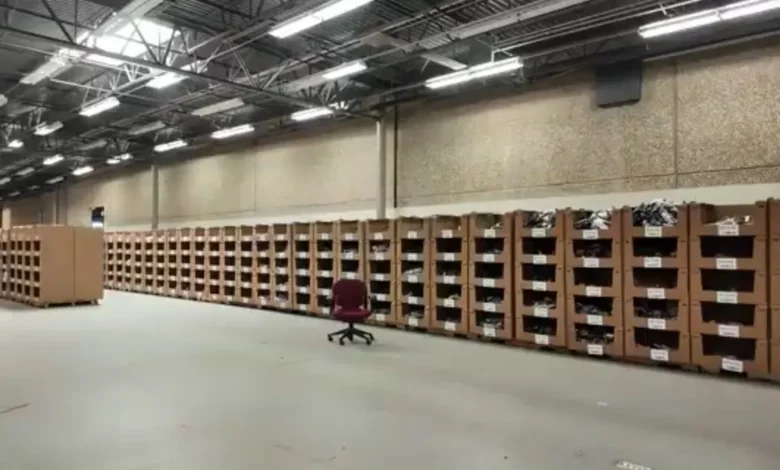
The global e-commerce landscape underwent a structural transformation when the long-standing de minimis trade exemption—which historically allowed shipments valued under $800 to enter the United States duty- and tax-free—was officially terminated by the Trump administration. For Melbourne-based menswear retailer OTAA, a specialist in premium ties and cufflinks, this policy shift acted as a catalyst for a significant operational overhaul. To mitigate ballooning logistics costs and maintain competitive pricing in its largest market, the company has formally transitioned its U.S. fulfillment operations to a state-of-the-art facility in Longview, Texas, through a strategic partnership with Cart.com.
The shift, which began as a tactical move in February 2026, has evolved into a cornerstone of OTAA’s North American growth strategy. With the U.S. accounting for approximately 50% of the brand’s total global revenue, the transition represents a critical effort to stabilize supply chain expenses in a post-exemption environment where direct-to-consumer (DTC) shipping from international hubs has become economically untenable.
The De Minimis Context and the Economic Pivot
For years, the de minimis provision (Section 321 of the Tariff Act of 1930) served as a backbone for international e-commerce. By bypassing formal customs entry procedures, foreign retailers could ship products directly to American consumers with minimal administrative friction or tax liability. However, the political consensus eventually shifted, driven by concerns over domestic manufacturing competitiveness and the influx of low-value, untaxed goods.
When the exemption was repealed, the immediate impact was a sharp increase in the "landed cost" of goods. For a company like OTAA, which relies on high-volume, lower-margin accessories, the additional duties and brokerage fees associated with every individual parcel threatened to erode margins significantly. According to internal data provided by the company, fulfilling an order directly from their Melbourne headquarters to a U.S. destination is now twice as expensive as shipping the same item from the Texas-based facility operated by Cart.com.
A Phased Approach to Domestic Logistics
The partnership with Cart.com is not merely a reactive measure but a calculated expansion. OTAA has adopted a phased, demand-driven approach to inventory management. Currently, the Longview facility holds approximately 1,750 individual styles—roughly 20% of the brand’s total product catalog. These items were selected based on high-frequency purchasing data, ensuring that the most popular SKUs are positioned as close to the end-user as possible.
This "hub-and-spoke" model allows OTAA to maintain its international lean operations while scaling its U.S. footprint. The company has already committed to expanding the range of products stocked in Texas, with plans to integrate an additional 1,000 styles before the close of the current calendar year. By localizing inventory, OTAA is not only reducing shipping costs but also significantly shortening delivery windows—a critical metric in modern retail that directly correlates with higher customer retention rates and improved net promoter scores.
Industry-Wide Ripple Effects
OTAA is far from the only firm grappling with these seismic trade policy changes. Major retailers, ranging from fashion conglomerates to specialty boutiques, have reported substantial financial headwinds directly attributable to the end of the de minimis loophole.

Lululemon, the athletic apparel giant, provided a stark example of the potential fiscal impact during a 2025 earnings call, disclosing an expected $240 million profit reduction directly tied to the new tariff and duty regime. The ripple effect has forced a broader industry reckoning regarding global supply chain design. DavidsTea, for instance, has had to re-evaluate its cross-border fulfillment strategy from Canada into the U.S., citing increased complexity and cost as the primary drivers for a localized fulfillment pivot. Similarly, Aritzia, the fashion retailer, noted in recent filings that a significant portion of its operational challenges were linked to the regulatory shift, with management highlighting the end of the exemption as a primary driver for the rising cost of goods sold.
Expert Analysis: The New Reality for DTC Brands
The strategy employed by OTAA reflects a broader trend among international brands seeking to "de-risk" their U.S. operations. Analysts suggest that the era of "frictionless" international e-commerce is effectively over for smaller and mid-sized enterprises.
"The end of de minimis changes the economics of serving American customers and makes the decision about where to hold inventory much more consequential," noted Omair Tariq, founder and CEO of Cart.com, in a statement regarding the partnership. "Brands need a U.S. operation sized to proven demand, with room to expand as the business grows."
This sentiment is echoed by supply chain economists, who argue that the shift towards domestic fulfillment centers is the new baseline for market entry. By utilizing third-party logistics (3PL) providers like Cart.com, international brands can bypass the massive capital expenditure required to build proprietary warehouses while still achieving the geographic proximity necessary to compete with domestic incumbents.

Chronology of the Transition
- Pre-2025: The de minimis exemption allows for seamless, duty-free shipping of items under $800 to U.S. consumers, enabling brands like OTAA to operate with centralized international fulfillment.
- 2025: The U.S. government officially eliminates the de minimis exemption, triggering an immediate reassessment of landed costs for foreign-based e-commerce retailers.
- February 2026: OTAA initiates its partnership with Cart.com, moving key inventory to a fulfillment center in Longview, Texas.
- November 2026: Following a successful pilot, OTAA announces the expansion of its U.S. fulfillment capabilities, confirming that the majority of U.S. orders are now processed domestically.
- Q4 2026 and Beyond: OTAA schedules the addition of 1,000 new SKUs to the Longview facility, aiming to capture further market share while maintaining operational efficiency.
Implications for Future Retail Strategy
The OTAA case study serves as a bellwether for how medium-sized global retailers will operate in the coming decade. As protectionist trade policies continue to reshape global commerce, the ability to rapidly localize inventory will separate thriving brands from those unable to absorb the costs of traditional cross-border logistics.
Furthermore, the integration of data-driven inventory management—where only top-selling items are held domestically while the "long tail" of the catalog is managed through different, perhaps more centralized or just-in-time, processes—appears to be the most sustainable path forward. For OTAA, the focus remains on customer experience. By insulating the consumer from the volatility of international shipping costs, the company is positioning itself to maintain its market share in the U.S. despite the challenging regulatory environment.
As the retail industry approaches 2027, the focus will likely remain on the "domestic-first" fulfillment model. For international brands, the question is no longer whether they should establish a U.S. logistics presence, but rather how quickly and efficiently they can do so. With Cart.com providing the infrastructure and OTAA providing the product, the partnership offers a blueprint for navigating the complexities of modern, post-de minimis international trade. The success of this transition highlights that while the regulatory environment has become more stringent, strategic agility remains the ultimate hedge against market volatility.