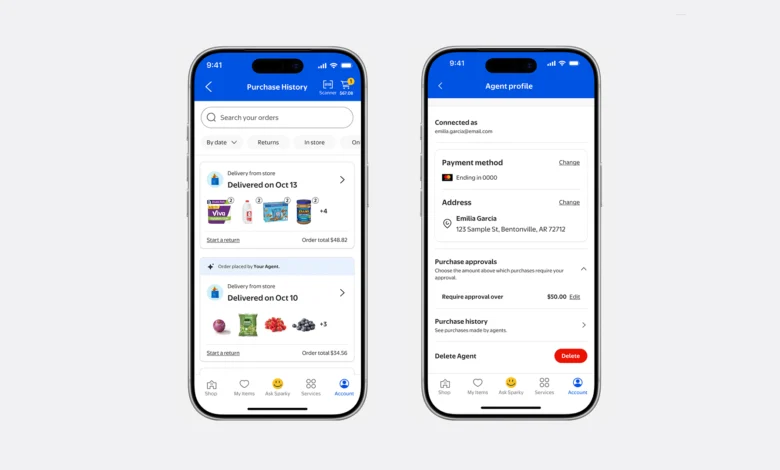
Walmart is taking a definitive step toward redefining the automated shopping experience by rolling out a comprehensive suite of oversight tools designed to give consumers granular control over AI agents. As artificial intelligence moves from simple product search functions to active transactional roles, the retail giant is prioritizing customer autonomy, ensuring that shoppers remain the final authority on purchases made on their behalf. This initiative, announced on October 21, marks a strategic pivot in the evolution of agentic commerce, addressing both the massive potential of AI and the lingering consumer hesitation surrounding automated spending.
The core of this new strategy is the introduction of Agent Profiles. Historically, purchases initiated by AI assistants were buried within a customer’s standard order history, often lacking clear distinction or centralized management. With the forthcoming launch of Agent Profiles, Walmart will decouple these automated actions from the user’s primary account interface. This allows customers to establish specific, protected environments for their AI agents. Through these profiles, users can set precise spending limits—such as $50, $100, or $200—and elect to either approve each transaction individually or allow the agent to execute purchases autonomously within those predefined fiscal boundaries.
A Chronology of Walmart’s AI Evolution
Walmart’s venture into agentic commerce did not occur in a vacuum; it is the culmination of years of deliberate technological investment. Following the initial success of its proprietary Sparky AI shopping agent, the company began integrating its services with major third-party platforms, including OpenAI’s ChatGPT, Google’s Gemini, and Meta’s Muse.
By early 2025, the industry began to shift from "generative" commerce, where AI simply provides information, to "agentic" commerce, where AI possesses the capability to execute tasks independently. Throughout the summer of 2026, Walmart’s internal data indicated that customers were increasingly comfortable with AI performing low-stakes research, but they remained deeply cautious regarding financial transactions. Recognizing this barrier, the leadership team, led by Daniel Danker, executive vice president of AI acceleration, product, and design, fast-tracked the development of the "Agent Gateway." This development phase was focused on creating a secure, high-speed connection between external AI models and Walmart’s backend systems, bypassing the latency and errors associated with traditional web-scraping methods.
Addressing Consumer Skepticism
The push for tighter controls comes at a time when market data highlights a significant "trust gap" in the adoption of AI. Research published by the payments technology provider NMI in August 2026 revealed that while many consumers are eager for AI to assist with shopping research, only 11% of U.S. adults have utilized AI to finalize a transaction. The data further suggests that 70% of respondents demand the ability to review or manually override an AI-driven purchasing decision before it is processed. Only a marginal 10% of surveyed adults expressed a willingness to grant AI systems full, unmonitored autonomy over their financial accounts.
Walmart’s response to these statistics is reflected in its strict terms of service for the new agent profiles. The company has mandated that, by default, all agent-led purchases must be reviewed. Furthermore, the architecture of these profiles prohibits agents from accessing sensitive payment-card details directly. Instead, agents operate within a "sandboxed" environment where payment information is handled securely by Walmart’s internal systems, preventing the agent from adding, modifying, or removing payment methods. This structural separation is designed to mitigate risks associated with potential security breaches at the third-party AI provider level.
Technical Foundations: The Agent Gateway and Model Context Protocol
To solve the issue of reliability, Walmart is implementing the Model Context Protocol (MCP). Developed by Anthropic, this open standard serves as a universal bridge, allowing AI applications to connect seamlessly with external data sources and tools. By adopting the MCP for its Agent Gateway, Walmart is moving away from the "browser-mimicry" model, where an AI agent attempts to navigate a website just like a human.

The previous method was notoriously fragile; minor updates to the Walmart website could cause an AI agent to "get stuck" or misinterpret a page element. The new gateway provides a direct, API-like interface that allows for discovery, cart management, and order tracking without requiring the agent to render the visual interface of the website. This not only increases efficiency but also enhances privacy. For instance, an AI agent can query the gateway for a customer’s preferred brand of bread or milk and receive a "yes/no" or "specific SKU" response without having access to the customer’s entire transaction history or sensitive personal identifiers.
Implications for Marketplace Sellers
While the new tools focus on the consumer, the implications for Walmart’s massive network of third-party marketplace sellers are profound. As AI agents increasingly act as the intermediaries between shoppers and products, the traditional rules of Search Engine Optimization (SEO) are being rewritten. Manish Joneja, senior vice president of Walmart Global Marketplace, has indicated that the rise of agentic commerce is a "game-changer" for how products are discovered.
When a customer asks an AI agent to "help me prepare for a healthy week," the agent may suggest specific vitamin supplements or protein powders. If a seller’s product data is not perfectly optimized—lacking clear, structured information regarding ingredients, price, and delivery timelines—their items may be effectively invisible to the AI. Consequently, Walmart is working closely with its sellers to enhance the quality of their product catalogs. The goal is to ensure that every item listed on the marketplace is "AI-readable," meaning the AI can instantly verify price competitiveness and shipping availability to provide the best recommendation.
Broader Market Analysis
Walmart currently holds the No. 2 position in Digital Commerce 360’s Top 1000 Database, underscoring its massive scale in the North American retail sector. Its ranking of No. 37 in the specialized AI Commerce Rankings reflects the early stages of this transition. The move to introduce rigorous oversight for AI agents represents a "pro-consumer" regulatory stance that could set a standard for the rest of the industry.
Analysts suggest that by implementing these safeguards, Walmart is attempting to avoid the "black box" criticism that often plagues AI development. By providing transparency—showing the shopper exactly why an agent chose a specific product, what the cost is, and where the funds are coming from—Walmart is positioning itself as the most "trusted" retailer in the age of automation. This is a critical differentiation strategy; if customers view AI as a helpful assistant rather than an unpredictable spend-manager, they are far more likely to integrate the technology into their daily lives.
Future Outlook
The rollout of these features over the coming month will likely serve as a test case for the wider retail industry. If successful, the Agent Profiles could become the industry benchmark for "responsible agentic commerce." As developers continue to refine these agents, the role of the human shopper will shift from an active searcher to an "approver."
Walmart’s strategy appears to be one of cautious integration. By giving users the controls to set limits, the company is effectively de-risking the shopping process. However, the success of this model will depend on the accuracy of the underlying AI and the willingness of third-party developers to adhere to the strict terms set forth by the retailer. As the landscape of e-commerce continues to evolve, Walmart’s investment in the Agent Gateway and consumer-centric profiles suggests that the future of retail is not just about having more technology, but about having the right, transparent controls to ensure that technology serves the user, not the other way around.
Whether these tools will be enough to move the needle on the 70% of shoppers who demand manual review remains to be seen. However, by providing a bridge between the convenience of automation and the security of manual oversight, Walmart is clearly betting that a transparent, controlled approach to AI is the key to winning the next generation of digital commerce.