Mux Introduces Custom Spending Alerts and Previews Future Spending Caps for Usage-Based Video Infrastructure Customers

The modern landscape of cloud infrastructure and developer tooling is increasingly defined by flexibility, scalability, and, crucially, usage-based pricing models. While these flexible financial structures allow organizations of all sizes to align their operational expenditures directly with their actual consumption, they have historically introduced a significant challenge for financial predictability: the dreaded end-of-month surprise bill. Whether resulting from an unexpectedly viral video, a misconfigured test live stream left running over a long weekend, or malicious bot traffic, unpredictable spikes in resource utilization can severely strain engineering budgets. Addressing this industry-wide pain point directly, video infrastructure platform Mux has officially rolled out a comprehensive spending alert system designed to give engineering and finance teams real-time visibility into their operational costs.
Available immediately to all platform users, the newly launched spending alerts feature allows organizations to establish customized financial thresholds tailored to their specific budgetary constraints. Rather than waiting for a monthly invoice to reveal how platform resources were consumed, engineering leads and system administrators can now configure automated email notifications that trigger the exact moment organizational spending crosses predetermined dollar amounts. This proactive approach to cost management represents a critical evolution in how developers interact with usage-based cloud services, bridging the gap between rapid scalability and rigorous financial governance.
The Mechanics of Proactive Cost Management
Under the hood, the newly implemented spending alert framework is designed to integrate seamlessly into existing organizational workflows without imposing administrative friction. To configure the system, authorized users navigate to the Mux dashboard, proceed through Organization Settings to the billing section, and access the dedicated alerts configuration panel. From there, administrators can establish up to three distinct dollar-based spending thresholds, with a minimum threshold requirement of ten dollars.
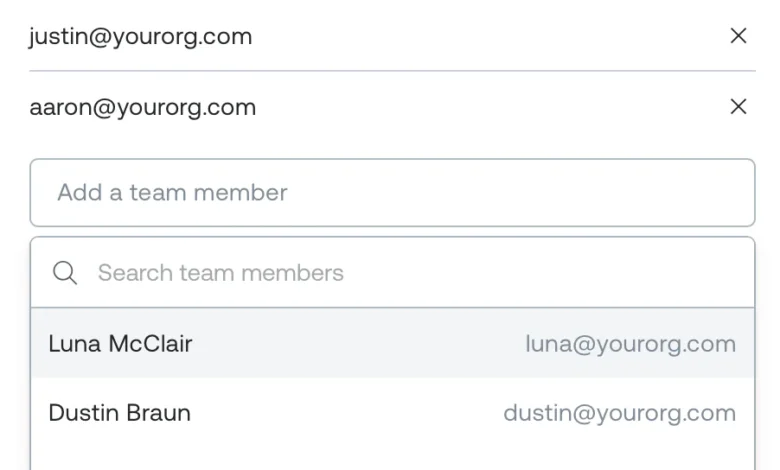
Crucially, the system is engineered to foster cross-functional collaboration between engineering and finance teams by allowing administrators to designate specific colleagues as alert recipients. Any user registered within the organization’s Mux account can be selected to receive automated email notifications when a threshold is breached. To prevent notification fatigue, the platform ensures that emails are sent strictly when a specific spending milestone is reached for the first time in a billing cycle. Furthermore, these thresholds and recipient lists remain entirely flexible, allowing teams to adjust their monitoring parameters dynamically as their project lifecycles evolve and scale.
Practical Applications in Fast-Paced Development Environments
To understand the practical utility of the new alert infrastructure, consider a typical deployment scenario: a development team integrates Mux into a web application to support user-generated video uploads and streaming playback. Based on historical traffic patterns and projected growth, the team estimates a monthly operational expenditure of approximately two hundred dollars.
In a traditional usage-based pricing environment, the team would have no native mechanism to verify whether their consumption was tracking according to expectations until the billing cycle concluded. With the new Mux spending alerts, however, the engineering lead can establish a strategic trio of thresholds—for instance, at one hundred dollars, two hundred dollars, and four hundred dollars.
By the midpoint of the billing cycle, the team expects to have consumed roughly half of their projected budget. If the one-hundred-dollar alert arrives precisely at mid-month, and the two-hundred-dollar alert arrives as the month concludes, the infrastructure’s behavior aligns perfectly with initial projections. However, the four hundred-dollar threshold serves as an essential financial backstop. If that upper limit is breached prematurely, or if the lower thresholds trigger weeks ahead of schedule, it acts as an immediate diagnostic signal.
Such a prompt notification enables engineering teams to investigate root causes immediately rather than retroactively. Rapid identification allows administrators to determine whether an unexpected cost spike stems from positive business drivers—such as a product launch making the front page of Hacker News or an organic surge in platform users—or technical anomalies, such as aggressive web scrapers, automated bot traffic, or orphaned live-streaming sessions that were inadvertently left active. By shortening the feedback loop between resource consumption and financial awareness, Mux is equipping developers with the intelligence needed to maintain tight control over their cloud expenditure.

Industry Context and the Evolution of Usage-Based Infrastructure
The introduction of granular spending alerts by Mux arrives against a broader macroeconomic backdrop where corporate technology budgets are under intense scrutiny. In recent years, enterprises and startups alike have pivoted away from bloated, fixed-cost software licenses toward consumption-based models that promise greater capital efficiency. According to recent market analyses, usage-based pricing has become the dominant commercial model for developer-centric infrastructure companies, API providers, and cloud service platforms.
However, this financial model has historically suffered from a structural asymmetry. While cloud vendors benefit from the frictionless scalability of usage-based consumption—where successful customer products naturally generate higher revenues for the provider—customers have often borne the disproportionate risk of billing anomalies. Industry surveys consistently indicate that unexpected cloud bills are among the leading sources of friction between software engineering departments and corporate finance teams.
Historically, infrastructure providers have attempted to solve this issue through passive reporting tools, such as retrospective analytics dashboards and historical usage graphs. While useful for auditing past consumption, these passive interfaces require active monitoring by busy engineering teams who already face competing demands for their attention. By shifting from passive reporting to active, event-driven notification systems, Mux is aligning its platform with modern DevOps best practices, where automated monitoring and alerting are standard requirements for both operational health and financial stewardship.
Looking Ahead: The Horizon of Hard Spending Caps
While real-time alerts represent a major step forward in cost visibility, Mux has indicated that its financial governance roadmap does not stop at notification emails. Recognizing that some organizations require automated enforcement mechanisms rather than advisory warnings, the company has simultaneously launched an exploratory beta initiative focused on developing custom spending caps.
Unlike alerts, which inform stakeholders that a financial boundary has been crossed, a spending cap is designed to take decisive action when a predetermined limit is reached. However, implementing hard limits in a live video streaming and processing infrastructure presents complex architectural and product design questions. For instance, if an organization reaches its hard spending cap mid-stream, how should the platform handle active live broadcasts or ongoing video uploads? Should streams be abruptly terminated, should processing be throttled, or should alternate degradation strategies be deployed?
To answer these nuanced questions correctly, Mux is actively soliciting feedback and use-case insights from its developer community through a dedicated beta program. By engaging directly with engineering teams, system architects, and financial controllers, the company aims to design a spending cap mechanism that balances rigorous budget enforcement with the high availability and reliability standards expected of professional video infrastructure. Organizations interested in shaping the future of consumption-based spending limits are encouraged to participate in the ongoing beta consultation via the official Mux developer portal.
Conclusion: Lowering Barriers for Developers
As the software development ecosystem continues to evolve, the integration of robust financial controls into developer infrastructure will undoubtedly become a baseline expectation rather than a premium feature. By combining an accessible onboarding model—highlighted by the platform’s enduring policy of requiring no credit card to get started—with sophisticated real-time spending alerts and upcoming hard limits, Mux is demonstrating a deep understanding of the operational realities faced by modern engineering teams.
For organizations building video-centric applications, the ability to innovate rapidly without the lingering anxiety of unpredictable financial exposure is a powerful catalyst. As these new alert features go live across the platform, developers can deploy, scale, and iterate with newfound confidence, knowing that their infrastructure is equipped with the proactive safeguards necessary to keep both their products and their budgets running smoothly.