‘Zero Intention of Living Quietly’ Review: Doc About ‘A Different Man’ Star Adam Pearson Is Moving, When It’s Not Getting in Its Own Way

A Chronology of a Public Life
Adam Pearson’s trajectory within the entertainment industry provides the backbone for Lovelace’s 87-minute film. Born with neurofibromatosis, a genetic condition that causes non-cancerous tumors to grow on nerve tissue and results in facial disfigurement, Pearson’s life has been documented through a mix of personal home movies, archival television footage, and his professional filmography. His early years were marked by a tentative entry into the performing arts, including youth talent shows where he demonstrated an early penchant for showmanship, notably performing as Avril Lavigne.
The timeline of his professional ascent is punctuated by three distinct eras: his formative years navigating childhood bullying, his breakout performance in Jonathan Glazer’s 2013 psychological thriller Under the Skin, and his 2024 career-defining role in Aaron Schimberg’s A Different Man. Throughout the documentary, Lovelace intersperses these professional milestones with moments of personal introspection, capturing Pearson’s transition from a reluctant public figure to an active advocate for the normalization of facial difference in media.
The Dynamics of Mentorship and Identity
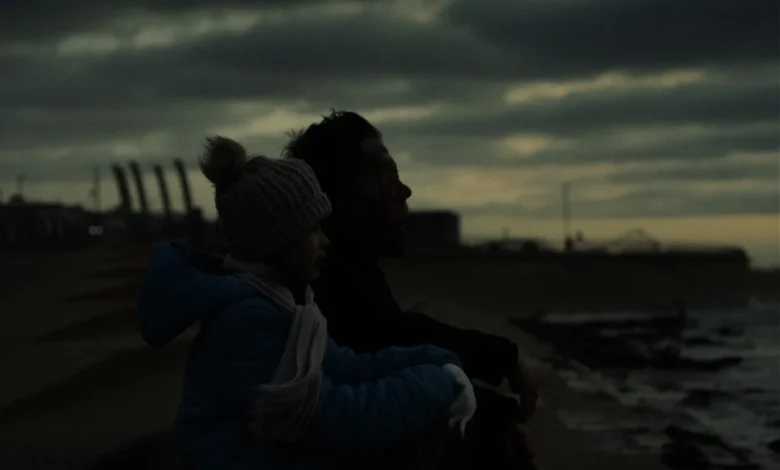
The narrative core of the film is not merely the chronological record of a career, but the burgeoning relationship between Pearson and Ellie, a teenager who shares his diagnosis. In a move facilitated by Ellie’s mother, Pearson assumes the role of a mentor. This dynamic serves as the film’s most authentic emotional anchor. For Pearson, the mentorship is a reciprocal process; while he provides guidance on navigating the societal stigmas associated with neurofibromatosis, Ellie’s aspirations act as a mirror, forcing Pearson to confront his own retreat from the spotlight.
Following a violent assault in a nightclub and a growing frustration with being cast as an object of pity or fascination, Pearson had largely deprioritized his acting ambitions. The film illustrates that his return to the screen—specifically his decision to accept the lead role in A Different Man—was fueled by a desire to model resilience for Ellie. Pearson articulates a clear philosophical stance: he cannot in good conscience encourage a young person to pursue a career in the arts if he himself is unwilling to challenge the industry’s narrow definitions of beauty and normalcy.
Data and Societal Context
The importance of this narrative is supported by broader data regarding the representation of disabled actors. According to reports from the Geena Davis Institute on Gender in Media and various disability advocacy groups, people with disabilities constitute approximately 20% of the global population, yet they remain significantly underrepresented in film and television. Furthermore, when disabled characters are portrayed, they are disproportionately played by non-disabled actors, a practice colloquially termed "cripping up."
Pearson’s career, particularly his role in A Different Man, challenges this paradigm by asserting that actors with facial differences should not be limited to roles that solely function as metaphors for "monstrosity" or "tragedy." The film highlights how historical depictions, such as those in The Elephant Man, have often served to solidify public prejudice rather than diminish it, providing a "spectacle" of difference that lingers in the collective consciousness. Pearson’s frustration with these tropes is palpable, as he recounts the real-world bullying he endured in the wake of such media portrayals, effectively bridging the gap between screen representation and lived psychological impact.
Stylistic Analysis and Production Choices
While the documentary succeeds as a character study, it is not without its stylistic pitfalls. Edward Lovelace employs a variety of cinematic techniques to emphasize the emotional gravity of Pearson’s internal state. However, some of these choices have been scrutinized for their overt dramatization. For instance, the use of tight, cinematic close-ups during mundane actions—such as the deletion of professional emails—and the heavy reliance on an emotive, "tinkly" piano score by Stephen Rennicks and Hugh Drumm, occasionally distract from the raw reality of the subject.
Critics have noted that these production decisions sometimes impose a sense of "importance" upon the audience, rather than allowing the natural gravity of Pearson’s experiences to resonate independently. This tension between the documentary’s candid subject matter and its polished aesthetic creates a paradox: the film is most effective when it simply observes, yet it frequently attempts to "sell" the depth of its subject through forced poignancy.
The Complexity of Human Experience
Despite these stylistic flourishes, the film avoids the "inspirational" trap that often plagues documentaries about individuals with disabilities. Pearson is allowed to be multifaceted: he is neither a saint nor a perpetual victim. The documentary includes segments where he discusses his own past behaviors, including instances where he engaged in bullying others, providing a nuanced look at the cycle of trauma. He speaks openly about the loneliness, anger, and anxiety that accompany his condition, refusing to frame his life as a simplistic triumph over adversity.
This refusal to sanitize his experience provides a more honest look at what it means to be "seen." By showing his fear regarding the progression of his condition, the film moves beyond the clichéd "disabled hero" narrative and into the realm of human endurance. It establishes that representation is not just about having a seat at the table; it is about having the autonomy to be flawed, to be complex, and to occupy space without being reduced to a single defining characteristic.
Broader Implications for the Film Industry
The release of Zero Intention of Living Quietly coincides with a shifting industry standard. Following the critical success of A Different Man, there has been increased dialogue among casting directors and studio executives regarding the necessity of authentic casting. The implications of this film extend beyond the individual; it serves as a case study for why diverse representation is essential for the future of cinema. When characters with facial differences are written with the same interiority as any other protagonist, the barrier between "us" and "them" begins to dissolve.
Ultimately, the film functions as a testament to the fact that "representation matters" is not merely a slogan, but a necessary component of a healthy, functioning cultural landscape. By capturing the bond between Pearson and Ellie, the documentary demonstrates that the most meaningful impacts of media are not found in awards or box office receipts, but in the tangible, human connections forged in the real world. Despite its occasional tendency to over-explain its own emotional weight, Zero Intention of Living Quietly stands as a vital addition to the canon of disability-focused cinema, asserting that the right to tell one’s own story is the most important form of visibility of all.