Trailer Leasing Surges Past Pandemic Peaks Amid Supply Contractions and Surging Industry Demand

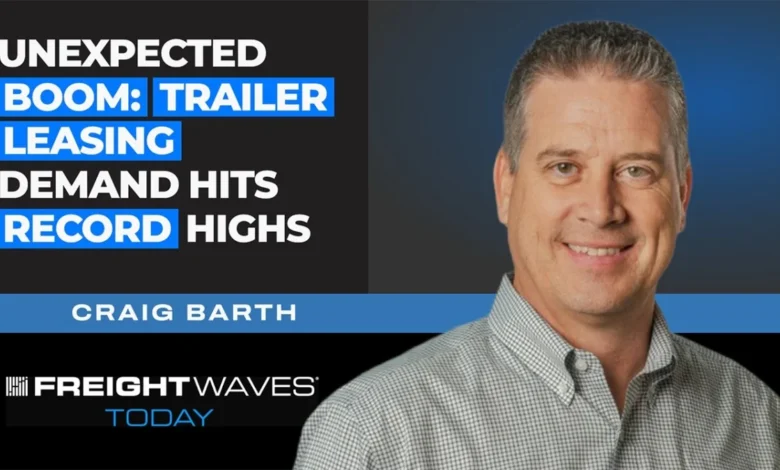
The North American commercial transport sector is witnessing an unprecedented phenomenon as trailer leasing utilization rates climb to historic highs, surpassing even the extraordinary demand levels recorded during the height of the COVID-19 pandemic. According to industry leaders, this current boom is fundamentally different from previous cycles. Rather than being fueled by an unexpected, massive influx of general freight volume, the market’s tightening is primarily a supply-side event. Fleets running older equipment have been forced to exit the market altogether, while persistent manufacturing deficits over the past several years have left the remaining carriers scrambling for newer, reliable assets from major leasing providers.
This unexpected market trajectory has caught many industry veterans off guard. Premier Trailer Leasing, one of the nation’s premier equipment providers, has reported utilization metrics that break previous company records. Craig Barth, the Chief Financial Officer of Premier Trailer Leasing, recently shed light on the mechanics of this surge, highlighting the shifting demand curves for older versus newer equipment, the acute pressures facing capital expenditure budgets, and a troubling wave of sophisticated rental fraud targeting unsuspecting operators.
The Anatomy of a Supply-Driven Boom
To understand the current dynamics of the trailer leasing market, analysts must look backward at the structural shifts within the carrier community over the past three years. Following the post-pandemic freight boom and subsequent market correction—often referred to in the industry as the "freight recession"—many small-to-midsize carriers faced prolonged margin compression. Elevated operational expenses, fluctuating spot rates, and rising insurance costs made it financially unsustainable for marginal operators to stay in business.
As these carriers closed their doors, they effectively removed blocks of older equipment from active circulation. Simultaneously, commercial trailer manufacturers have kept production volumes well below historical replacement levels for roughly three years. This prolonged underinvestment has created a generational gap in the equipment pipeline. Fleet operators who traditionally preferred to rotate out their trailer inventory every five years have found themselves holding onto units aged seven, eight, or even nine years.
Consequently, the maintenance burden on these aging assets has skyrocketed. Routine repairs, frequent component replacements, and the looming threat of catastrophic mechanical failures on the highway have pushed carriers away from owning older units and toward the reliability of leased equipment. The sweet spot for modern fleets has historically been trailers ranging from zero to five years old. However, that entire cohort has been completely absorbed by the market, forcing operators to accept older configurations or enter competitive queues for newly manufactured units.
A Sudden Shift in Market Sentiment
The turning point for the current market cycle materialized earlier in the year. According to Barth, customer sentiment underwent a dramatic transformation during the May and June timeframe. Historically, discussions regarding the late third-quarter and fourth-quarter equipment needs are measured, as companies assess their year-end balance sheets and prepare for seasonal lulls. In stark contrast, mid-year dialogues with Premier’s clientele turned "flat out optimistic."
This optimism triggered an aggressive pivot in corporate strategy. Typically, the fourth quarter is a period when leasing companies see equipment returning to the yard as seasonal distribution pushes wind down and fleets prepare for year-end accounting. This year, however, Premier Trailer Leasing is breaking seasonal norms. Instead of scaling back or letting yards fill up with idle units, the company is purchasing every available trailer it can secure to satisfy immediate customer demand.
Furthermore, Premier is not just looking at the closing months of the current calendar year; the organization is actively placing equipment orders well into the future, attempting to get ahead of what executive leadership projects will be an extraordinarily strong market environment in 2027. This long-term capital commitment underscores the fundamental belief that the current supply tightness is not a temporary anomaly, but rather the beginning of a prolonged structural deficit in available equipment.
Sector-Specific Pressures: Flatbeds and Dry Vans
Different segments of the logistics and transportation ecosystem are experiencing distinct pressures, though supply constraints remain the common denominator across all equipment categories.
Flatbed trailers, in particular, are facing acute market tension. The primary driver behind this specialized demand is the unprecedented wave of heavy industrial development, most notably the nationwide construction boom surrounding massive data centers, semiconductor manufacturing plants, and infrastructure projects. These projects require a continuous flow of heavy building materials, structural steel, and specialized industrial equipment. For flatbed operators, the primary constraint is no longer the price of the lease, but simple, physical availability. Finding an uncommitted flatbed ready for deployment has become a formidable challenge for project logisticians.
Concurrently, the dry van segment is experiencing robust utilization driven by a different economic engine: resilient consumer spending. Despite broader macroeconomic anxieties and persistent inflationary pressures, consumer demand heading into the traditional holiday shipping season has remained remarkably steady. Retailers and consumer goods distributors have required additional dry van capacity to position inventory strategically across regional distribution centers, further draining the available pool of uncommitted equipment.
Capital Expenditure Constraints and Fleet Priorities
Another critical catalyst driving carriers toward leasing models rather than direct acquisitions is the complex landscape of fleet capital expenditures (CapEx). Commercial motor carriers operate in an environment of perpetual reinvestment, balancing the replacement cycles of power units against trailer inventories.
In recent quarters, a significant portion of the typical fleet’s available capital has been consumed by truck renewals. Navigating increasingly stringent emissions standards, transitioning to newer model-year tractors, managing volatile diesel and alternative fuel costs, and increasing driver compensation to retain talent have collectively strained operator balance sheets. When faced with these competing financial priorities, fleet executives are frequently compelled to defer direct capital purchases of trailers.
Leasing offers a pragmatic financial bridge. By turning a major capital expense into a predictable operational expenditure, leasing allows motor carriers to preserve vital cash flow and liquidity. This financial flexibility is especially crucial for mid-sized and regional fleets that lack the deep capital reserves of mega-carriers but still need to scale their physical footprint to capture available freight opportunities.
Emerging Fraud Schemes Target Trailer Renters
While the operational and financial aspects of the trailer leasing market present formidable challenges, executive leadership has also raised urgent alarms regarding a parallel threat: sophisticated financial fraud targeting individuals and businesses seeking equipment rentals.
As legitimate rental inventory becomes scarcer and harder to secure through standard channels, bad actors have identified an opening to exploit desperate or unverified operators. The mechanics of the scam typically involve fraudulent actors monitoring commercial drop yards, industrial parks, and major distribution centers to identify trailers that remain parked and idle for consecutive periods, usually three to four days.
Once these idle units are cataloged, the perpetrators photograph them and post fraudulent rental listings across online classified platforms and social media marketplaces, most notably Facebook Marketplace. These listings often feature attractive pricing and immediate availability to lure unsuspecting victims.
To maintain the illusion of legitimacy, the fraudsters utilize advanced, AI-generated invoices complete with corporate-looking letterheads. When victims express interest and agree to terms, the scammers demand immediate electronic payment via peer-to-peer applications such as Zelle or Venmo. By the time the victim attempts to pick up the equipment or contacts the actual asset owner, the funds have been irrevocably transferred, and the fraudulent listings vanish.
Industry executives emphasize that established, reputable leasing companies maintain strict financial protocols. Premier Trailer Leasing, for instance, never accepts peer-to-peer payment apps like Zelle or Venmo for business transactions. Security experts and company representatives strongly advise anyone seeking commercial trailer rentals to bypass online intermediaries and directly contact verified corporate headquarters or regional branch networks—such as Premier’s network spanning 42 branch locations across 31 states—to independently verify the legitimacy of any offer before transmitting funds.
Broader Economic Implications and Outlook
The current state of the trailer leasing market serves as a bellwether for the broader supply chain and logistics ecosystem. The convergence of diminished manufacturing output, the natural attrition of older equipment, and concentrated capital investments in power units has created a tight bottleneck that will take years to fully unwind.
For motor carriers, the implications are clear. Securing capacity will require closer partnerships with established, institutional lessors, longer-term planning horizons, and a heightened emphasis on preventive maintenance protocols. Operators who neglect routine upkeep on their existing fleets risk compounding the broader market deficit by forcing equipment out of service prematurely.
At the same time, the aggressive forward-buying strategies of major leasing companies signal confidence in the medium-term economic outlook. As manufacturing pipelines slowly catch up and industrial projects continue to demand specialized transport solutions, the trailer market will remain a critical focal point for supply chain resilience. Industry stakeholders moving forward must navigate not only the day-to-day realities of tight equipment availability and rising maintenance costs, but also the digital-age security threats that accompany a modern, interconnected logistics marketplace.