Google launches Universal Cart to streamline fragmented online shopping experiences for U.S. consumers

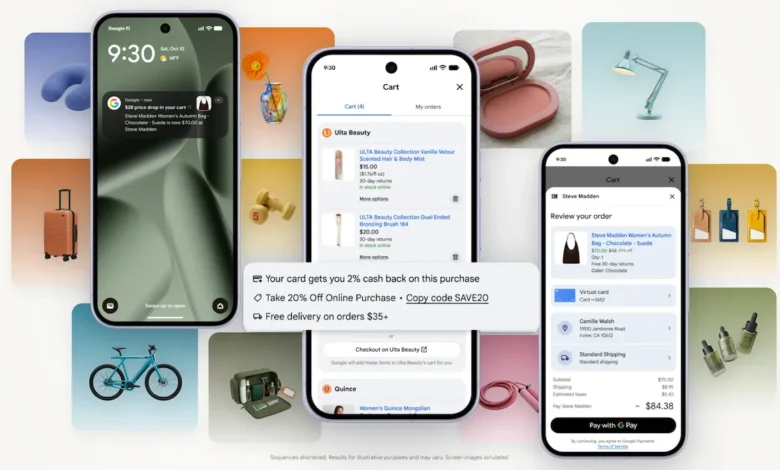
Google officially launched "Universal Cart" on Thursday, a sophisticated digital tool designed to unify the fragmented online shopping journey for users in the United States. Initially unveiled as a preview during the Google I/O developer conference in May, the tool represents a significant shift in how search engines facilitate commerce. By allowing users to aggregate products from disparate retailers into a single, centralized hub, Google is moving beyond its traditional role as a discovery engine and positioning itself as an active participant in the consumer transaction lifecycle.
The Evolution of the Shopping Journey
The modern e-commerce experience is characterized by extreme fragmentation. A typical consumer might browse social media for inspiration, conduct price research via a search engine, visit multiple brand websites to compare specifications, and eventually navigate to a third-party retailer to complete a purchase. This process often leads to "cart abandonment" and the loss of product data across different browser sessions and devices.
Universal Cart is engineered to solve these friction points. When a user identifies an item through Google Search or the Gemini AI app, they can save it to their universal cart. This digital repository persists across sessions, ensuring that items remain available for review regardless of which retailer originally hosted the product. By acting as a persistent bridge between search intent and final conversion, Google is effectively creating a cross-platform shopping assistant that eliminates the need for users to manually track items or bookmark numerous individual store tabs.
Chronology of Google’s Commerce Strategy
Google’s foray into agentic commerce has been a multi-year project, accelerating significantly since the emergence of large language models (LLMs). The timeline of these developments reflects a broader corporate strategy to capture more value from the purchase funnel:
- May 2024: Google first demonstrated the prototype of Universal Cart at I/O, showcasing how AI could bridge the gap between discovery and checkout.
- Early 2025: Google introduced the Universal Commerce Protocol (UCP), an open standard designed to standardize how AI agents interact with retail backends, payment gateways, and inventory systems.
- April–September 2025: Competitors like Amazon and OpenAI aggressively expanded their own AI-driven shopping capabilities, prompting Google to fast-track its retail-facing integrations.
- November 2025: The official rollout of Universal Cart to U.S. users, marking the first time the tool has moved from a controlled experimental phase to general public access.
Technical Infrastructure and the Universal Commerce Protocol
At the heart of this functionality is the Universal Commerce Protocol (UCP). Launched earlier this year, UCP serves as the technical backbone that allows Google’s AI agents to communicate seamlessly with various e-commerce platforms. Without such a standard, AI agents would struggle to navigate the unique checkout flows of different retailers.
By utilizing UCP, Google can facilitate a more cohesive checkout experience. The system is designed to identify and apply relevant promotional codes automatically and calculate total costs, including tax and shipping, before the user ever leaves the Google ecosystem. Furthermore, the tool integrates with the user’s stored payment information, allowing for credit card-specific perk optimization. For instance, if a user has multiple cards on file, the system can suggest the one that offers the best cash-back or rewards points for a specific category of purchase.
Beyond Discovery: Data-Driven Shopping Benefits
The utility of Universal Cart extends beyond simple storage. Google has integrated real-time data monitoring to provide proactive alerts, a feature designed to increase user retention within the app. The system monitors price volatility and inventory status for every item saved in the cart.
If a product experiences a price drop, the user receives a notification, reducing the need for manual price tracking. Similarly, for items that are currently out of stock, the tool provides automated updates as soon as the retailer replenishes inventory. This level of granular tracking was previously only available through third-party browser extensions or dedicated price-tracking websites. By bringing this functionality in-house, Google is betting that the convenience of an all-in-one hub will keep users within the Gemini and Search environments throughout the entire buying process.
The Competitive Landscape of Agentic Commerce
Google’s latest move is part of a larger industry-wide race to dominate "agentic commerce." As consumers grow accustomed to interacting with AI for daily tasks, technology giants are competing to see whose agent will handle the final transaction.
Amazon has recently deployed AI agents capable of searching third-party stores and facilitating purchases without requiring the user to navigate the Amazon retail site manually. Simultaneously, OpenAI has been refining its own shopping systems, integrating them into the ChatGPT interface to offer personalized recommendations that culminate in a direct checkout process.
Industry analysts suggest that the battle is no longer about who has the best search results, but who has the most reliable "agent." A successful shopping agent must possess high levels of trust, secure payment processing, and the ability to handle complex edge cases—such as returns, shipping delays, and customer service inquiries—without breaking the flow of the purchase. Google’s reliance on UCP is a calculated effort to ensure that its agents are the most interoperable, potentially giving it an edge over more walled-garden approaches favored by competitors.
Implications for Retailers and Advertisers
For retailers, the launch of Universal Cart presents both opportunities and challenges. On one hand, integration with Google’s ecosystem could drive higher conversion rates, as the tool effectively removes the technical hurdles that lead to abandoned checkouts. By lowering the barrier to purchase, smaller retailers may find it easier to compete with larger e-commerce platforms.
However, some industry experts raise concerns regarding the "middleman" effect. If Google becomes the primary interface for the purchase, the retailer risks losing a direct relationship with the consumer. Data regarding user preferences, browsing habits, and purchase history may be increasingly funneled through Google’s AI, potentially giving the tech giant more leverage in advertising negotiations. Retailers must balance the benefits of increased discoverability against the potential loss of brand loyalty and direct consumer interaction.
Fact-Based Market Analysis
The move toward AI-integrated shopping is supported by significant shifts in consumer behavior. According to recent market reports, a growing percentage of younger consumers start their product research on social platforms or AI chatbots rather than traditional search engines. By integrating the cart into the Gemini experience, Google is responding to this migration.
Data suggests that convenience is the primary driver of digital commerce growth. Features that reduce the number of clicks required to finish a purchase correlate strongly with higher conversion rates. By consolidating notifications, price tracking, and payment processing into a single interface, Google is attempting to create a "sticky" ecosystem that discourages users from switching to rival platforms.
Looking Ahead
The rollout of Universal Cart is currently limited to the United States, but if the tool achieves high adoption rates, it is likely that Google will expand the feature to international markets. The long-term success of the project will likely depend on three factors: the number of retailers that adopt the Universal Commerce Protocol, the accuracy of the AI in managing complex checkout scenarios, and the user’s willingness to entrust their payment data to an AI-driven interface.
As the lines between search, social media, and e-commerce continue to blur, Universal Cart serves as a clear signal that the future of the internet is not just about finding information, but about the seamless execution of tasks. Whether this leads to a more efficient marketplace or further centralizes power within a few dominant tech companies remains a central point of discussion among regulators and industry stakeholders. For now, the integration of these features into the Gemini app underscores Google’s commitment to staying at the forefront of the generative AI revolution, turning search results into actionable, real-world outcomes.
Related posts: