QVC Prepares for its 40th Milestone Holiday Season by Bridging Traditional Live Television with 24/7 TikTok Commerce

As the retail landscape shifts dramatically toward digital integration, QVC is preparing to celebrate a major operational milestone: its 40th holiday shopping season. Known historically as a pioneer of live-television commerce in the United States, the network is executing a sophisticated, multi-pronged merchandising and marketing strategy this year. By simultaneously leveraging traditional broadcast television, its proprietary web domains, and around-the-clock live streaming on TikTok Shop, the company aims to capture consumer spending during the critical final quarter of the year while accelerating its broader corporate turnaround.
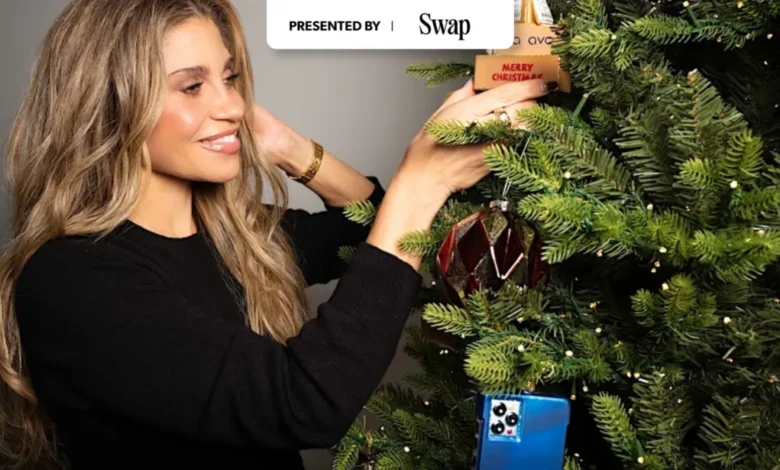
The upcoming holiday lineup includes high-profile gift offerings from globally recognized brands such as Le Creuset, KitchenAid, Laura Mercier, and Nespresso. To differentiate its inventory, the retailer has also secured exclusive product launches, including pieces from Off/Duty by Coco Rocha and RM Studio by Rebecca Minkoff. To kick off the consumer shopping calendar, QVC has scheduled its multi-day "Nonstop Holiday Party" event from November 6 through November 8. This promotional window will feature early Black Friday discounts alongside appearances from prominent cultural figures and celebrities, including Martha Stewart, John Legend, and Teri Hatcher. Additionally, the company has tapped actor Danielle Fishel—widely recognized for her role in the television series Boy Meets World—to portray Mrs. Claus in an extensive seasonal marketing campaign.
A Legacy of Live Commerce Meets Modern Digital Platforms
Founded in 1986, QVC established itself as a foundational pillar of home shopping, inviting consumers to purchase goods via telephone instructions delivered through scheduled television broadcasts. Over the decades, the format cultivated a deeply loyal demographic base characterized primarily by engaged female shoppers who valued the personal rapport built by trusted on-air hosts.
However, the rapid migration of consumer attention toward digital platforms, social media, and on-demand streaming necessitated a radical structural pivot. Recognizing that modern audiences increasingly treat social feeds as a digital equivalent to channel surfing, QVC management authorized a major technological expansion into social commerce. In April 2025, QVC launched a 24/7 live social shopping experience directly on TikTok Shop, joining forces with hundreds of thousands of digital creators to amplify its reach.
This digital strategy has yielded substantial quantitative results. Throughout 2025, QVC and its corporate sibling network, HSN, successfully acquired nearly 1 million new United States-based customers exclusively through TikTok Shop. This performance earned the QVC Group recognition as the Seller of the Year at the TikTok Shop Awards. Today, the company’s retail ecosystem spans linear television, QVC.com, mobile applications, dedicated streaming platforms, and social media networks, creating a vast omnichannel funnel.
Navigating Corporate Restructuring and Financial Recovery
The ambitious holiday rollout arrives at a pivotal juncture for QVC Group, Inc. as the parent organization works aggressively to return to sustained revenue growth. For several years, the company faced substantial macroeconomic headwinds, including declining linear cable television viewership, shifting consumer discretionary spending patterns, international trade tariffs, and intense competition from direct-to-consumer e-commerce giants.
These pressures culminated in a formal Chapter 11 bankruptcy filing by QVC Group in April, a strategic restructuring move designed to stabilize the balance sheet. Demonstrating operational resilience, the company emerged from the bankruptcy proceedings in August, successfully reducing its outstanding corporate debt by more than $5 billion. Financial filings indicate the scale of the ongoing transition: QVC Group reported total net revenue of $1.765 billion for the three-month fiscal period ending June 30, marking a decrease from $1.984 billion during the corresponding period a year prior. Leadership views the upcoming holiday season as a crucial catalyst to reverse top-line contractions and re-engage both legacy consumers and newly acquired digital shoppers.
Bridging Two Worlds: Insights from SVP of Social Commerce Krystyna Taheri
To better understand how a four-decade-old broadcasting institution adapts to the hyper-fast environment of social media, Modern Retail recently spoke with Krystyna Taheri, Senior Vice President of Social Commerce at QVC Group. Taheri oversees the complex operational balance between the company’s traditional television studios and its newly established social media infrastructure.
Discussing the operational differences between the two mediums, Taheri emphasized that while the underlying commercial principles remain consistent, the execution requires entirely different mechanics. "QVC’s been doing this for 40 years, and I would say we’re very good at experimenting in formats and style on TV," Taheri noted. "We still do about 60,000 hours a year of live TV. And then, on TikTok, we do about 200 hours a week of just live. While we’ll share some of the same products, we have different hosts. There’ll be some crossover, but we have TikTok-specific hosts."
The pacing of the presentation represents one of the most significant departures from traditional broadcasting. According to Taheri, social selling demands rapid engagement. "It’s a different style of live selling. It’s a lot faster. You’re talking 20-second, 30-second hooks and sells, versus a seven- to eight-minute segment, which is what we do on TV. So that’s been a big fundamental shift."
Designing Dedicated Studios for the Digital Age
The infrastructural requirements for streaming 24 hours a day, 7 days a week on platforms like TikTok required QVC to construct 10 specialized live studios. Unlike traditional television production facilities—which rely on sophisticated, automated robotic camera teams—the TikTok studios are intentionally designed to mirror the native aesthetic of social media content creation, frequently utilizing mobile devices for filming.
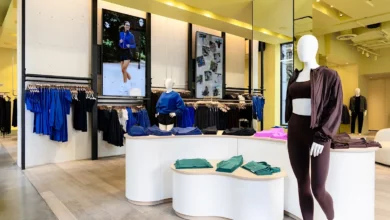
QVC has customized these physical spaces to cater to distinct product categories. The main channel utilizes a clean, branded set design, while the fashion channel mimics the layout of a walk-in closet. The beauty studio employs an up-close perspective where hosts operate from a simple tray setup to ensure maximum visibility during product application. Meanwhile, the home and kitchen studios incorporate warm environments featuring fireplaces and food-preparation areas, working toward fully live cooking demonstrations. These micro-environments successfully replicate the immersive spatial storytelling of television within a compact, digital-first footprint.
Talent Development, Data Analytics, and Agile Experimentation
The transition to social commerce also required a new approach to talent management and coaching. QVC recruits a hybrid roster of digital personalities—some possessing established external followings, others possessing raw selling talent—and subjects them to rigorous internal training programs. Hosts participate in weekly tape reviews, sitting down with producers to analyze successful segments alongside underperforming broadcasts.
Rather than fixating solely on immediate revenue output, QVC instructs its hosts to monitor core platform engagement metrics, such as click-through rates and click-to-order rates, understanding that sustained engagement naturally drives conversion growth. Furthermore, the company encourages an aggressive test-and-learn mentality. By allowing hosts considerable creative autonomy—such as designing niche recurring programs like the "Girly Girl Vibes" show—the network treats its continuous live broadcasts as an immediate consumer focus group.
Demographics and the Omnichannel Customer Flywheel
Despite the distinct operational styles of television and social video, QVC has observed fascinating behavioral patterns across its consumer base. Demographic analysis indicates that TikTok buyers skew older than the platform’s average user base, yet younger than QVC’s core television audience. The consumer base remains predominantly female, heavily influenced by the nature of the product assortment.
Significantly, the acquisition of 1 million net new customers on TikTok Shop over the past year demonstrates that social platforms are successfully capturing demographics that had never previously interacted with QVC via television or its primary web domain. At the same time, company leadership observes a powerful omnichannel flywheel effect. A subset of dedicated brand loyalists actively transitions between platforms, discovering products on linear broadcasts, engaging with content on TikTok, and eventually exploring comprehensive offerings on QVC.com.
Strategic Execution for the Holiday Peak
As the retail industry faces heightened competition during the final quarter of the year, QVC is deploying a highly coordinated, aggressive holiday calendar. Acknowledging that consumer shopping behavior begins earlier each year—noted by strong early sales of holiday decor following the company’s annual "Christmas in July" promotion—management views Cyber Weekend as a make-or-break trading period.
To capture consumer demand during Black Friday and Cyber Monday, QVC has planned extensive product drops, major exclusive launches, and marathon "mega lives" lasting eight to ten hours. These extended streams feature multiple rotating hosts, fresh set designs, and substantial marketing investments intended to drive immediate urgency. These peak events are supported by a continuous drip of promotional programming, including the early-November "Nonstop Holiday Party," creating a cohesive narrative designed to maintain viewer excitement throughout the entire holiday shopping season.