Middle East Tensions Mount as Iran Signals Openness to Diplomacy Amid Critical Elections in US and Israel

The geopolitical landscape of the Middle East faces an exceptionally volatile phase as towering concerns over a potential return to all-out conflict between Iran, Israel, and the United States take center stage. With critical electoral cycles looming in both the United States and Israel, the diplomatic and military calculus across the region has grown increasingly fragile. High-ranking Iranian officials have stepped forward to emphasize that communication channels and diplomatic backchannels with Washington remain active through intermediaries, even as military postures harden. Meanwhile, U.S. President Donald Trump has offered mixed signals regarding immediate military action against the Islamic Republic, declaring that a strike is not on the immediate agenda while American naval and air forces maintain a high state of readiness in strategic maritime choke points like the Strait of Hormuz.
This high-stakes diplomatic and military standoff unfolds against a backdrop of deeply entrenched regional hostilities. From ongoing exchanges of drone and missile fire involving Houthi forces in Yemen and Saudi infrastructure to targeted Israeli military operations in the Gaza Strip and the occupied West Bank, the collateral impacts on civilian populations continue to mount. International humanitarian organizations are grappling with systemic access issues, underscored by recent legal battles that have forced the resumption of detainee list transfers to the International Committee of the Red Cross (ICRC). As regional leaders navigate this multifaceted crisis, the intersection of domestic political pressures and external security threats threatens to reshape the strategic equilibrium of the entire Middle East.
Diplomatic Channels Remain Open Despite Stalled Formal Talks
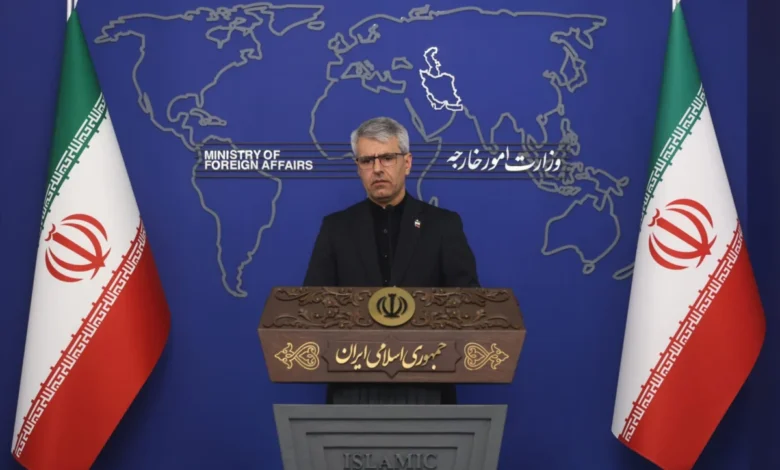
Tehran has maintained that the pathway to a negotiated settlement remains open, despite months of apparent stagnation in formal bilateral discussions. Esmail Baghaei, spokesperson for Iran’s Ministry of Foreign Affairs, stated during a recent broadcast interview that backchannel communications between Tehran and Washington are actively passing through regional intermediaries. However, Baghaei underscored the profound ideological and strategic chasm separating the two adversaries, pointing out that Washington continues to pursue unilateral demands. He specifically criticized the frequent invocation of the phrase "complete surrender" by U.S. leadership, asserting that such maximalist terminology is fundamentally unacceptable to any representative of the Iranian state.
The persistence of these diplomatic overtures occurs against a backdrop of escalating domestic anxiety within Iran. Ordinary citizens and political analysts alike have expressed deep apprehension regarding the trajectory of U.S. and Israeli foreign policy as electoral deadlines approach. Many fear that political leaders in Washington and Jerusalem might utilize external military engagements to rally domestic constituencies or preemptively neutralize perceived regional threats. Despite these anxieties, the Iranian foreign ministry’s willingness to acknowledge ongoing indirect contacts suggests that neither side has completely abandoned the prospect of managing hostilities through diplomatic mechanisms, even as military readiness reaches a fever pitch.
Mixed Military Signals and Regional Posturing
The threat of direct military escalation has generated intense speculation, prompting varied responses from key political and military leaders. When pressed by journalists regarding potential plans for a U.S. military strike against Iranian targets, President Trump initially deflected, noting the strategic folly of telegraphing operational timelines. He subsequently clarified his administration’s immediate posture by stating unequivocally that a military strike would not occur "today."
This calibrated rhetoric coincides with robust displays of American military deterrence in the region. Admiral Brad Cooper, head of U.S. Central Command, recently conducted aerial inspections over the Strait of Hormuz, highlighting the ongoing protection provided to international shipping. According to U.S. military assessments, more than 3,000 commercial vessels have successfully transited the critical waterway over the past six months under the protective umbrella of American naval support, underscoring Washington’s commitment to maintaining global trade routes against asymmetric disruptions.
In Jerusalem, Prime Minister Benjamin Netanyahu adopted a sharply combative tone during an inspection of an anti-ballistic missile battery. Citing sensitive intelligence reports, Netanyahu warned that Iran or its regional proxy networks might attempt to launch synchronized attacks designed to disrupt the upcoming Israeli elections. "The IDF is ready both to defend and to strike," Netanyahu warned in a televised address, issuing a stark admonition that any hostile maneuver would be met with "disproportionate blows far greater than you can imagine." This posture reflects a broader convergence of domestic political vulnerability and strategic deterrence strategies across the allied nations.
Humanitarian Developments: ICRC Resumes Detainee List Transfers
Amid the geopolitical turbulence, a significant humanitarian development emerged regarding the treatment of Palestinian detainees held by Israeli authorities. The International Committee of the Red Cross (ICRC) confirmed that it has begun receiving updated lists of Palestinian detainees originating from the occupied West Bank and Gaza Strip. This resumption follows a decisive ruling by the Israeli Supreme Court, which ordered the government to reinstate the sharing of administrative detention records and to facilitate ICRC prison visits aimed at evaluating conditions of confinement.
The humanitarian protocols had been suspended by the Israeli government immediately following the Hamas-led attacks on October 7, 2023, and the subsequent outbreak of the Gaza war. Thousands of Palestinians were rounded up during sweeping military operations across the West Bank and Gaza. While a portion of these detainees was released during previous temporary ceasefires, human rights monitors estimate that approximately 9,000 individuals remain incarcerated under conditions that international observers have frequently characterized as severe.
ICRC spokesperson Gilad Grossman welcomed the resumption of administrative data sharing as a positive step, though he noted that physical prison visits by ICRC delegates have not yet recommenced. The humanitarian agency remains in active dialogue with Israeli prison authorities, expressing cautious optimism that comprehensive on-site inspections will be restored in the near future to ensure adherence to international humanitarian standards.
Continued Aerial Assaults and Infrastructure Vulnerabilities in the Arabian Peninsula
The conflict’s geographical expansion was further underscored by renewed kinetic activity targeting Saudi Arabian infrastructure. King Khalid International Airport in Riyadh announced the reopening of Terminals 1 and 2 for both domestic and international air traffic. However, this normalization of civil aviation was immediately challenged when Iran-backed Houthi forces in neighboring Yemen launched a coordinated barrage of ballistic missiles and explosive drones directed at the Saudi capital.
Major General Turki al-Malki, spokesperson for the Saudi-led coalition, confirmed that national air defense systems successfully intercepted and destroyed the incoming ballistic missile and drone payloads before they could reach their intended civilian targets. Nevertheless, the peripheral impact of these interceptions continues to pose severe risks to non-combatants. Saudi civil defense authorities reported that falling debris from two intercepted ballistic missiles in the southern governorates of Khamis Mushait and Ahad Rafida resulted in injuries to two individuals—one a Saudi national and the other a resident of Asian nationality. Furthermore, the shrapnel caused structural damage to three residential buildings and seven private vehicles.
These incidents recall the devastating attack in early October, when Houthi strikes struck an airport complex housing multiple terminals in Riyadh, resulting in 17 fatalities and over 330 injuries. The persistent vulnerability of Saudi strategic infrastructure highlights the limitations of purely defensive military measures and underscores the urgent necessity of a sustainable political settlement in Yemen.
Gaza Casualties Mount Amid Unrelenting Israeli Bombardments
On the ground in the Gaza Strip, the human toll of the ongoing military campaign continues to accumulate unabated. Palestinian medical officials reported that a fresh series of Israeli airstrikes resulted in the deaths of at least seven individuals across multiple urban and residential centers. Two distinct strikes in Gaza City accounted for four fatalities, while a separate bombardment in the southern city of Khan Younis claimed the lives of two brothers. An additional casualty was recorded in the central town of Deir al-Balah.
These fatalities were formally verified by medical personnel across a network of major healthcare facilities, including Shifa Hospital, Hamad Hospital, Nasser Hospital, Al-Aqsa Hospital, and an operating American field hospital. The Israeli military did not issue an immediate operational comment regarding these specific strikes.
More than a year has elapsed since the initial phase of the current conflict configuration, yet Israeli forces continue their systematic bombardment of targets they identify as militant infrastructure. According to the Gaza Health Ministry—operating under the auspices of the Hamas-administered government—the cumulative death toll since the hostilities escalated has surpassed 1,500 individuals. While the ministry’s statistical tracking does not traditionally disaggregate civilian casualties from active combatants, international aid organizations note that women and children consistently account for nearly half of all documented fatalities, reflecting the dense urban character of the theater of operations.
International Appeals: The Humanitarian Crisis in Taiz and Papal Intervention
The broader humanitarian crisis across the Arabian Peninsula drew high-level international concern, notably from the Vatican. Pope Leo XIV issued an impassioned public appeal calling for an immediate cessation of hostilities in Yemen, specifically highlighting the catastrophic conditions unfolding in the southwestern city of Taiz. More than one million residents remain trapped under a prolonged, suffocating siege imposed by Houthi forces, cutting off normal commercial and humanitarian access.
In a message disseminated via social media, the pontiff emphasized the acute deprivation facing the civilian population, pointing to critical shortages of potable water, basic foodstuffs, and essential medical supplies. Local reports corroborate this dire assessment, noting that families in Yemen’s third-largest city have been forced to implement severe water-rationing protocols. Simultaneously, chronic shortages of staple groceries have triggered hyperinflation, pushing essential goods far beyond the financial reach of ordinary households.
Libyan Political Leadership Responds to Western Rhetoric
Beyond the immediate theater of active combat, diplomatic friction emerged involving North African leadership and American domestic political discourse. Interim leaders in Libya issued strong rejections of recent remarks made by former U.S. President Donald Trump, who categorized Libya alongside several other nations as "terror-infested" during a domestic campaign rally. Trump had utilized the rhetorical designation to criticize political opponents regarding immigration policies concerning nations experiencing prolonged state collapse.
Prime Minister Abdulhamid Dbeibah, heading Libya’s Government of National Unity based in Tripoli, formally rejected what he termed "any affront" directed at the Libyan state or its citizenry. Dbeibah emphasized the profound sacrifices made by Libyans in their ongoing domestic struggles against extremist factions. Concurrently, the rival eastern-based administration, operating under the self-styled Libyan National Army, echoed these sentiments, formally calling upon national authorities to lodge a diplomatic protest against the American political commentary. Libya has remained mired in deep institutional division and political instability since the NATO-backed uprising and civil conflict that led to the overthrow of longtime dictator Moammar Gadhafi in 2011, leaving the nation governed by rival administrations that struggle to project unified sovereignty.
Implications and Broader Strategic Outlook
The convergence of these disparate yet interconnected geopolitical friction points illustrates the extreme fragility governing international relations in the Middle East. The delicate balance between deterrence and escalation remains subject to rapid shifts driven by domestic political imperatives, electoral timelines, and the unpredictable nature of proxy warfare. While backchannel communications between Washington and Tehran indicate a mutual desire to avoid a catastrophic, all-out military confrontation, the margin for error has narrowed significantly.
As international actors continue to grapple with humanitarian catastrophes in Gaza, Yemen, and the West Bank, the imperative for structured, inclusive diplomatic frameworks becomes increasingly urgent. The coming days—marked by high-stakes electoral decisions in the United States and Israel—will likely serve as a critical inflection point, determining whether the region steps back from the precipice of expanded conflict or descends further into systemic instability.
Related posts: