UK Sanctions Cryptomus as Global Crackdown on Illicit Crypto Payment Hubs Intensifies

The United Kingdom has officially imposed sweeping economic sanctions against Cryptomus, a notorious cryptocurrency payment processor that has functioned as a central artery for the Russian wartime economy. The move represents a significant escalation in Western efforts to dismantle the infrastructure supporting ransomware syndicates, narcotics trafficking, and the sophisticated cybercrime networks that have become deeply embedded in the Russian financial landscape. By freezing the entity’s assets within British banks and prohibiting all UK-based firms from engaging in business with the platform, the UK government is attempting to sever a vital link between the global digital economy and state-sanctioned illicit financial activity.
Alongside Cryptomus—which has operated under various aliases including Certa Payments and Xeltox Enterprises—the sanctions package targets several other high-volume virtual payment conduits: VexPay, TokenSpot, and the Tsunami Payments service. These platforms, often operating with minimal to no regulatory oversight, have collectively facilitated the movement of billions of dollars in illicit funds, effectively providing a digital lifeline for entities seeking to bypass traditional international financial restrictions.
A Chronology of Evasion and Institutional Defiance
The rise of Cryptomus and its subsequent evolution into a hub for criminal finance began in 2022, shortly after the onset of the conflict in Ukraine. From its inception, the platform positioned itself as a "no-questions-asked" payment processor, attracting a clientele composed largely of ransomware operators, darknet marketplace administrators, and money launderers.
The platform’s history is characterized by a "chameleonic" strategy, frequently rebranding to evade regulatory scrutiny. In December 2024, a major investigation revealed that Cryptomus was a primary processor for dozens of Russian cryptocurrency exchanges. The firm’s resilience was tested in 2025 when Canadian authorities levied a record-breaking CAD $176 million fine against the platform for flagrant anti-money laundering (AML) violations. Rather than complying or ceasing operations, Cryptomus effectively ignored the fine, appealed the ruling to delay enforcement, and launched a parallel, unregulated service named "Heleket."
By mid-2026, the platform had become so deeply entrenched in the criminal ecosystem that its transaction volume reached staggering proportions. According to research conducted by TRM Labs in April 2026, Cryptomus had processed more than $7 billion in transactions since 2022. These funds were linked to a disturbing spectrum of criminal activity, ranging from the distribution of child sexual abuse material to the financing of terrorist networks and international human trafficking operations.
Data-Driven Insights into the Illicit Ecosystem
Blockchain analytics firms have provided critical data regarding the scale of the operations now under sanction. Chainalysis, which has been tracking the infrastructure supporting Russia’s wartime economy, noted that Cryptomus and Heleket became the primary hubs for illicit financial flows. In a late 2025 assessment, the firm reported that the number of illicit counterparties interacting with these services surged to over 900 in a single month.

The effectiveness of these platforms in moving funds was directly tied to their refusal to implement standard Know Your Customer (KYC) protocols. While the platform did occasionally attempt to institute superficial compliance measures to avoid total deplatforming, these efforts were largely performative. TRM Labs observed that when stricter KYC requirements were introduced, transaction volumes cratered, prompting the company to redirect traffic toward its "no-KYC" parallel service, Heleket. This strategic pivot allowed the organization to continue its operations with minimal disruption, proving that regulatory fines alone were insufficient to curb its activities.
The "Five Eyes" Precedent and Regulatory Friction
The recent sanctions are particularly notable for their geopolitical implications. Richard Sanders, a prominent blockchain analyst who spent months mapping the payment infrastructure of these platforms, highlighted that this is the first documented instance of a "Five Eyes" nation (Australia, Canada, New Zealand, the UK, and the US) imposing sanctions on a cryptocurrency entity incorporated within another Five Eyes jurisdiction.
"A fine doesn’t stop a cryptocurrency payment processor from processing payments," Sanders noted in his analysis of the situation. "Sanctions kill the operation. The distinction matters."
The difficulty in regulating these entities stems from their use of shell corporations and fraudulent regulatory bodies. Investigations have previously linked the parent company of Cryptomus, Certa Payments, to a web of fake financial institutions. The sole shareholder of the parent firm was identified as a 25-year-old individual who also oversaw the "WS Management and Advisory Corporation." This entity positioned itself as a regulatory body for the disputed region of Western Sahara. By issuing its own "licenses" to cryptocurrency firms, these platforms created a facade of legitimacy that allowed them to operate with a veneer of legality while facilitating high-risk, illicit transactions.
The Mechanics of the "Western Sahara" Ruse
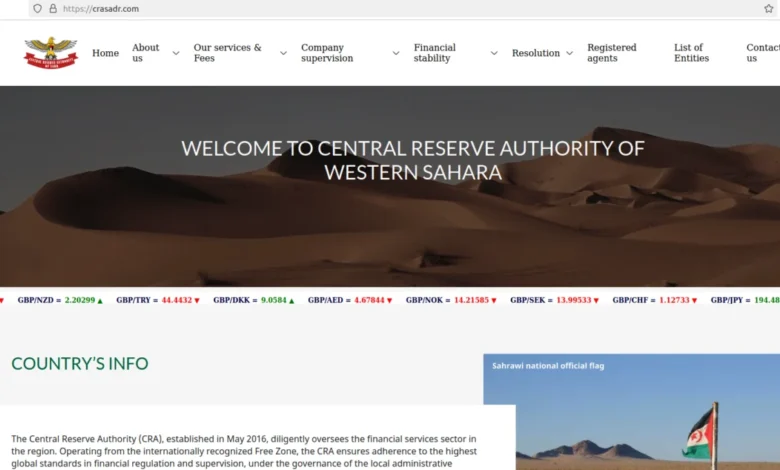
The complexity of the Cryptomus operation extended to its use of digital infrastructure. The website for the "Central Reserve Authority of the Western Sahara" (crasadr.com) was used to grant licenses to a variety of questionable businesses, including online gaming sites and foreign exchange brokers. Evidence suggested that Certa Payments shared servers with domains related to these fictional regulatory entities, indicating a highly coordinated attempt to deceive global financial institutions.
This "regulatory arbitrage"—the practice of seeking out jurisdictions or entities with non-existent or corrupted oversight—has been a cornerstone of the illicit crypto-finance industry. By masking their operations behind these fabricated institutions, companies like Cryptomus were able to convince some global partners that they were legitimate financial services providers, despite their heavy involvement in prohibited activities.
Broader Impact and Global Financial Implications
The decision by the UK government to target these platforms sends a clear message to the broader cryptocurrency industry: the era of "regulatory immunity" for digital payment processors that ignore AML/CFT (Anti-Money Laundering/Combating the Financing of Terrorism) standards is coming to an end. The sanctions effectively isolate these entities from the mainstream financial system, making it exponentially more difficult for them to convert digital assets into fiat currency.

However, the challenge remains for global regulators to maintain this pressure. As Cryptomus and its affiliates have shown, these organizations are highly adaptable. When faced with legal action in one country, they pivot, rebrand, and migrate their infrastructure to more permissive environments. The shift from simple fines to targeted asset freezes and global sanctions represents a more sophisticated, albeit necessary, approach to modern financial policing.
For the cryptocurrency sector, the implications are profound. The industry is currently at a crossroads, with regulators demanding greater transparency and accountability. Platforms that choose to build their business models around the obfuscation of illicit funds are increasingly being viewed as state-level threats, particularly when those funds are tied to the economic support of regimes under international embargo.
Future Outlook: The Ongoing War on Digital Crime
As of October 2026, the immediate impact of the UK sanctions was visible in the sudden operational failures reported by users of the Cryptomus platform. Telegram support channels, previously active, began reporting an inability to process transactions, mirroring the typical fallout of such high-level financial intervention.
The long-term success of these measures will depend on the willingness of other jurisdictions to adopt similar sanctions, creating a "domino effect" that makes it impossible for these entities to function anywhere in the global market. While the "Five Eyes" alliance has taken the lead, the participation of other international partners—including the European Union and Asian financial hubs—will be essential to fully dismantle the illicit payment networks that have, until now, operated with near impunity.
The saga of Cryptomus serves as a stark case study in the intersection of decentralized technology and centralized criminal intent. It highlights the vulnerability of the global financial system to entities that leverage the speed and borderless nature of cryptocurrency to facilitate illegal acts. As authorities continue to refine their ability to track and sanction these digital actors, the cost of operating an "illicit-first" crypto-business is rising, potentially forcing a much-needed consolidation of the industry around compliant, transparent, and regulated actors.
The path forward will likely involve more stringent oversight of cryptocurrency gateways, increased collaboration between private-sector blockchain analytics firms and government intelligence agencies, and a more aggressive stance on the "shell" regulatory bodies that provide cover for criminal enterprises. The closure of the Cryptomus pipeline is a significant victory for international security, but it is merely one front in a much larger, ongoing campaign to secure the digital financial frontier.