The landscape of Business-to-Business (B2B) software evaluation is undergoing a profound paradigm shift, driven by the rapid evolution and commercial deployment of generative artificial intelligence and autonomous software agents. For decades, enterprise and mid-market buyers relied on a familiar playbook to assess software vendors: analyst quadrants, static feature checklists, G2 review grids, and vendor-supplied marketing collateral boasting metrics like speed improvements and cost efficiencies. However, these traditional evaluation methods are increasingly proving inadequate for the dynamic, non-deterministic nature of AI agents. In response, industry leaders are pioneering a new approach to product validation, characterized by rigorous, open-source competitive evaluations—commonly known as evals.
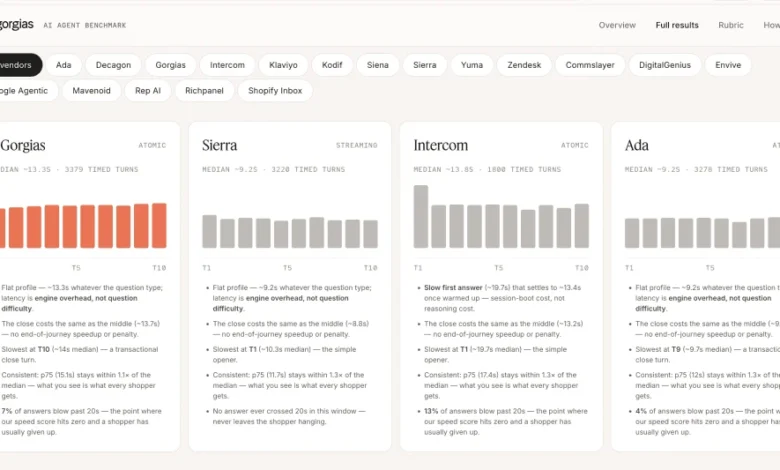
A prominent milestone in this movement was reached when Gorgias, a $100M Annual Recurring Revenue (ARR) leader in ecommerce customer experience (CX) automation, published a comprehensive and highly transparent public benchmark of its proprietary AI support agent against 17 major market competitors. The initiative, championed and supported by early-stage investor SaaStrFund, marks a departure from conventional software marketing. Rather than concealing competitive vulnerabilities or relying on idealized use cases, the Gorgias evaluation openly displayed scenarios where competing products outperformed its own agent, establishing a new gold standard for software transparency in the era of artificial intelligence.
Background Context and the Evolution of Software Testing
To understand the significance of publishing raw AI evaluations, one must examine the fundamental technological differences between legacy Software-as-a-Service (SaaS) and modern AI agents. Traditional enterprise software, such as Customer Relationship Management (CRM) platforms or ticketing systems, is deterministic. When a user clicks a specific button or executes a predefined workflow, the software performs the exact same operation every time. Consequently, a static feature checklist or a single product demonstration could accurately represent the capabilities of the platform for months or even years.
Artificial intelligence operates under an entirely different paradigm. AI models and autonomous agents are probabilistic. An AI support agent might generate a flawless, highly accurate resolution for a customer query on Monday, yet hallucinate or provide a suboptimal response to a nearly identical query on Thursday. Furthermore, underlying foundation models frequently undergo updates, fine-tuning, and parameter adjustments managed by third-party providers or internal engineering teams. These updates can inadvertently degrade performance in specific verticals without triggering traditional software release notes or alerts.
Because of this inherent volatility, static evaluation methods fail to capture the operational reality of deploying AI agents in production environments. B2B buyers have grown increasingly skeptical of vendor-curated marketing claims, recognizing that traditional benchmarks are often lagging indicators based on surveys, subjective user reviews, and self-reported data updated only once or twice a year. The emergence of rigorous, automated evals addresses this gap by testing what an AI product actually executes in real-world scenarios, utilizing standardized rubrics and live test datasets.
The Anatomy of the Gorgias Benchmark
The Gorgias AI Agent Benchmark represents one of the most exhaustive public comparative studies conducted within the ecommerce customer service technology sector. To construct the evaluation harness, the company utilized a vast dataset consisting of 8,356 live customer support conversations, testing them across 18 distinct vendor solutions.
Rather than filtering the results to present an unblemished narrative of market dominance, the resulting benchmark data acknowledged specific competitive advantages held by rival firms. For instance, while Gorgias secured top rankings in overall support capability, competitors such as Yuma demonstrated superior automation rates in specific workflow categories, and other solutions like Envive showcased rapid response times averaging 7.9 seconds. By publishing these nuanced findings alongside its own performance metrics, Gorgias subverted traditional marketing norms, trading sanitized perfection for unassailable credibility.
The entire evaluation framework, including the underlying testing harness, scoring rubrics, and open-source code repositories, was made publicly available via GitHub and dedicated reporting portals. This transparency allowed industry observers, prospective buyers, and technical evaluators to independently verify the methodology, inspect the scoring weights, and replicate the tests.
Strategic Implications for Enterprise Buyers and AI Vendors
The decision by Gorgias to open-source its competitive evaluation framework highlights several broader economic and structural shifts currently reshaping the software industry.
First, buyer behavior in the enterprise sector is evolving rapidly. Modern procurement teams—particularly in digitally native ecommerce brands—possess the technical capability to test AI solutions side-by-side in a matter of hours or days, rather than weeks. When a vendor publishes a comprehensive, deeply detailed evaluation that includes categories of failure alongside victories, it effectively performs the technical due diligence for the buyer. Consequently, buyers are far more likely to trust the positive claims made in a report that candidly admits its limitations.
Second, the mechanism of software discovery and shortlisting is shifting from human-driven search to agentic automation. Increasingly, enterprise procurement processes begin with queries directed at advanced AI models and research assistants such as Claude or ChatGPT. These AI models possess the capability to read, parse, and cite versioned technical rubrics, public scoring weights, and open-source code repositories. They cannot, however, effectively index or verify gated, proprietary PDF whitepapers or marketing slide decks. Vendors that adopt an open, checkable, and machine-readable approach to competitive evals significantly increase the probability of being discovered, cited, and recommended by AI-driven procurement agents.
Finally, internal product development teams benefit immensely from continuous, public benchmarking. When competitive metrics—such as resolution accuracy, latency, and task completion rates—are published transparently and updated on a regular cadence, competitive intelligence ceases to be a static document buried in executive slide decks. Instead, it becomes a dynamic, public-facing engineering roadmap. Internal teams are directly incentivized to close performance gaps because those gaps are visible to the entire market in real-time.
Methodological Best Practices for Transparent Evals
Industry analysts and technical leaders observing the rollout of the Gorgias benchmark have synthesized several core principles for organizations seeking to replicate this transparent evaluation strategy:
- Open-Source the Testing Harness: Credibility requires reproducibility. Vendors should publish the codebase, testing scripts, and evaluation frameworks utilized to generate performance metrics, enabling independent verification by the technical community.
- Utilize Real-World Data: Benchmarks should be executed against authentic, representative datasets—such as thousands of live customer interactions—rather than idealized, synthetic test prompts engineered to favor a specific product architecture.
- Acknowledge and Publish Losses: A competitive evaluation where a vendor wins every single category immediately triggers skepticism. Demonstrating intellectual honesty by highlighting competitor strengths in specific domains validates the integrity of the entire study.
- Version Control the Rubric: Scoring criteria, prompt evaluations, and weighting mechanisms must be version-controlled in public repositories to ensure that metrics cannot be quietly manipulated over time to obscure performance declines.
- Ensure Machine Readability: As software discovery increasingly relies on autonomous agents, evaluation reports should be formatted to allow automated indexing and verification, avoiding restricted formats that impede machine analysis.
Conclusion and Future Outlook
The publication of granular, open-source AI evals signals a maturation phase for the generative artificial intelligence market. As enterprise adoption accelerates, the tolerance for vague marketing claims and static feature matrices will continue to diminish. By embracing radical transparency, inviting independent scrutiny, and publishing competitive evals that acknowledge both strengths and weaknesses, market leaders are establishing a new standard of accountability. In an ecosystem where AI agents increasingly influence purchasing decisions, trust will no longer be earned through persuasive copywriting, but through verifiable, reproducible data published in the open light of day.