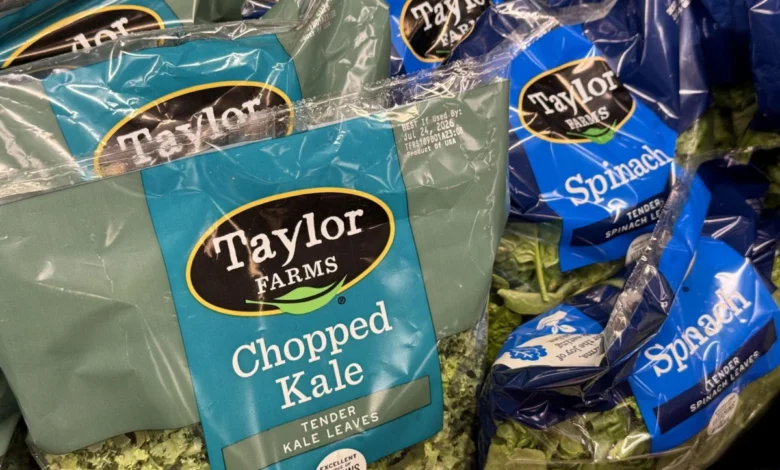
Walmart Inc. has announced the removal of four bagged iceberg lettuce salad products manufactured by Taylor Farms from its shelves as a voluntary precautionary measure, expanding the scope of recalls linked to an ongoing outbreak of cyclosporiasis across the United States. While the retail giant stated on Saturday that there have been no confirmed illnesses directly associated with the specific Marketside store-brand items sold at select locations, the decision reflects a heightened alert and a commitment to consumer safety amid a growing public health concern.
A spokesperson for Walmart clarified that the company has received notice from a supplier regarding potential links to the outbreak, prompting the removal of these products. "While there is no indication that products sold in our stores are directly affected by the current cyclospora investigations, we have removed these four products as a precaution," the spokesperson stated. This proactive step underscores the complex supply chains involved in the food industry and the challenges of rapidly tracing and containing foodborne illness outbreaks.
The expansion of recalls, encompassing various retail outlets, comes at a critical time for the produce sector. Summer months typically represent a peak sales period for fruits and vegetables, driven by increased outdoor activities and holiday celebrations. However, recent weeks have seen a noticeable consumer hesitancy to purchase berries and leafy greens, a trend that can significantly dampen demand for these essential agricultural commodities for weeks, and potentially months, to come. Such product removals can have ripple effects throughout the agricultural economy, impacting growers, distributors, and retailers alike.
Expanding Reach of Cyclospora Outbreak and Recalls
The action by Walmart follows a broader recall initiated by Taylor Farms, a significant produce supplier. Taylor Farms has systematically pulled products from a specific farm in Mexico that were distributed to 27 states across the U.S. This widespread recall signifies the intricate network of food distribution and the potential for a single contaminated source to affect a vast number of consumers.
The U.S. Centers for Disease Control and Prevention (CDC) has reported that the cyclosporiasis outbreak has now impacted individuals in 34 states. Michigan, in particular, has emerged as the state with the highest reported case count, recording over 5,000 illnesses as of July 17. These state-level figures often lag behind national statistics, suggesting that the total number of affected individuals could be considerably higher.
Cyclosporiasis is a gastrointestinal illness caused by the microscopic parasite Cyclospora cayetanensis. Symptoms typically include severe diarrhea, nausea, fatigue, and loss of appetite, which can persist for several days or even up to two months. The incubation period, which can range from a few days to up to two weeks after ingestion of the parasite, poses a significant challenge for federal health authorities in swiftly tracing the origin of the outbreak and identifying all potentially contaminated food items.
Timeline of the Cyclospora Outbreak and Regulatory Response
The emergence of this outbreak and the subsequent recalls can be pieced together through official statements and actions:
- Early to Mid-June: While the exact onset is difficult to pinpoint due to the incubation period, reports of increased gastrointestinal illnesses began to surface in various states.
- Late June to Mid-July: The period between June 29 and July 16 is identified as the window during which the implicated shredded iceberg lettuce product was distributed.
- Early July: Health officials began to identify a pattern and potential links to specific food items. A lettuce supplier to Taco Bell locations in the Midwest was identified as the source of most infections by earlier this week.
- July 17 (Saturday): Walmart announces the removal of four specific bagged iceberg lettuce salad products manufactured by Taylor Farms, sold under its Marketside brand. Taylor Farms reiterates its recall of all iceberg lettuce due to potential contamination with Cyclospora. The Mexican Ministry of Health issues a statement confirming collaboration with the U.S. FDA in an "ongoing" investigation.
- July 19 (Friday, inferred from article context): The FDA indicates that more states could be added to the recall notice, highlighting the dynamic nature of the investigation.
Official Statements and International Cooperation
Mexico has pledged to investigate the origins of the parasite outbreak, though the government has expressed caution regarding the definitive conclusion that contamination occurred within its territory. The Mexican Ministry of Health, in a statement released on Saturday, confirmed its collaboration with the U.S. Food and Drug Administration (FDA) in an "ongoing" investigation to pinpoint the "source" of the outbreak in the U.S. Research institutions from Mexico’s Health and Agriculture ministries are actively engaged with the FDA, facilitating a "continuous exchange of technical information" aimed at mitigating health risks and safeguarding populations in both nations.
"Identifying the product’s country of origin provides a traceability data point, but it does not in itself confirm that the contamination occurred within Mexican territory," the Mexican government emphasized in its statement. This highlights the complexities of international food safety investigations, where multiple jurisdictions and supply chain actors are involved.
Taylor Farms’ Response and Product Specificity
Taylor Farms has been a central figure in the unfolding recall. The company stated on Friday that no other products beyond the recalled items are affected and that its branded salad kits sold in supermarkets did not contain iceberg lettuce. However, on Saturday, Taylor Farms broadened its recall to encompass all iceberg lettuce, citing the "potential to be contaminated with Cyclospora."
The company has been actively working to remove the implicated products from the supply chain. In a statement, Taylor Farms indicated it had ceased receiving product from the implicated lot, suspended distribution of iceberg lettuce originating from Central Mexico, notified its customers, and was continuing its cooperation with the FDA, CDC, and state health authorities. The specific shredded iceberg product under scrutiny was distributed between June 29 and July 16.
Broader Implications for Food Safety and Consumer Confidence
The cyclosporiasis outbreak and the subsequent widespread recalls serve as a stark reminder of the vulnerabilities within the global food supply chain. The long incubation period of Cyclospora makes swift containment and consumer notification a significant challenge, often requiring extensive epidemiological investigations.
The impact on consumer confidence can be substantial. Shoppers, particularly those with young children or compromised immune systems, may exhibit increased caution when purchasing produce, especially items that have been implicated in past outbreaks. This can lead to a prolonged period of reduced sales for affected product categories, impacting not only retailers like Walmart but also the entire agricultural sector, from farmers to distributors.
The incident also underscores the importance of robust international cooperation in food safety matters. The collaborative efforts between the U.S. FDA and Mexican health authorities are crucial for effectively identifying the source of contamination and implementing preventative measures to avoid future occurrences. The ability to trace the origin of food products through transparent and reliable systems is paramount in ensuring the safety of the food we consume.
As the investigation continues, the FDA has indicated that more states may be added to the recall notices, suggesting that the full scope of the outbreak is still being determined. The economic and health implications of this outbreak are significant, highlighting the continuous need for vigilance, advanced food safety practices, and effective communication among all stakeholders in the food industry. The proactive removal of products by retailers like Walmart, even in the absence of confirmed illnesses linked to their specific offerings, demonstrates a commitment to prioritizing consumer well-being in the face of evolving public health threats.