The Human Counter-Current How Together Tech and DIY Hardware Are Challenging the AI Dominated Silicon Valley Landscape


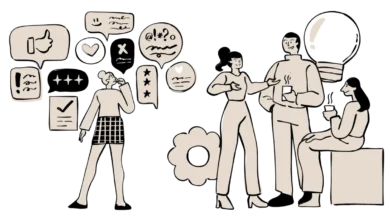
The global technology sector is currently defined by a stark and widening dichotomy between the massive capital requirements of artificial intelligence and a burgeoning grassroots movement prioritizing human connection, physical hardware, and digital minimalism. While the industry’s largest players continue to secure record-breaking sums to fuel the development of large language models and generative tools, a parallel ecosystem is emerging that rejects the isolation of screen-centric living. This shift, often referred to as "together tech," represents a fundamental pivot away from the algorithmic curation of social life and toward tangible, in-person experiences.
At the center of this movement is Brynn Putnam, the founder of Mirror, the high-tech fitness company acquired by Lululemon for $500 million in 2020. Putnam’s latest venture, Board, recently secured $20 million in funding to develop a platform focused on in-person games and social experiences. The success of this fundraising round suggests that venture capitalists see significant value in "unplugged" interactions, even as the broader market remains obsessed with the integration of AI into every facet of daily life. Board has reportedly already sold thousands of units, signaling a strong consumer appetite for social tools that facilitate physical presence rather than digital substitution.
The Massive Scale of the AI Fundraising Machine
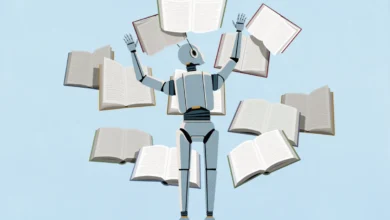
The rise of human-centric startups occurs against a backdrop of unprecedented financial commitment to artificial intelligence. Alphabet, the parent company of Google, recently finalized a record-breaking $85 billion raise specifically earmarked for its AI business. This figure represents one of the largest single capital infusions in the history of the technology sector, underscoring the high stakes of the "AI arms race" currently being fought between Google, Microsoft, and OpenAI.
This capital is largely destined for the massive infrastructure required to train and maintain advanced AI models. Industry analysts note that the cost of high-performance GPUs, such as those manufactured by NVIDIA, combined with the astronomical energy requirements of modern data centers, has created a high barrier to entry. Consequently, much of the capital flowing into the AI space is essentially circulating back to the "big guys"—the hyperscale cloud providers and chip manufacturers who control the means of production for modern computing.
In addition to Alphabet’s massive raise, the industry is closely watching Anthropic, a leading AI safety and research company, which has reportedly filed for a confidential initial public offering (IPO). Anthropic’s move to go public follows several rounds of significant private funding from companies like Amazon and Google. The transition from private venture backing to the public markets will be a litmus test for the long-term viability of high-valuation AI startups in an environment where profitability is often secondary to scale and computing power.
The Emergence of Together Tech and DIY Hardware
While the AI giants focus on digital intelligence, a growing subculture of creators and entrepreneurs is championing "together tech." This movement is characterized by products that encourage users to step away from the keyboard and engage with the physical world. The term "touching grass," once a derogatory internet slang for someone who needs to disconnect from the digital world, has been reclaimed as a design philosophy.
A notable example of this trend is the viral rise of "cyberdecks." These are whimsical, DIY computers often crafted with retro-futuristic aesthetics, mechanical keyboards, and modular components. Unlike the sleek, sealed-shut laptops produced by major manufacturers, cyberdecks are designed to be touched, modified, and understood by their users. They represent a rejection of the "black box" nature of modern technology, where hardware is increasingly inaccessible and software is increasingly opaque.
Cyberdeck creators often document their builds on platforms like TikTok and YouTube, where they emphasize the tactile satisfaction of assembly and the joy of using a device that does not track data or serve advertisements. This DIY renaissance is closely linked to the "Right to Repair" movement, as it empowers individuals to own their technology rather than merely licensing access to it.
Chronology of the Human-Centric Shift
The current tension between AI dominance and human-centric tech has been building for several years, following a series of cultural and economic shifts:
- The Post-Pandemic Correction (2022-2023): After years of forced isolation and a reliance on video conferencing, consumer fatigue with digital-only interactions reached a breaking point. This led to a resurgence in live events, board games, and physical hobbies.
- The Generative AI Explosion (Late 2022-Present): The release of ChatGPT and subsequent models accelerated the automation of creative and intellectual tasks, leading to concerns about the "dehumanization" of digital content.
- The Mirror Exit and Re-Entry (2023-2024): Brynn Putnam’s transition from the high-tech, screen-based Mirror to the physical, social-based Board served as a bellwether for changing founder priorities.
- The Search Engine Pivot (2024): As Google and Bing integrated AI-generated summaries into search results, users began seeking "AI-free" alternatives. DuckDuckGo capitalized on this by making its no-AI search engine easier to access, resulting in a significant traffic boom.
Market Reactions and Data-Driven Insights
The financial data supports the idea that the tech market is bifurcating. On one hand, the "Magnificent Seven" tech stocks continue to drive the majority of the S&P 500’s gains, largely due to their AI capabilities. On the other hand, niche markets for physical goods and privacy-focused services are seeing double-digit growth.
According to market research, the global board game market is projected to reach over $30 billion by 2028, growing at a CAGR of nearly 10%. This growth is driven by millennials and Gen Z, demographics that are increasingly looking for ways to socialize without the presence of smartphones. Similarly, the demand for "dumb phones"—mobile devices with limited internet connectivity—has seen a surprising uptick among younger users who wish to limit their screen time.
In the realm of digital services, DuckDuckGo’s recent traffic surge indicates that a subset of the population is actively avoiding AI-curated information. Critics of AI search argue that large language models often "hallucinate" or provide biased summaries that lack the nuance of original source material. By offering a search experience that prioritizes traditional indexing over AI synthesis, DuckDuckGo has positioned itself as the premier choice for the "human-first" internet user.
Analysis of Implications: Is the Money Flowing Back to the Giants?
A critical question raised by tech journalists and analysts, including those on TechCrunch’s Equity podcast, is whether these human-centric movements can truly escape the gravity of Big Tech. While a startup like Board might focus on in-person games, its backend infrastructure likely still relies on Amazon Web Services or Google Cloud. Similarly, even the most dedicated cyberdeck builder often uses components sourced from global supply chains dominated by a handful of massive corporations.
The "together tech" wave is not necessarily a total abandonment of technology, but rather a re-negotiation of the relationship between the user and the tool. It is an attempt to create "intentional tech"—devices and platforms that serve a specific human purpose without the parasitic additions of data harvesting and attention-engineering.
However, the sheer scale of Alphabet’s $85 billion raise suggests that for the foreseeable future, the "big guys" will continue to set the pace of innovation. The challenge for startups in the "together tech" space will be to maintain their human-centric focus while navigating a venture capital landscape that is increasingly skewed toward the high-risk, high-reward world of artificial intelligence.
Official Responses and Industry Perspectives
Representatives from the AI-free search movement argue that the current trajectory of the internet is unsustainable. "Users are tired of being treated as data points for training models," said a spokesperson for a privacy-focused browser. "There is a genuine hunger for tools that just work, without trying to think for you."
Conversely, proponents of the AI surge, including executives at Alphabet and Anthropic, maintain that AI is the ultimate tool for human empowerment. They argue that by automating mundane tasks, AI will actually free up more time for the very in-person experiences that Putnam and the cyberdeck community are championing.
Kirsten Korosec, Anthony Ha, and Sean O’Kane of TechCrunch have noted that this tension is likely to define the next decade of Silicon Valley. Whether the "together tech" movement remains a niche lifestyle choice or evolves into a mainstream market force will depend on the public’s long-term reaction to the ubiquity of artificial intelligence.
Broader Impact and Future Outlook
The broader impact of this shift extends beyond the tech industry and into the realms of sociology and urban planning. If the "together tech" movement continues to gain momentum, it could drive a renewed focus on "third places"—physical locations like cafes, community centers, and game parlors where people can gather outside of work and home.
In the short term, we can expect to see more founders following in Brynn Putnam’s footsteps, leveraging their experience in high-growth tech to build products that are intentionally "low-tech" or "human-tech." We may also see a rise in "hybrid" experiences, where AI is used behind the scenes to facilitate physical logistics, such as matching people with similar interests for in-person meetups, without being the primary interface of the interaction.
Ultimately, the record-breaking raises for AI and the viral success of "touching grass" are two sides of the same coin. They both represent an industry-wide recognition that the current digital status quo is changing. While one side seeks to solve human problems with more powerful machines, the other seeks to solve them by bringing people back together. The future of technology likely lies in the balance between these two powerful, and increasingly divergent, forces.