The Ultimate Retail Battleground: How Walmart’s Dominance in Grocery Outpaces Amazon’s Digital Reach

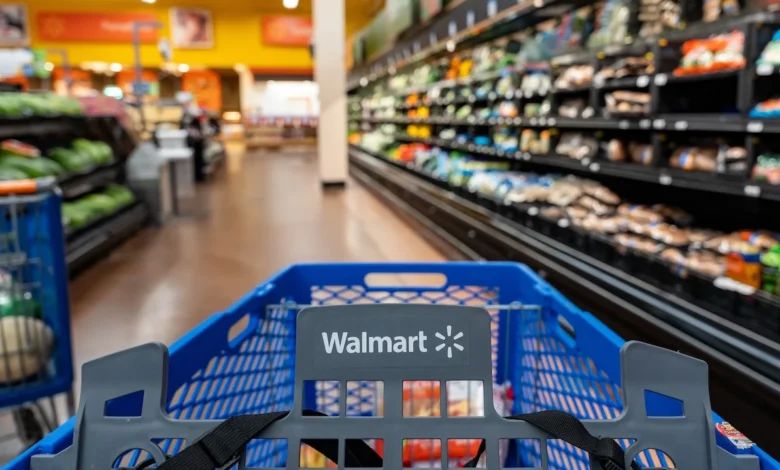
The retail landscape of the twenty-first century is defined by a high-stakes, multi-front war between two corporate leviathans: Amazon and Walmart. While Amazon spent decades engineering a seamless, tech-enabled ecosystem designed to capture every conceivable discretionary purchase, Walmart has relied on a foundational retail engine it has mastered for over half a century. Food and beverages now account for roughly 60 percent of Walmart’s massive retail business, serving as an irreplaceable anchor that drives foot traffic and digital engagement. According to data from the September 2026 PYMNTS Intelligence report titled Share of Wallet: Amazon vs. Walmart, Walmart commands approximately 21 percent of all U.S. food and beverage spending. In stark contrast, Amazon controls a mere 3 percent of the domestic grocery market. Even more telling for industry analysts, Walmart’s stronghold on the grocery sector has actually tightened since 2019, a period during which Amazon has nearly doubled its overall retail market share.
This dynamic illustrates a fundamental divergence in retail strategy. Amazon’s triumph lies in digital discretionary spend, capturing consumer wallets through a vast selection of electronics, apparel, and home goods delivered with unprecedented speed. Walmart’s supremacy, however, is rooted in necessity. Grocery shopping is not a discretionary luxury; it is a recurring biological and domestic requirement that compels households to enter the Walmart ecosystem on a weekly, and often bi-weekly, basis. As the retail industry shifts its primary strategic metric from individual transaction volume to maximizing lifetime customer value, this high-frequency interaction has emerged as Walmart’s most formidable competitive asset.
The Historical Evolution of the Modern Retail Clash
To understand how Walmart and Amazon arrived at their current positions, one must examine the chronological evolution of their respective business models. Founded in 1962 by Sam Walton, Walmart built its empire on physical proximity, supply chain efficiency, and everyday low pricing, gradually expanding into supercenters that combined general merchandise with full-scale supermarkets. By the late 1990s and 2000s, Walmart had firmly established itself as the largest grocery retailer in the United States, a position it maintained through sheer physical scale and localized distribution networks.
Meanwhile, Amazon launched in 1994 as an online bookstore before systematically expanding into nearly every consumer product category. The turning point in modern retail occurred in 2005 with the introduction of Amazon Prime. By bundling expedited shipping with digital media, Amazon engineered a synthetic habit loop, incentivizing consumers to centralize their shopping online. Recognizing the threat of e-commerce, Walmart began its digital transformation in the 2010s, heavily investing in omnichannel capabilities, curbside pickup, and home delivery.
The battle lines intensified significantly in 2017 when Amazon acquired Whole Foods Market for $13.7 billion, signaling its formal, aggressive entry into the physical grocery space. Analysts predicted an imminent disruption of traditional supermarket chains. Yet, despite massive capital outlays, technological experiments like Amazon Go cashierless stores, and rapid scaling of delivery infrastructure, Amazon’s market share in food and beverages remains modest. Conversely, Walmart leveraged its existing network of thousands of brick-and-mortar stores—most located within a short drive of the vast majority of the U.S. population—to scale curbside pickup and delivery faster and more cost-effectively than its Seattle-based rival.
Analyzing the Data: The Asymmetry of Consumer Spending
The comparative metrics compiled by PYMNTS Intelligence highlight a fascinating asymmetry in the American consumer economy. Amazon has successfully conquered categories requiring vast digital catalogs and complex logistics for non-perishable items, securing victories across multiple non-grocery segments. However, the sheer volume of daily consumption protects Walmart’s core fortress.
Consider the mathematics of consumer frequency. A typical household may purchase furniture once a year, electronics once every few years, and apparel seasonally. Conversely, the same household must purchase groceries weekly. By retaining a 21 percent share of U.S. grocery spending, Walmart secures an unshakeable point of recurring contact. Every trip for milk, eggs, fresh produce, and household consumables reinforces a behavioral loop that requires zero marketing expenditure to initiate.
Market analysts note that Walmart is effectively utilizing its grocery dominance in the exact same strategic manner that Amazon utilized Prime. Amazon’s genius was never merely collecting subscription fees; it was using shipping perks to secure customer loyalty, subsequently cross-selling higher-margin services such as cloud computing, third-party marketplace access, and digital advertising. Walmart is now executing a mirror-image strategy in reverse, leveraging mandatory physical purchases to capture digital market share.
The Ecosystem Cross-Pollination: From Cereal Aisles to Digital Services
For Walmart, a grocery customer is rarely just a grocery customer. Through deliberate ecosystem expansion, the company has transformed a low-margin retail transaction into a multi-dimensional customer relationship. A shopper utilizing Walmart’s curbside grocery pickup is a prime candidate for conversion into a Walmart+ subscriber, an active pharmacy patient, a third-party marketplace shopper, or a financial services user.
Furthermore, the data generated by these frequent interactions holds immense commercial value. Similar to how Amazon revolutionized digital advertising by leveraging purchase intent and search data, Walmart possesses an extraordinarily rich, recurring dataset. Household-level insights regarding dietary habits, brand preferences, purchasing frequency, and response to price fluctuations allow Walmart Connect—its retail media network—to offer advertisers highly targeted opportunities. In this light, grocery ceases to be a low-margin anchor weighing down corporate balance sheets; it functions as the foundational distribution layer that subsidizes and accelerates higher-margin ancillary business units.
Both retail giants are currently engaged in a relentless campaign of territorial expansion. Amazon continues to refine its grocery delivery footprint, experimenting with micro-fulfillment centers and automated warehouses to lower the cost of perishable logistics. Simultaneously, Walmart has poured capital into building out its digital marketplace, fulfillment capabilities, membership perks, and advertising infrastructure, progressively mirroring the operational profile of Amazon.
Implications of the Artificial Intelligence Era in Retail
Looking toward the horizon, the strategic interplay between Amazon and Walmart faces a new technological frontier driven by artificial intelligence. Industry experts project that as AI consumer agents become ubiquitous, the friction involved in switching between online retailers for discretionary purchases will plummet to near zero. An AI-powered personal assistant can compare televisions, athletic footwear, or home decor across dozens of online marketplaces in a fraction of a second, stripping away brand loyalty for non-essential goods.
However, artificial intelligence cannot easily dislodge deeply ingrained, habitual household routines tied to physical sustenance. While an AI agent can instantly find the lowest price for a Sony television, human beings still require immediate access to fresh groceries, dairy, and household consumables. Therefore, the ultimate retail moat of the future may rely less on convincing consumers where to purchase discretionary gadgets and more on controlling the recurring, subconscious behaviors that anchor everyday life.
Amazon constructed Prime to manufacture a shopping habit. Walmart’s enduring advantage is that grocery shopping already is one. As this multi-trillion-dollar rivalry continues to unfold, the ultimate victor may not be the company with the most sophisticated algorithms, but the one that best controls the cart carrying the daily bread.