The Evolution of Web Video: Video.js v10 Officially Launches Following Ground-Up Reconstruction and Major Ecosystem Consolidation

The digital video landscape has undergone a profound structural shift with the official General Availability release of Video.js v10 on October 1, 2026. This milestone marks the culmination of an intensive year-long engineering effort that brought together elite talent from across the web media industry. Rather than a routine software update, version 10 represents a complete, ground-up rewrite of one of the internet’s most foundational video playback engines. By synthesizing architecture, design philosophies, and core codebases from prominent open-source projects including Plyr, Vidstack, Media Chrome, and Mux Player, the development coalition has successfully modernized a technology stack that has historically powered trillions of video plays over its 15-year history.
Background and Industry Context
To understand the magnitude of the Video.js v10 release, one must look back at the shifting dynamics of the web development and video engineering sectors. For over a decade, Video.js served as the de facto standard open-source HTML5 and Flash video player, stewarded primarily by the engineering team at Brightcove. However, industry volatility led to significant corporate restructuring, resulting in the layoff of key Video.js maintainers. Recognizing the immense systemic risk this posed to the broader web ecosystem—where countless enterprise applications and media platforms rely on stable, secure video components—Mux stepped forward to champion the project.
Mux not only committed corporate resources to the revitalization of Video.js but also joined the Open Source Pledge, signaling a formalized economic commitment to sustaining critical software infrastructure. In an unprecedented consolidation of domain expertise, Mux invited the primary creators behind rival and complementary player technologies—specifically Sam Potts of Plyr, community leaders from Vidstack, and the architects of Media Chrome—to collaborate full-time on a unified vision. This merger of engineering ideologies abandoned legacy technical debt, opting instead to reconstruct the player from scratch to meet the rigorous performance, accessibility, and modern framework demands of the next decade of web development.
Chronology of the v10 Lifecycle and Adoption
The developmental trajectory of Video.js v10 accelerated rapidly following its conceptualization. Throughout late 2025 and the first three quarters of 2026, the combined engineering task force operated in transparent development cycles, releasing incremental alpha and beta builds to gather rigorous feedback from the open-source community. CultRepo, a prominent chronicler of software engineering history, even captured the dramatic transition in a dedicated documentary detailing the resurrection of the open-source icon.
On October 1, 2026, the project reached its primary inflection point with the formal deployment of version 10 GA. In the months immediately following the launch, adoption metrics climbed steeply. The project swiftly surpassed one million cumulative downloads on the npm registry, driven by active enterprise migration and enthusiastic adoption by independent developers. Concurrently, the core maintainer coalition maintained an aggressive release cadence, deploying continuous bug fixes, performance optimizations, and feature expansions logged transparently via the official changelog. This rapid validation underscored the industry’s readiness for a modular, high-performance playback engine designed natively for component-driven frameworks.
Architectural Innovations: Size, Composition, and Idiomatic Design
Video.js v10 introduces fundamental structural departures from its predecessors, addressing the historical bloat and rigidity associated with monolithic web video players. The core engineering philosophy centers around three primary pillars: modularity (smaller footprint), composability, and idiomatic integration.
In terms of bundle optimization, Video.js v10 implements a strict tree-shaking architecture. If a developer does not explicitly import a component, zero bytes of that component are included in the final production bundle. Out of the box, standard configurations utilize hls.js for robust universal compatibility. However, teams can seamlessly integrate SPF, a high-performance custom playback engine engineered specifically for this release. Adopting SPF cuts the player’s core footprint in half. For specialized use cases—such as background hero videos or looping muted clips—the <mux-background-video> element shrinks the required library footprint to less than one-tenth the size of traditional implementations.
Furthermore, the architecture transitions the video player from a monolithic, self-contained application sitting inside a host webpage into a flexible library of composable primitives. Developers are no longer forced to accept a rigid, pre-styled interface. Using modern CLI tools such as the shadcn integration (npx shadcn@latest add @videojs/video), development teams can pull the actual source code of the player directly into their repositories, exercising absolute ownership and customization control. Alternatively, developers can bypass default skins entirely, assembling bespoke playback experiences using granular React or vanilla HTML components like Container, PlayButton, and TimeSlider.
Developer ergonomics have similarly been modernized. Whereas past iterations required developers to learn specialized paradigms like web component slots and Shadow DOM parts—which often frustrated teams accustomed to React, Vue, or Svelte workflows—v10 delivers native, idiomatic developer experiences. Whether building with HTML and CSS data attributes, or utilizing React with TypeScript and Tailwind CSS, the APIs feel organic to the host framework.
Accessibility and Modern Standards
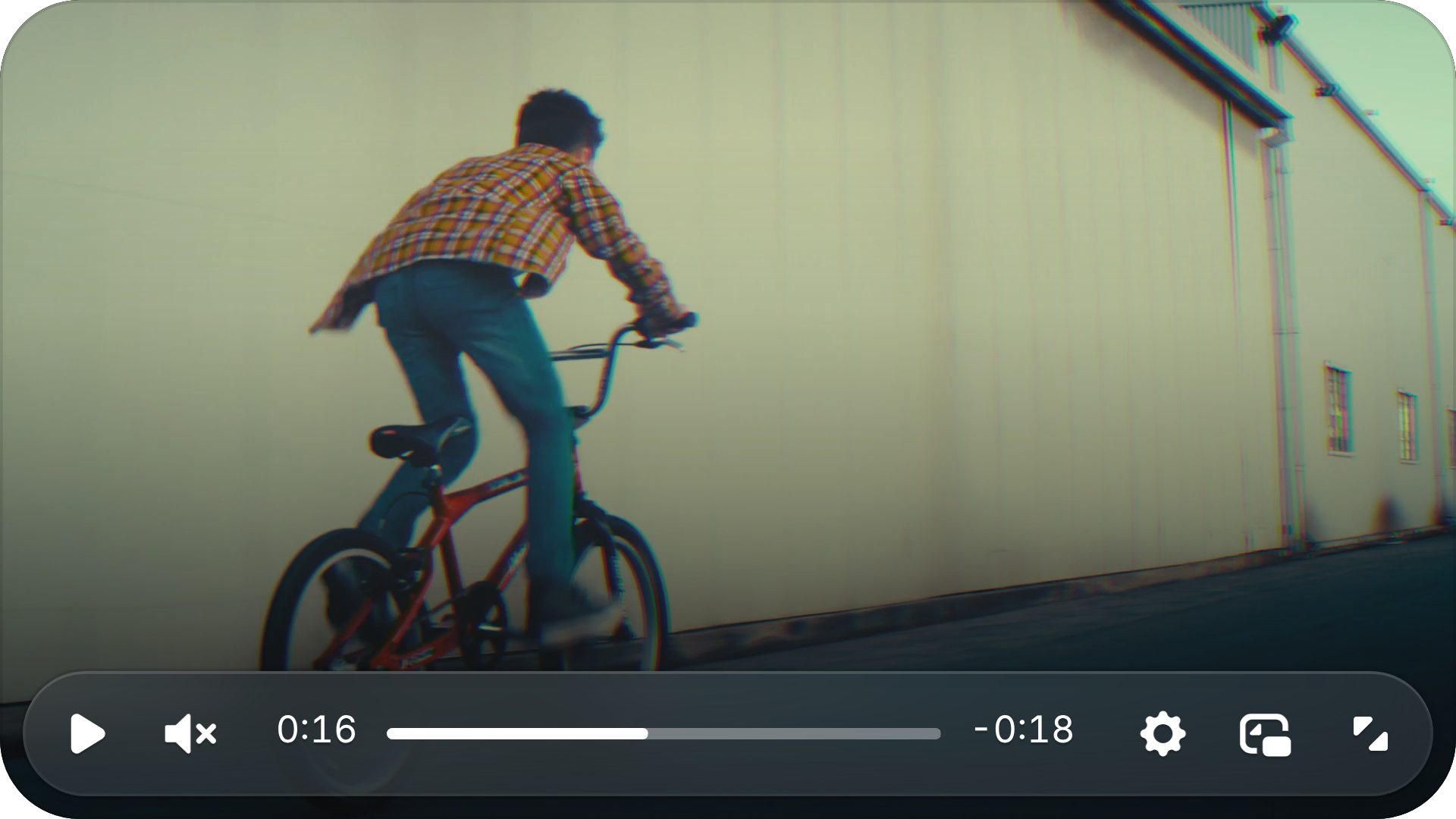
A critical area of emphasis for the Video.js v10 coalition was uncompromising accessibility and visual refinement. Sam Potts, creator of Plyr, spearheaded the visual design system, introducing sophisticated UI themes such as the frosted-glass "Default" skin and the borderless "Neutral" skin. These interfaces are designed to adapt fluidly to modern web aesthetics while maintaining rigorous accessibility compliance.
Collaborating with leading web accessibility specialists, the engineering team integrated comprehensive support for edge-case user preferences. The player automatically adapts to operating system settings, including reduced-motion, reduced-transparency, and high-contrast forced-colors modes. Hit areas for interactive controls have been substantially enlarged to assist users with motor impairments, and visible keyboard focus indicators are engineered to render clearly across dynamic video backgrounds. Furthermore, dynamic accent contrast calculation via the CSS contrast-color() function ensures optimal legibility regardless of underlying video luminance.
Strategic Implications for Mux and the Ecosystem
The launch of Video.js v10 carries significant strategic ramifications for Mux and its customer base. Mux has officially designated Video.js v10 as its premier recommended playback technology for web-based applications utilizing Mux Video. Consequently, Mux has pivoted its internal documentation, iframe embedding infrastructure (player.mux.com), and dashboard interfaces to lead entirely with Video.js v10.
Despite this major shift, Mux has established a clear, non-disruptive migration path for existing users. Mux Player for Web has officially transitioned into maintenance mode. The company has formally committed to supporting legacy Mux Player integrations with security patches, bug fixes, and compatibility updates for a minimum of 18 months, ensuring that development teams face no artificial pressure or abrupt breaking changes. Native Mux Player implementations for iOS and Android remain entirely unaffected by these web-centric updates.
For developers seeking advanced telemetry and performance analytics, the integration between Video.js v10 and Mux Data operates seamlessly. Unlike older integrations where monitoring was tightly coupled, V10 makes data collection opt-in via the <mux-data> component, allowing engineering teams to precisely control bundle contents and data-emission parameters while retaining access to global-scale streaming analytics, automated chapter generation, and timeline hover previews.
Looking Ahead: The Future of Web Media Infrastructure
The release of Video.js v10 signifies more than just a successful software rewrite; it represents a cooperative model for sustaining foundational web infrastructure. By uniting competing open-source factions under a shared banner supported by commercial backing, the project has established a blueprint for preventing open-source rot in critical web technologies.
As web consumption habits continue to evolve—transitioning rapidly from traditional horizontal viewing paradigms toward vertical, swipe-based, and immersive formats—Video.js v10 is architected to remain resilient against future shifts in user interface design. With robust support for modern AI-assisted coding agents (including specialized documentation endpoints like llms.txt and dedicated CLI skills), the platform is optimized for both human developers and automated generation workflows.
Development teams building for the web are encouraged to evaluate the migration guides provided by the Video.js and Mux documentation portals. Whether initializing a greenfield project using the @videojs/cli agent skills or gradually transitioning legacy web applications over the allotted maintenance window, the web video community enters a new era defined by modularity, performance, and collaborative longevity.
Related posts: