The landscape of physical media in the video game industry is undergoing a structural transformation, and Nintendo finds itself at a unique crossroads as it balances legacy support with the harsh realities of supply chain economics. While industry peers like Sony have signaled a move toward a digital-first or digital-exclusive future, Nintendo remains steadfast in its commitment to the cartridge format. However, this commitment is becoming increasingly complex to maintain. As production costs for proprietary ROM chips rise and the reliance on specialized suppliers like Rohm and Lapis Semiconductor intensifies, the cost-benefit analysis for publishers is shifting, creating a ripple effect that ultimately impacts the end consumer.
The current situation highlights a divergence in strategy between the three major console manufacturers. Sony, through its iterative hardware cycles and the phasing out of disc-based infrastructure for certain iterations, has signaled a clear preference for digital distribution. Nintendo, conversely, has leaned into the cultural cachet of its physical catalog. In a statement released last month, company leadership reiterated that it has no immediate plans to abandon physical cartridges, citing strong fan demand and the unique role that physical media plays in the Nintendo ecosystem, particularly regarding gifting and second-hand market liquidity. Despite this vocal commitment, the underlying economic engine—the production of high-capacity ROM chips—is showing signs of fatigue.
The Economics of the ROM Supply Chain
Nintendo’s reliance on specialized semiconductors to power its Switch-family cartridges is a legacy of its bespoke hardware design. Unlike the industry-standard Blu-ray discs utilized by Sony and Microsoft, which benefit from economies of scale due to their similarity to consumer media formats, Nintendo’s cartridges are custom-engineered. This requires specific partnerships with manufacturers such as Rohm and Lapis Semiconductor.
As the global semiconductor market shifts toward advanced nodes and high-bandwidth memory for AI and data center applications, the older fabrication processes required for game ROMs are increasingly marginalized. This creates a supply-side squeeze. When capacity is limited and manufacturers must choose between high-margin enterprise chips and legacy ROM components, the costs for the latter inevitably rise. This is not merely a hypothetical concern; it is already being reflected in the pricing models of Nintendo’s publishing partners.
Chronology of a Shifting Market
The friction between physical production costs and market pricing began to manifest more clearly in recent years. A timeline of these developments provides context for the current volatility:
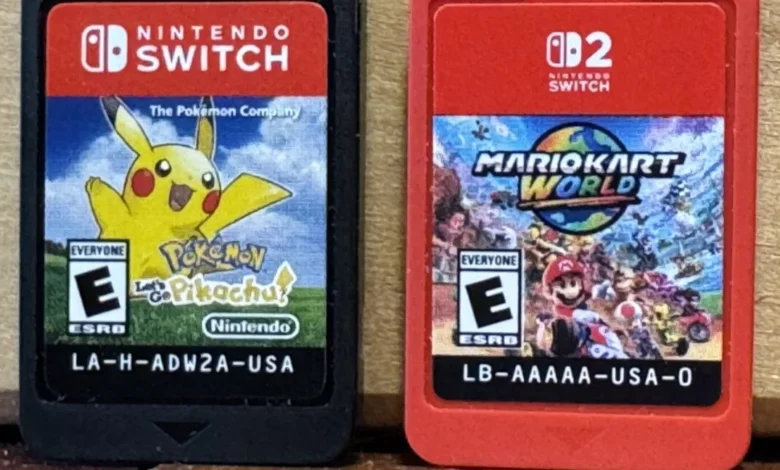
- Late 2025: The industry saw early warning signs as publishers struggled with the cost-to-capacity ratio. Japanese publisher Inin faced a dilemma regarding the release of R-Type Dimensions III. The company publicly stated that a full cartridge release was only financially viable once Nintendo introduced smaller-capacity, lower-cost cartridge variants for the next-generation Switch architecture. This highlighted that, for mid-tier publishers, the cost of the physical medium is a primary barrier to entry.
- Early 2026: Nintendo formally adjusted its internal pricing strategies. The company began charging a premium for physical versions of select titles compared to their digital counterparts. This move served as an admission that the cost of goods sold (COGS) for physical media had reached a threshold where the traditional "one price for all formats" model was no longer sustainable.
- Q2 2026: Data from the second calendar quarter of 2026 confirmed a long-term trend: digital software sales accounted for 61.5 percent of Nintendo’s total software revenue. This represents a steady, year-over-year increase, signaling that while physical media remains a pillar, it is becoming a shrinking slice of the total revenue pie.
The Price Gap and Publisher Incentives
The decision to charge more for physical cartridges is a significant departure from historical industry standards. For decades, the price of a game was agnostic to the format; the retail price was determined by the software’s value, not the medium on which it was stored. By decoupling these prices, Nintendo is effectively passing the logistical and manufacturing costs directly to the consumer.
This policy creates a secondary challenge: the "Physical Premium" effect. When physical copies are priced higher than digital downloads, the incentive for consumers to shift toward digital platforms increases. This creates a self-fulfilling cycle. As fewer consumers purchase physical copies due to higher price points, the production runs for those physical copies decrease in volume. Smaller production runs lead to higher per-unit costs, which further pressures publishers to increase prices or forgo physical releases entirely.
Implications for Mid-Tier and Independent Publishers
The impact on smaller publishers is particularly acute. Large-scale AAA publishers like Nintendo, Capcom, or Ubisoft can often absorb the cost fluctuations of physical manufacturing by spreading risks across a massive portfolio. Smaller studios, however, operate on thin margins.
If the cost of manufacturing a 16GB or 32GB cartridge remains prohibitively high, these studios are forced into a binary choice: either raise the MSRP of their game to an uncompetitive level or skip a physical release altogether. This "digital-only" shift is not always a choice driven by consumer preference, but rather a defensive financial maneuver. Analysts have suggested that without a reduction in the manufacturing cost of high-capacity ROM chips, we may see an era where only the most successful titles receive physical releases, effectively turning the physical game market into a luxury niche.
Market Analysis: Balancing the Scales
Industry analyst David Gibson recently pointed out that while the cost of ROM production is rising, the rapid acceleration of digital adoption provides a potential counter-balance. If digital sales continue to climb at the current trajectory, the total volume of physical units produced may shrink to a level where only a highly efficient, specialized supply chain is required.
In this scenario, the market for physical games would reach a new equilibrium. Rather than being the default format, physical games would transition into a "collector’s edition" model. These cartridges would likely be produced in lower quantities, command a higher price, and be marketed toward enthusiasts who value the tangibility of the product. This would allow Nintendo to maintain its commitment to physical media without being beholden to the volatility of mass-market chip production.
Official Responses and Strategic Outlook
While Nintendo has remained largely tight-lipped regarding the specific details of its semiconductor supply contracts, the company’s investor relations documentation has increasingly emphasized "digital transformation" as a core growth pillar. In recent shareholder meetings, Nintendo executives have highlighted the increased profitability of digital sales, which bypass the costs of manufacturing, shipping, and retail distribution.
Despite this, the "hybrid" nature of the Switch platform—being a portable device—creates a unique demand for physical media that isn’t as prevalent in the home-console-only market. Users often prefer the ability to swap physical cartridges while on the go without relying on high-speed internet or large internal storage capacities. This consumer behavior acts as a floor for physical demand, ensuring that even as costs rise, there remains a dedicated base willing to pay the premium.
Broader Industry Implications
The broader gaming industry is watching Nintendo’s strategy with significant interest. The company is currently the only major console manufacturer still treating the physical format as a primary business component. Sony and Microsoft have both experimented with digital-only console hardware, essentially testing the market’s appetite for a disc-less future.
If Nintendo succeeds in maintaining a healthy, albeit premium-priced, physical market, it may provide a roadmap for other publishers to sustain physical distribution. However, if the cost of proprietary components continues to outpace the market’s willingness to pay, Nintendo may eventually be forced to abandon its current trajectory.
For the time being, the strategy is one of managed decline and consolidation. By raising prices for physical goods and leaning into the digital transition, Nintendo is attempting to buy time. They are effectively subsidizing the continued existence of physical media through a combination of higher consumer costs and a strategic pivot toward digital growth. Whether this "limping along" strategy can hold for the duration of the current hardware generation—or if it will force a more radical pivot in the years to come—remains one of the most critical questions in the gaming industry.
The sustainability of this model relies on three key factors: the stability of the semiconductor supply chain, the continued patience of the physical-media-loving consumer base, and the ability of digital growth to offset the overhead of maintaining a physical infrastructure. As of late 2026, the data suggests that while the floor is shifting, the foundation remains intact, even if that foundation is increasingly expensive to reinforce. The industry must now prepare for a future where physical ownership is no longer a standard expectation, but a premium experience governed by the volatile economics of specialized hardware production.