AWS Expands Amazon Elastic Block Store Capabilities with Cross-Account Volume Cloning


Amazon Web Services (AWS) has announced a significant enhancement to its storage infrastructure, introducing cross-account copy functionality for Amazon Elastic Block Store (EBS) volume clones. This update builds upon the initial launch of EBS Volume Clones, which debuted last year to provide users with instantaneous, point-in-time copies of block storage volumes within the same Availability Zone. By enabling the movement and duplication of these clones across distinct AWS accounts, the company is addressing a long-standing requirement for streamlined data portability in multi-account environments.
The Evolution of EBS Storage Management
The introduction of EBS Volume Clones marked a shift in how cloud architects manage data lifecycles. Historically, duplicating a large EBS volume required snapshotting the data, waiting for the snapshot to complete, and then creating a new volume from that snapshot—a process that could be time-consuming and resource-intensive for large datasets. Volume clones changed this by allowing near-instantaneous duplication of data at the storage layer.
However, the utility of these clones was initially limited by organizational boundaries. As enterprises move toward decentralized, multi-account architectures—often governed by AWS Organizations and AWS Control Tower—the ability to move data securely between isolated environments became a critical bottleneck. The new cross-account capability effectively bridges this gap, allowing administrators to share volume clones across AWS accounts while maintaining strict security and governance protocols.
Chronology of EBS Enhancements
The trajectory of Amazon EBS development has focused heavily on performance and management efficiency.
- Initial Launch: Amazon EBS was introduced in 2008 as a foundational block storage service, providing persistent storage for EC2 instances.
- Incremental Innovation: Over the subsequent decade, AWS introduced features such as Elastic Volumes (allowing for real-time resizing), Multi-Attach for Provisioned IOPS, and Fast Snapshot Restore.
- The Clone Paradigm: In the previous year, AWS moved away from the snapshot-dependency model by introducing native Volume Clones, providing an efficient way to clone data within a single Availability Zone.
- The Current Milestone: With the integration of AWS Resource Access Manager (RAM), the current update allows for the cross-pollination of data, facilitating complex workflows such as production-to-staging refreshes without the need for manual snapshot management or data export.
Technical Implementation and Security Protocols
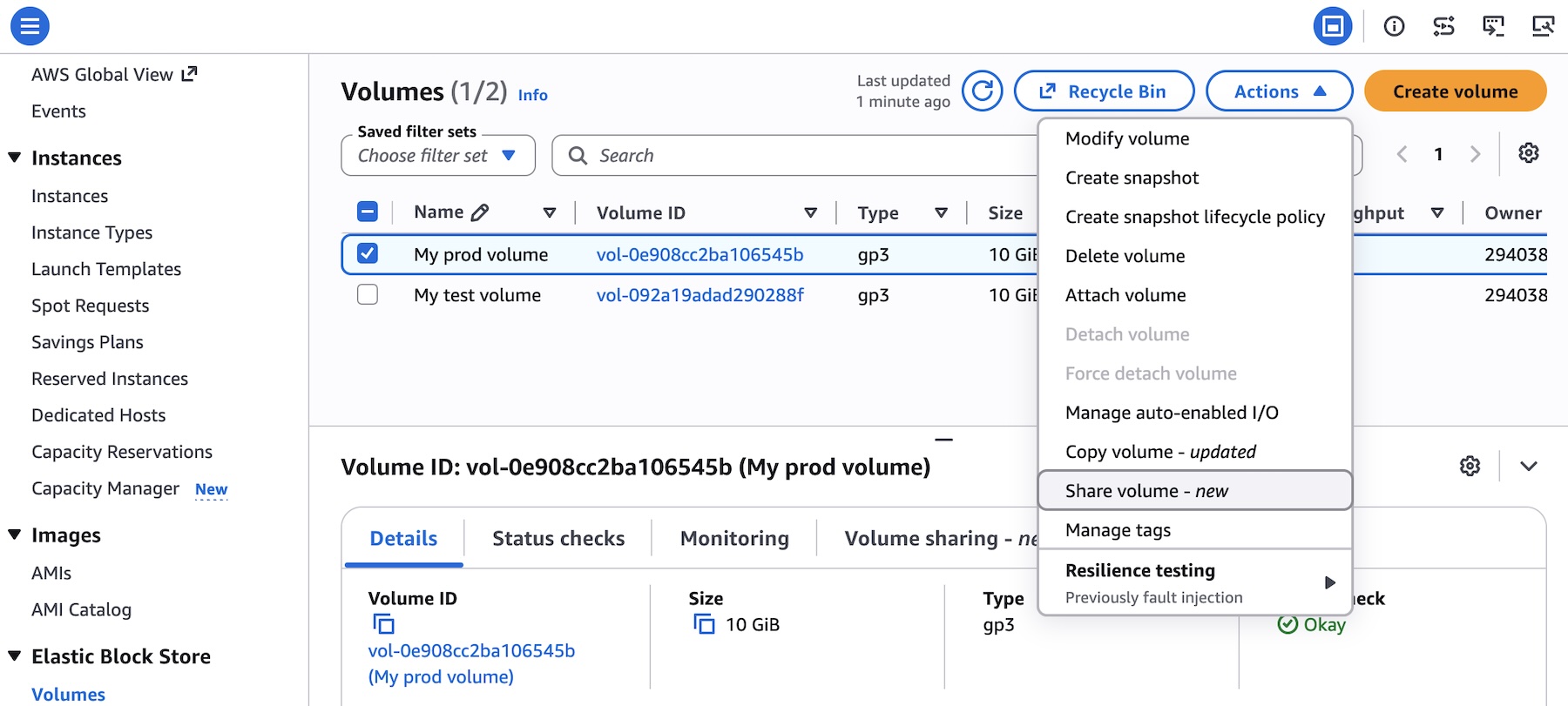
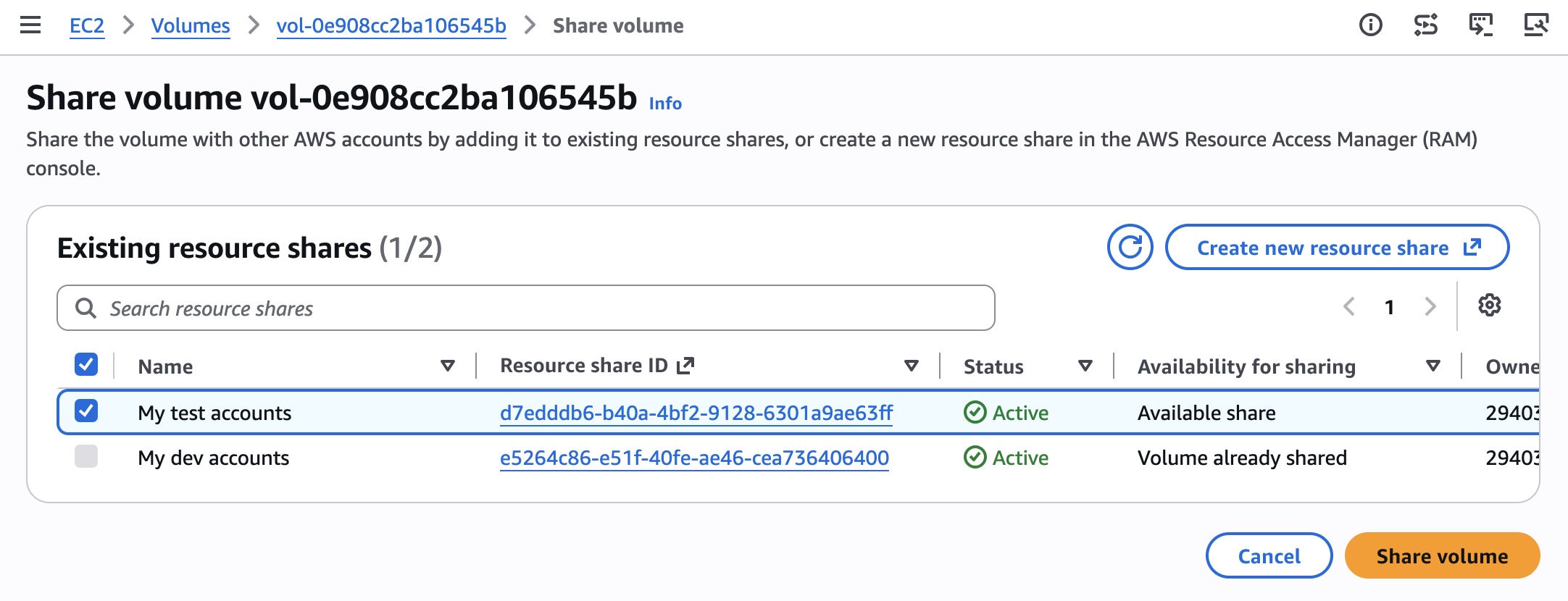
The mechanism for cross-account cloning relies on the integration of AWS RAM, a service designed to share AWS resources across accounts. Under the new workflow, a volume owner initiates a "Share volume" request through the Amazon EBS console. This action triggers the RAM framework, which validates the resource share against the AWS Organization’s security policies.

Once the target account accepts the resource share, the user in the secondary account gains the ability to initiate a copy of the volume. A key feature of this process is the flexibility of encryption. When copying the volume, the target account holder can choose to re-encrypt the data using an AWS Key Management Service (AWS KMS) key specific to the target account. This ensures that even if a production key is compromised, the data in the testing or development environment remains shielded by the secondary account’s security parameters.
Data Security and Operational Efficiency
The implications for enterprise security are substantial. In many regulated industries, production data must be strictly isolated from development and quality assurance environments. Previously, developers often had to rely on complex scripts or third-party tools to sanitize and move data, which increased the risk of data leakage or manual error.
By providing a native, managed service for cross-account cloning, AWS reduces the attack surface. Because the process is handled entirely within the AWS control plane, the data remains within the AWS global network and is not exposed to the public internet during the transit process. Furthermore, the ability to utilize KMS keys in the target account aligns with the principle of "least privilege" and separation of duties, ensuring that production administrators do not necessarily need access to the encryption keys of the testing environment.
Implications for DevOps and CI/CD Pipelines
For software development teams, this feature acts as a force multiplier for CI/CD pipelines. Testing environments often require "production-like" data to accurately simulate performance bottlenecks and edge-case bugs. Previously, the overhead of creating these environments meant that developers often worked with stale or synthetic data.
With the new cross-account clone functionality, a production environment can be cloned and pushed to a sandbox account in minutes. This enables:
- Rapid Environment Refresh: Automated pipelines can trigger volume clones to ensure that testing environments are always synchronized with the most recent production state.
- Isolated Benchmarking: Engineers can perform destructive testing or load testing on a full-scale replica of the production database without risking the primary infrastructure.
- Simplified Compliance Audits: Because the copy process is logged via AWS CloudTrail, auditors can verify exactly when and where data was moved, facilitating compliance with regulations like GDPR or HIPAA, which require granular control over data location.
Industry Context and Strategic Positioning
The move to integrate AI-assisted management—such as the support for the AWS MCP (Model Context Protocol) Server—indicates that AWS is positioning this feature for the era of AI-driven infrastructure management. By allowing developers to use natural language or AI-assisted coding tools to manage volume sharing and copying, AWS is lowering the barrier to entry for complex storage operations.
This update places AWS in a strong position relative to competitors who often rely on third-party snapshots or manual volume attachments. By consolidating these capabilities within the native console, AWS simplifies the "cloud-native" experience. As enterprises shift more of their core business logic to the cloud, the ability to manipulate large-scale datasets across accounts with minimal latency is becoming a primary differentiator for cloud service providers.
Future Outlook
The availability of cross-account volume clones in all regions that support EBS Volume Clones suggests a robust rollout. While the current iteration focuses on EBS volumes, industry observers anticipate that this framework of "resource sharing" will continue to expand to other storage services, such as Amazon FSx or EFS, to create a unified data management experience across the AWS ecosystem.
For organizations currently managing large fleets of EC2 instances, the recommendation is to audit existing IAM policies to ensure that the new RAM permissions are scoped appropriately. As with all cloud infrastructure updates, the shift toward cross-account capabilities requires a balance between developer agility and the hardening of cross-account security boundaries. By providing the tools for this balance, AWS is enabling organizations to scale their operations without sacrificing the integrity of their production data.

Users interested in adopting these features are encouraged to consult the Amazon EBS User Guide and leverage the AWS re:Post community for architectural patterns specific to their deployment size. As the infrastructure landscape becomes increasingly complex, these native features serve as the building blocks for more resilient, secure, and performant cloud architectures.