BlueNoroff Orchestrates Advanced Phishing Campaign Using AI-Generated Deepfakes and Impersonated Video Conferencing Tools.

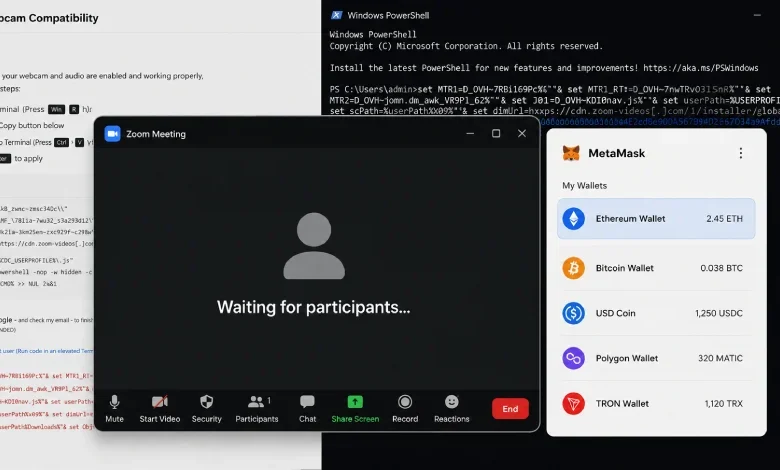
The North Korean state-sponsored threat actor known as BlueNoroff has significantly escalated its cyber-espionage and financial theft operations by deploying a sophisticated "ClickFix" phishing kit. This latest campaign, meticulously documented by cybersecurity firm JUMPSEC, leverages a combination of typosquatted domains, social engineering, and artificial intelligence to impersonate popular video conferencing platforms like Zoom and Microsoft Teams. By targeting high-value individuals within the cryptocurrency and venture capital sectors, the group has established a repeatable and highly effective pipeline for malware delivery and digital asset exfiltration.
The campaign represents a tactical evolution for BlueNoroff, a subgroup of the notorious Lazarus Group, which is widely believed to operate on behalf of the Democratic People’s Republic of Korea (DPRK). Historically focused on attacking the SWIFT banking network and decentralized finance (DeFi) protocols, BlueNoroff’s recent shift toward "operator-driven" victim acquisition suggests a more personalized and resource-intensive approach to cybercrime.
The Architecture of Deception: The ClickFix Pipeline
The core of the current campaign is the "ClickFix" methodology, a social engineering tactic where victims are lured into executing malicious commands under the guise of fixing a technical issue. In this specific iteration, the attack chain begins with the compromise of a trusted contact. BlueNoroff operators hijack the Telegram accounts of individuals who are well-established in the cryptocurrency community. Because the victim often knows the compromised individual in real life or has a history of professional interaction with them, the initial barrier of skepticism is bypassed.
The attacker, posing as the trusted contact, initiates a conversation and suggests a professional meeting, often framed as an investment opportunity or a partnership proposal. To facilitate this, they share a Calendly link. While Calendly is a legitimate scheduling tool, the link provided by the attackers redirects the victim to a malicious domain designed to mimic the appearance of a Zoom or Microsoft Teams meeting invitation. These domains utilize typosquatting—such as "us.zoom.06webin.us"—to appear authentic to the casual observer.

Technical Execution and Wallet Reconnaissance
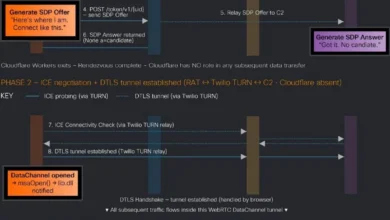
Upon clicking the fake meeting link, the victim is prompted to enter their name and grant the website permission to access their webcam. This is a critical juncture in the attack. If the victim grants permission, the phishing kit utilizes the Mediasoup WebRTC library to stealthily stream the victim’s camera feed directly to an operator’s control panel. This allows the North Korean actors to observe the victim in real-time, adding a layer of surveillance to the operation.
Simultaneously, the phishing kit performs a silent "fingerprinting" of the victim’s web browser. The primary objective of this step is to inventory installed cryptocurrency wallet extensions, such as MetaMask, Phantom, or Coinbase Wallet. This reconnaissance allows the attackers to assess the potential value of the target before proceeding with the final stage of the malware delivery. If a high-value wallet is detected, the "admin" (the threat actor) joins the fake meeting to guide the victim toward the final trap.
The Role of AI-Generated Deepfakes
One of the most striking features of this campaign is the use of artificial intelligence to maintain the illusion of a legitimate meeting. When the victim joins the "call," they are often met with a video feed that appears to be the person they expected to meet. However, JUMPSEC researchers discovered that these are not live video streams. Instead, the attackers use pre-edited composite videos.
These composites feature AI-generated headshots, created using tools like OpenAI’s ChatGPT (DALL-E) or similar generative models, which are then superimposed over authentic body movements captured from previous successful recordings of other victims. This creates a "plausibly familiar-looking face" that moves with natural body language. This recursive cycle—where one successful compromise provides the visual data for the next—demonstrates a high level of operational maturity and a chillingly efficient use of stolen data.
The ClickFix Payload and Malware Delivery
Once the victim is "in" the meeting, they are typically shown a screen indicating they are the only participant and that the system is "waiting for others." To explain the lack of audio or video connectivity, the operator triggers a fake error message within the interface, stating that the user’s microphone or camera is not working.

The system then prompts the user to "Update the Zoom SDK" or "Fix Audio Drivers" to resolve the issue. Clicking this prompt provides the victim with a command-line instruction (PowerShell for Windows or a Zsh/Bash script for macOS) that they are told to copy and paste into their terminal. This is the "ClickFix" payload. By convincing the user to manually execute the code, the attackers bypass many automated security warnings that occur when downloading and running traditional executable files.
The executed script typically serves as a downloader for more persistent malware, such as Infostealers or Remote Access Trojans (RATs). In the Windows variants, the script often connects to a remote server to fetch a secondary payload, while the macOS versions have been observed using sophisticated obfuscation to hide their intent from built-in security features like Gatekeeper.
Chronology of Discovery and Campaign Evolution
The activities of BlueNoroff and related clusters have been under intense scrutiny by the global cybersecurity community for over a year. A timeline of the campaign’s discovery highlights the rapid pace of development:
- Early 2025: Initial reports emerge of North Korean actors using fake Zoom lures to target cryptocurrency developers. JUMPSEC and other firms begin tracking the "ClickFix" pattern.
- April 2025: Researchers identify a cluster dubbed "ClickFake Interview," which specifically targets job seekers in the tech sector with fake interview invitations.
- May 2026: A threat actor using the alias "John" (@alchemy_john_mac) is identified via Telegram bot tokens hard-coded into the malware. This individual is observed interacting with cryptocurrency groups, inquiring about vesting contracts.
- May 31 – July 14, 2026: JUMPSEC identifies five distinct versions of the phishing kit, indicating that the developers are actively fine-tuning the code, improving the user interface, and adding features to the operator’s dashboard.
- July 2026: Detailed analysis reveals the "Teams" variant of the kit is more advanced than the Zoom version, featuring mobile device blocking and more robust wallet probing capabilities.
Analysis of Platform Selection: Why Zoom and Teams?
The specific focus on Zoom and Microsoft Teams, rather than Google Meet, is a calculated choice by the North Korean operators. Sean Moran, head of threat research at JUMPSEC, noted that the "ClickFix" pretext relies on the victim’s belief that they are using a "heavyweight" desktop application.
"The whole hook is the ‘Zoom/Teams SDK out of date’—that only lands on platforms that victims believe have a desktop client," Moran explained. "Google Meet is browser-first, so an ‘SDK update’ doesn’t make sense to the user." Furthermore, Zoom and Teams are the established standards for high-level corporate and financial communications. A Google Meet link might feel informal, whereas a Zoom link carries the professional weight expected for investor calls or partnership discussions. Additionally, the complex subdomain structure of Zoom (e.g., us06web.zoom.us) makes it significantly easier for attackers to create convincing typosquatted URLs that blend in with legitimate traffic.

Official Responses and Industry Implications
While Zoom and Microsoft have not issued specific joint statements regarding this North Korean campaign, both companies have historically urged users to only download updates through official channels and to be wary of third-party links. Cybersecurity agencies, including the FBI and the CISA, have repeatedly warned that North Korean cyber actors are aggressively targeting the crypto industry to fund the regime’s weapons programs.
The implications of this campaign extend far beyond simple phishing. The use of AI-generated composites and the hijacking of trusted social media accounts suggest that "identity" is becoming the primary battleground in cybersecurity. When a victim sees a familiar face and hears a familiar context, technical defenses are often rendered moot by human trust.
Broader Impact and Security Recommendations
The BlueNoroff "ClickFix" campaign underscores a shift toward highly personalized, multi-stage attacks. As digital assets and Web3 technologies become more integrated into the global economy, the individuals who control these assets—executives, developers, and founders—become high-value targets.
To mitigate these risks, organizations and individuals are advised to:
- Verify Out-of-Band: If a contact sends a meeting link unexpectedly via Telegram or WhatsApp, verify the request through a different communication channel (e.g., a phone call or a corporate email).
- Avoid Terminal Commands: Never copy and paste commands from a website into a terminal or PowerShell window, regardless of how legitimate the source appears.
- Use Hardware Wallets: For high-value cryptocurrency holdings, hardware wallets provide a layer of protection that browser-based extensions cannot match, as they require physical confirmation for transactions.
- Endpoint Protection: Ensure that endpoint detection and response (EDR) solutions are configured to monitor for suspicious PowerShell or script execution patterns.
BlueNoroff’s continued refinement of its victim acquisition pipeline demonstrates that the group is not merely looking for technical vulnerabilities, but is actively exploiting the fabric of professional relationships and the growing capabilities of artificial intelligence. As these tactics continue to mature, the boundary between a legitimate business interaction and a state-sponsored heist will only become more difficult to discern.