As the global digital education market continues its upward trajectory, the methodologies used to convert prospects into long-term students have undergone a fundamental shift. While traditional e-commerce focuses on the immediate sale of tangible goods, the digital product sector—comprising online courses, memberships, and downloadable intellectual property—relies on a sophisticated email marketing architecture built on trust, education, and psychological triggers. Industry data suggests that the global e-learning market is projected to reach $460 billion by 2026, yet the difference between successful creators and those who struggle often lies in the efficacy of their email nurture sequences rather than the quality of the product itself.
The Fundamental Divergence in Product Marketing
The marketing requirements for physical goods versus digital knowledge products are diametrically opposed. In traditional e-commerce, the physical product acts as its own closer; the consumer evaluates quality through sight, touch, and utility. The primary role of email in this context is to drive traffic to a product page where the physical attributes can complete the sale.
Conversely, digital products are intangible "promises of transformation." Because there is no physical packaging to admire or tactile quality to assess, the email itself must perform the heavy lifting of the sales process. For course creators, the email is not just a delivery mechanism for a link; it is the laboratory where trust is manufactured. Experts in the field argue that for digital products, email is not merely a retention tool but the entire funnel. While a physical brand might rely on retargeting pixels and abandoned cart sequences to catch casual browsers, a digital creator must use email to bridge the gap between initial curiosity and the final transaction.
The Chronology of a Digital Product Lead
To understand the modern email playbook, one must view the subscriber journey as a chronological progression of value. The process typically follows a four-stage architecture:
- The Lead Magnet Phase: This is the entry point where a prospective student exchanges their email address for immediate value, such as a checklist, mini-course, or webinar.
- The Welcome and Nurture Phase: A series of automated messages designed to earn attention and establish the creator’s authority.
- The Launch Phase: A time-bound period of high-intensity communication focused on conversion.
- The Post-Purchase Retention Phase: Emails sent after the transaction to ensure product consumption and student success.
In this framework, the lead magnet is frequently misunderstood. While many creators view it as the end of a transaction, successful organizations like Foundr view it as the opening chapter of a long-term relationship. By providing high-level free training at the top of the funnel, creators can lower the barrier to entry, eventually leading prospects toward more substantial commitments, such as the Foundr+ membership platform, which serves a community of over 30,000 entrepreneurs.
Building Belief Through Nurture Sequences
The core objective of a nurture sequence in the digital product space is "belief building." Before a customer invests in a $500 or $2,000 course, they must believe three things: that the problem they face is solvable, that the creator’s methodology is the correct solution, and that they, the student, are capable of achieving the results.
Data from marketing automation platforms indicates that the length of these sequences should correlate with the price point of the offering. A low-ticket item, such as a $49 ebook, may require only three to four emails to convert. However, flagship courses or high-ticket coaching programs often require a "runway" of six to ten emails delivered over several weeks.
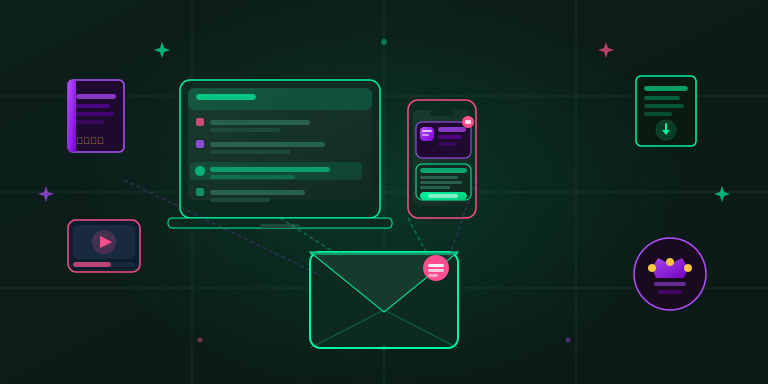
The structure of a high-performing nurture sequence typically follows this arc:
- Identification: Highlighting the specific pain point the subscriber is currently experiencing.
- Possibility: Painting a vivid picture of the "after" state—what life or business looks like once the problem is solved.
- Proof: Introducing case studies and student testimonials to validate the methodology.
- Logical Conclusion: Positioning the course as the only sensible next step for someone serious about progress.
The Mechanics of a High-Conversion Launch
When a digital product moves from the "nurture" phase to the "launch" phase, the communication style must shift from educational to urgent. A launch is a contained window of opportunity, and the email cadence must reflect that.
During a launch, industry leaders recommend moving away from feature lists and focusing on objection handling. Common objections in the digital space include a lack of time, fear of failure, or skepticism regarding the return on investment. Effective launch emails tackle these directly. For example, if a prospect is "too busy," an email might detail how current students integrate the course into a 40-hour work week.
Furthermore, the final 48 hours of a launch are critical. While some creators fear over-communicating, data suggests that sending one email per day—and multiple emails on the final day—is necessary to capture late-stage decision-makers. However, this urgency must be authentic. "Manufactured urgency," such as fake countdown timers or rolling deadlines that never actually end, can permanently damage a creator’s reputation and lead to high unsubscribe rates.
The Post-Purchase "Blind Spot"
One of the most significant missed opportunities in digital product marketing occurs after the cart closes. Most creators cease communication once the sale is finalized, but this is where the most valuable marketing assets—successful students—are created.
Student completion rates for online courses are notoriously low, with some industry reports suggesting that fewer than 10% of students finish the programs they buy. To combat this, the "Post-Purchase Playbook" includes:
- The 7-Day Check-in: A simple email sent one week after purchase to ask about the student’s progress and offer assistance.
- Milestone Celebrations: Automated emails triggered when a student completes a specific module or lesson.
- The Re-engagement Sequence: Targeted messages for students who haven’t logged in for more than 14 days.
High completion rates lead to better testimonials, higher referral rates, and increased lifetime value. For instance, Foundr+ utilizes a 90-day results guarantee, a commitment that is only sustainable if the post-purchase email sequence effectively drives student engagement and implementation.
Supporting Data and Market Implications
The ROI of email marketing remains unparalleled in the digital space. According to the Direct Marketing Association, for every $1 spent on email marketing, the average return is approximately $36 to $42. In contrast, social media conversion rates often hover around 1% to 2%, whereas targeted email lists can see conversion rates of 5% to 10% during launch periods.
The shift toward "owned media" (email lists) is also a response to the volatility of "rented media" (social media platforms). Algorithm changes on platforms like Meta, X (formerly Twitter), and TikTok can overnight reduce a creator’s reach by 50% or more. Email provides a direct, unmediated line of communication that is immune to algorithmic shifts.
Technological Integration and Automation
To execute this complex playbook at scale, creators are increasingly turning to specialized automation tools. Platforms like Omnisend have gained traction by offering features specifically designed for the digital product lifecycle, including advanced segmentation and automated "flows."
Segmentation allows creators to send different messages to different groups: for example, sending a "re-engagement" email only to those who haven’t opened the last three messages, or offering a specific discount only to those who have visited the sales page multiple times without purchasing.
The transition between platforms has also become a focal point for the industry. As creators grow, they often migrate from basic email providers to more robust automation engines. Service providers have responded by offering "white-glove" migration services—often moving entire lists, templates, and automation flows within a five-day window—to minimize the technical friction that often prevents business scaling.
Analysis of Long-term Impact
The professionalization of email marketing for digital products signals a maturing industry. The "wild west" era of aggressive, hype-driven sales emails is being replaced by a more sophisticated, relationship-based model.
Creators who prioritize the "trust-before-revenue" philosophy are finding more sustainability in their business models. By focusing on the quality of the interaction rather than the quantity of the emails, they build a durable asset that survives market fluctuations. As the digital product economy continues to expand, the ability to master these email frameworks will likely remain the single most important skill set for creators looking to build a lasting brand in the digital age.