Howes Percival’s Katie James on why a turnaround may not be enough to save Poundland – Retail Gazette

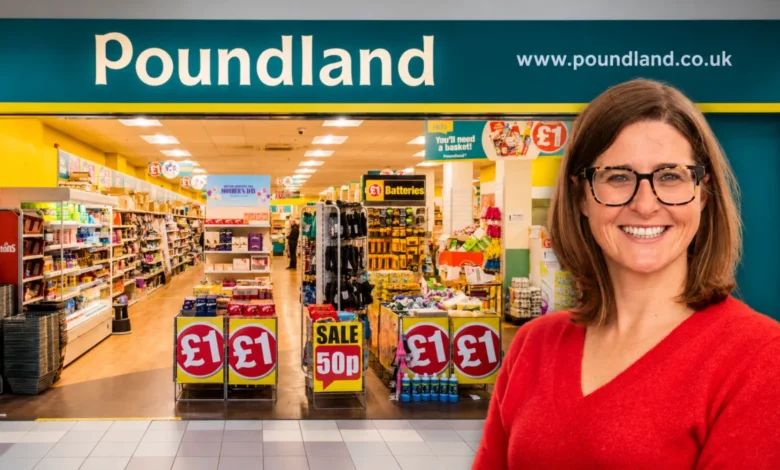
Katie James, a partner at the law firm Howes Percival, notes that Poundland’s current situation serves as a stark reminder of a fundamental business truth: a company can improve its day-to-day operations and generate profit, yet still remain fundamentally unable to satisfy the expectations of those who hold its debt. “Profit is great; it means you can pay your employees and your current debts,” James explains. “But if it is not making sufficient profit, it cannot eat into that debt. That is the crux of the problem.”
A Chronology of Financial Strain
The current crisis did not emerge overnight; it is the culmination of years of shifting ownership and aggressive financial maneuvering. In 2025, the retail group Pepco divested its interest in Poundland, selling the chain to the investment firm Gordon Brothers for a symbolic £1. This transaction was framed as a strategic move to facilitate a necessary restructuring. However, the deal was underpinned by significant financial obligations, including a £95 million asset-based lending facility provided by Gordon Brothers and additional lending from the former owner, Pepco.
As of late 2026, the exact quantum of the outstanding debt remains opaque to the public, hidden within complex, non-disclosed segments of filed accounts. The disconnect between the management’s focus on operational turnaround and the lenders’ focus on debt recovery has created a volatile environment. While management argues that the business is heading in the right direction and requires more time to solidify its gains, the secured creditors appear to have lost patience, citing looming market risks and a desire to protect their security.
In October 2026, the gravity of the situation was confirmed when Poundland filed a notice of intention to appoint administrators. While this step does not automatically trigger the end of the business, it serves as a formal signal to the market that the company is effectively insolvent or on the precipice of becoming so.
The Mechanism of Administration and Lender Power
One of the most misunderstood aspects of retail insolvency is the power dynamics between directors and secured lenders. Under UK law, when directors initiate the administration process, the company must be able to prove it is, or is likely to become, insolvent. However, a qualifying secured lender possesses more flexibility. They can move to appoint administrators if there has been a breach of lending covenants or if they perceive that their underlying security is at significant risk, regardless of whether the business is still technically trading in the black.
Once an administrator is appointed, they become an officer of the court. Their primary mandate is not to serve the interests of the shareholders or the previous owners, but rather to act in the best interest of all creditors. The legal objectives for the administrator are threefold: to rescue the company as a going concern, to achieve a better result for the creditors as a whole than would be likely in a liquidation, or to realize property in order to make a distribution to one or more secured or preferential creditors.
For Poundland, this could manifest in several ways: a trade sale to a new owner, a “pre-pack” administration where a buyer is lined up before the insolvency process formally begins, or a piecemeal break-up of the store portfolio. The feasibility of these options depends heavily on the cost of trading through the administration period. Wages for employees retained by the administrator after a 14-day grace period become an expense of the administration itself, creating a high barrier to entry for any potential buyer who wishes to keep the business operational.
The Ripple Effect: Suppliers and the High Street
The potential collapse of a retailer of Poundland’s scale is not merely a corporate event; it is a systemic shock to the retail ecosystem. James describes business relationships as a “spider’s web,” where the failure of one node threatens to collapse the entire structure.
Small to medium-sized suppliers are at the greatest risk. Many have already begun to tighten their credit terms, shifting to “cash on delivery” models to mitigate their exposure. Others are invoking retention-of-title clauses, attempting to reclaim goods that have not yet been paid for. This creates a supply-chain bottleneck that could leave store shelves empty during the critical Christmas trading window—the most important period in the retail calendar. If suppliers cannot be assured of payment, the stock flow stops, and if the stock stops, the retail business loses its only source of revenue.
Furthermore, the broader impact on the UK high street cannot be overstated. Poundland, much like the defunct Woolworths before it, serves as a "destination" retailer. Shoppers often visit a high street specifically to visit a Poundland, and in doing so, they provide passing trade to neighboring businesses. Should a significant number of Poundland stores vanish, the footfall in towns across the country could suffer a permanent decline, leading to a secondary wave of closures among smaller, independent retailers who rely on the traffic generated by larger discount brands.
Political Pressure and the Search for a Buyer
The public and political stakes have become increasingly high. With 12,000 jobs hanging in the balance during the run-up to the holiday season, the government has begun to exert pressure on stakeholders to find a resolution that preserves employment. While Gordon Brothers has issued statements suggesting they are open to solutions that protect jobs, the reality of commercial lending remains cold and calculated.
Potential suitors, including the Martin Property Group and interest from Poundland founder Steve Smith, have reportedly entered the frame. However, the gap between expressions of interest and a finalized, binding deal is substantial. The increased public scrutiny and media coverage have had the unintended effect of increasing competition, which, while beneficial for valuation, adds layers of complexity to an already fast-moving and chaotic negotiation process.
Strategic Lessons and the Future of Value Retail
For the wider retail industry, the Poundland saga serves as a cautionary tale regarding the importance of transparent communication. James emphasizes that when a business’s finance director or senior leadership stops communicating with stakeholders, it is almost always a precursor to a wider collapse. Late payments, broken promises regarding delivery schedules, and the sudden cessation of dialogue are red flags that are often ignored by long-term partners who rely on the comfort of past relationships.
Ultimately, the survival of Poundland will depend on more than just financial engineering. The company must prove to its consumers that it has a clear, compelling value proposition that warrants a visit. Loyalty is a powerful asset, but it is not a substitute for a sustainable business model. The legal and financial battle being fought in boardrooms and courtrooms is only one half of the equation; the other half will be decided by the shoppers themselves.
As the company faces its immediate future, the primary challenge remains reconciling the needs of its secured lenders with the need to keep 12,000 people employed and its doors open for the Christmas period. Whether the outcome is a rescue, a sale, or a managed wind-down, the lessons of this crisis will likely influence retail lending practices for years to come. For now, the clock is ticking, and the window for a orderly resolution is closing, leaving the fate of one of the UK’s most recognizable high-street brands hanging in a delicate, precarious balance.
Related posts: