Larry Ellison Cancels Planned Multi-Billion Dollar Oracle Stock Sale Amid Broader Corporate Expansion

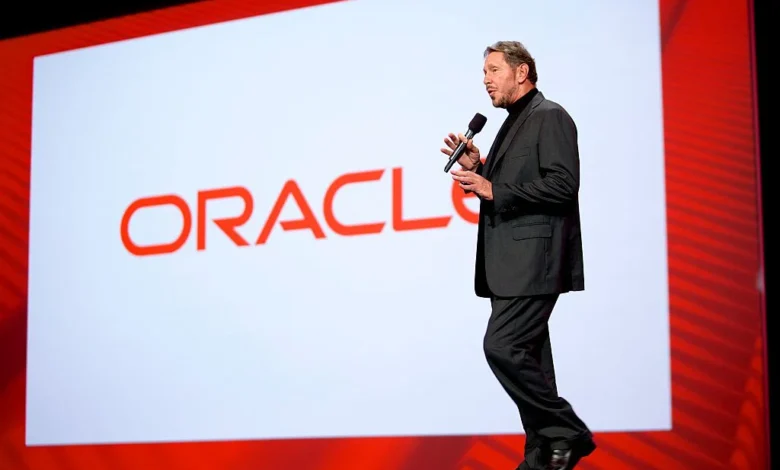
In a sudden and unexpected shift in corporate financial strategy, Oracle co-founder, Chief Technology Officer, and executive chairman Larry Ellison has officially canceled a planned multi-billion-dollar liquidation of his company stock. The abrupt reversal, announced by the enterprise software giant on a Saturday, brings a halt to what would have been one of the most substantial insider stock sales of the year.
According to prior regulatory disclosures filed with the U.S. Securities and Exchange Commission (SEC), Ellison had previously mapped out a trading plan to offload up to 50 million shares of Oracle common stock. Based on market valuations at the time of the initial filing, the block of shares was estimated to be worth approximately $7.5 billion. However, the company’s recent weekend announcement confirmed that the entire initiative has been scrapped. Corporate representatives noted that no shares were ever sold under the now-defunct trading plan, and Ellison currently maintains no alternative proposals to divest from his equity holdings in the technology conglomerate.
The decision comes at a critical juncture for Oracle, a legacy database titan that has aggressively repositioned itself as a major infrastructure player in the modern artificial intelligence economy. While corporate executives routinely utilize pre-scheduled trading plans—known as Rule 10b5-1 plans—to diversify personal wealth or fund outside ventures without running afoul of insider trading regulations, the cancellation of a divestment of this magnitude has drawn intense scrutiny from financial analysts, institutional investors, and market observers alike.
Chronology of Events and Regulatory Disclosures
The timeline leading up to the cancellation underscores a period of high-stakes financial maneuvering and intense capital expenditure for both Oracle and the Ellison family portfolio.
The initial signals of a major liquidity event began when regulatory filings surfaced indicating Ellison’s intent to part with 50 million shares. For a billionaire whose net worth is inextricably linked to Oracle’s stock performance, liquidating a $7.5 billion stake represents a massive capital reallocation. Such filings are typically scrutinized by Wall Street for indications of insider sentiment, though executives frequently establish these plans months in advance for personal estate planning, philanthropic endeavors, or external investments.
For weeks, market participants anticipated the execution of the sale, pricing in the potential downward pressure 50 million newly circulating shares could exert on the open market. However, the execution phase never materialized. By Saturday afternoon, Oracle issued a definitive statement bringing the speculation to a close.
"No Oracle stock was sold under that plan, and he has no other plans to sell any of his Oracle stock," the company stated in its official release.
By Sunday afternoon, as global financial markets prepared for the upcoming trading week, Oracle’s stock found itself under sustained pressure. Trading data from Yahoo Finance indicated that Oracle shares have experienced a significant downward trajectory, falling approximately 22 percent since the beginning of the year. This persistent market headwinds environment makes the retention of Ellison’s shares a potent statement of internal confidence, signaling to the broader investment community that the company’s largest stakeholder prefers to hold firm through the volatility.
Heavy Investments in AI Infrastructure and Data Centers
To fully understand the weight of Ellison’s decision to retain his shares, one must examine Oracle’s aggressive pivot toward cloud computing and artificial intelligence infrastructure. Over the past several quarters, Oracle has found itself locked in a fierce, high-stakes race against established cloud giants such as Amazon Web Services, Microsoft Azure, and Google Cloud to capture the exploding demand for generative AI training and hosting capabilities.
To remain competitive, Oracle has been spending heavily on the construction and expansion of next-generation data centers worldwide. These facilities require billions of dollars in capital expenditures, specifically for high-density server racks, advanced cooling systems, and massive allocations of specialized graphics processing units (GPUs) manufactured by firms like Nvidia.
This capital-intensive strategy has temporarily squeezed profit margins and triggered short-term apprehension among risk-averse investors, contributing to the aforementioned 22 percent year-to-date decline in share price. Nevertheless, corporate leadership has consistently defended these expenditures as existential investments necessary to secure Oracle’s long-term dominance in enterprise cloud services. By canceling his planned stock sale, Ellison—who retains a controlling economic and voting stake in the firm—effectively binds his financial fortunes even tighter to the success of this capital-heavy transformation.
Strategic Realignments: The TikTok Partnership and Media Ventures
Beyond its core database and cloud infrastructure operations, Oracle has dramatically expanded its corporate footprint through high-profile geopolitical and media alignments that have further complicated its balance sheet and operational focus.
Earlier in the year, Oracle solidified its position as one of the primary owners and critical security partners for TikTok’s United States operations. The complex, multi-layered agreement was designed to address long-standing national security and data privacy concerns raised by federal regulators regarding the short-form video platform’s parent company, ByteDance. As a key stakeholder and technological custodian, Oracle is tasked with ensuring that U.S. user data remains isolated and protected under domestic jurisdiction—a responsibility that elevates Oracle’s public profile and intertwines its corporate destiny with complex geopolitical developments.
Simultaneously, Larry Ellison’s personal financial ecosystem has been deeply engaged in massive media and entertainment transactions. Ellison has deployed a substantial portion of his personal wealth to back his son, David Ellison, in high-profile entertainment ventures. Most notably, the senior Ellison provided critical financial backing for the high-stakes acquisition of Warner Bros., a transaction valued at approximately $40 billion.
This ambitious media consolidation effort has not been without turbulence. The proposed acquisition has faced intense legal scrutiny, regulatory hurdles, and contested courtroom battles. Negotiations involving state authorities, such as ongoing legal discussions overseen by California officials, have required steady capital backing and unwavering financial commitment from the Ellison family. Analysts have frequently speculated on whether Larry Ellison’s planned stock sale was originally intended to free up liquid capital to support these expansive media ambitions or to shore up personal leverage tied to the Warner Bros. acquisition process. The cancellation of the sale suggests that either alternative financing has been secured for the media venture or that Ellison prefers to keep his Oracle equity intact as collateral and a foundation of stability.
Market Implications and Fact-Based Analysis
The immediate market implications of Ellison’s decision to cancel his $7.5 billion stock sale are multifaceted. From a technical perspective, the removal of potential selling pressure amounting to 50 million shares is inherently net-positive for supply-demand dynamics on the New York Stock Exchange, where Oracle trades under the ticker symbol ORCL. Large-scale insider liquidations often generate bearish sentiment among retail and institutional investors who fear that insiders are capitalizing on local market peaks. By aborting the sale, Ellison avoids feeding any negative sentiment regarding management’s view of the company’s intrinsic value.
Furthermore, the move sends a stabilizing psychological signal to shareholders who have grown anxious over the stock’s 22 percent year-to-date retreat. At a time when Oracle is absorbing massive capital expenditures to build out AI data centers and navigating complex operational responsibilities related to its TikTok partnership, the company’s visionary co-founder maintaining a 100 percent lock on his multi-billion-dollar equity position underscores a shared-fate alignment between executive leadership and public shareholders.
However, financial analysts caution that the lack of an official explanation from Oracle leaves room for various interpretations. While bullish analysts view the retention of shares as an ultimate vote of confidence in the cloud infrastructure strategy and the long-term payoff of AI data center investments, neutral observers point out that changing macroeconomic conditions, shifting debt markets, or evolving legal parameters surrounding the family’s media acquisitions could have rendered the stock liquidation unnecessary or strategically disadvantageous at this specific moment.
As Oracle navigates the remainder of the fiscal year, all eyes will remain on the company’s quarterly earnings reports to gauge whether its multi-billion-dollar capital expenditures on AI data centers are successfully translating into accelerating cloud revenue growth. With Ellison’s shares safely locked in his portfolio, the billionaire technologist remains entirely exposed—for better or for worse—to the monumental operational transformations currently sweeping through Oracle and its expanding global enterprise.