AWS Expands Bedrock Model Portfolio with Strategic Integration of GPT-6 and Claude 5.5 Families

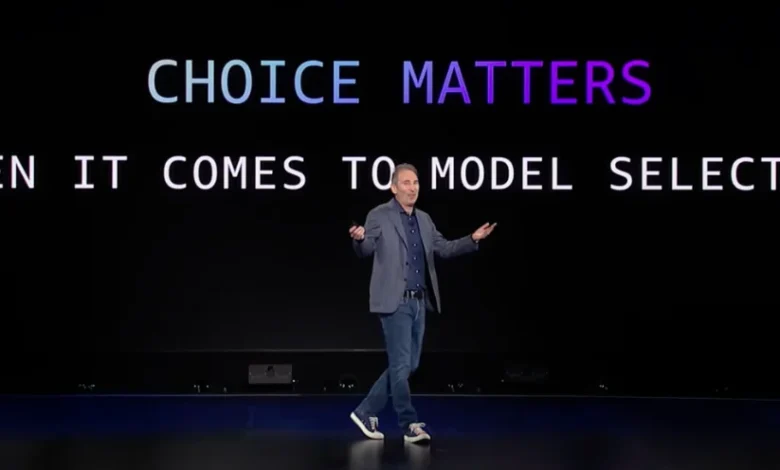
The landscape of generative artificial intelligence is undergoing a fundamental shift from a pursuit of raw parameter scale toward a more nuanced, efficiency-driven paradigm. Amazon Web Services (AWS) has officially responded to this transition by expanding the model catalog available on Amazon Bedrock, its managed service for building generative AI applications. The latest additions—OpenAI’s GPT-6 Sol and GPT-6 Luna, alongside Anthropic’s Claude Opus 5.5—represent a deliberate effort to provide enterprise developers with granular control over the intelligence-to-cost ratio, allowing for the deployment of specialized models tailored to specific operational requirements.
The Strategic Shift Toward Model Specialization
For much of the past two years, the enterprise AI sector was defined by a "bigger is better" philosophy, where organizations prioritized the most capable frontier models regardless of the computational overhead. However, as production-grade AI deployments scale, the economic and latency constraints of using massive, general-purpose models have become a significant bottleneck.
AWS’s latest integration reflects a market-wide maturation. By introducing models that are architecturally optimized for different tiers of utility—ranging from complex reasoning tasks to high-volume, repetitive automation—AWS is enabling a "right-sizing" strategy. This approach is intended to lower the Total Cost of Ownership (TCO) for AI infrastructure while maintaining high performance benchmarks for specific business processes.
Breakdown of New Model Capabilities
The introduction of the GPT-6 series marks a significant milestone in the evolution of OpenAI’s model architecture on the AWS platform.
- GPT-6 Sol: Designed primarily for development and operations (DevOps) environments, this model is engineered to handle demanding, recurring workflows that require a high degree of technical precision. Its architecture is tuned to minimize hallucination rates while maximizing output accuracy for code generation, debugging, and infrastructure management.
- GPT-6 Luna: Positioned as the efficiency workhorse of the new lineup, Luna is optimized for high-volume, repeatable tasks. It provides a significant price-performance advantage over previous generations, such as the GPT-5.6 series. By reducing the compute intensity required for standardized workflows—such as data classification, sentiment analysis, and routine content moderation—Luna enables enterprises to scale AI operations without a linear increase in expenditure.
- Claude Opus 5.5: Anthropic’s latest entry into the Claude 5.5 family represents a refinement of the "agentic" capabilities found in its predecessors. Opus 5.5 is specifically tuned for complex, long-running agentic tasks, such as multi-step autonomous coding projects or long-context data synthesis. Internal testing suggests that Opus 5.5 achieves superior results compared to the original Opus 5 while consuming fewer tokens, effectively increasing the "intelligence density" of the model.
Chronology of the AWS Bedrock Expansion
The integration of these models follows a rapid succession of announcements that have reshaped the cloud-based AI market over the last three months:
- Early Q4 2025: AWS began socialising the concept of "Intelligent Model Routing," where users could leverage Bedrock to switch models dynamically based on input complexity.
- January 2026: Initial public previews of the Claude 5.5 family were initiated, signaling a move toward more efficient, token-conscious architecture.
- Late January 2026: AWS confirmed the immediate availability of the GPT-6 family, marking one of the fastest integrations of a frontier model series into the Bedrock ecosystem to date.
- Current State: Enterprise customers are now able to access these models via API across major AWS regions, allowing for immediate integration into existing CI/CD pipelines and production environments.
Data-Driven Economic Implications
The primary driver behind this expansion is the necessity of cost-efficient scaling. According to recent industry benchmarks, the transition from legacy large language models to optimized models like GPT-6 Luna can reduce inference costs by approximately 30% to 45% for high-throughput applications.
Furthermore, the introduction of token-efficient models like Claude Opus 5.5 addresses the "latency tax" associated with massive models. For real-time applications, such as customer-facing chatbots or real-time diagnostic systems, the reduction in time-to-first-token (TTFT) provided by these newer models is critical. Data suggests that while frontier models of the past often suffered from latency spikes during peak usage, the specialized nature of the 5.5 and 6-series models allows for more predictable performance under high concurrent load.
Official Perspectives and Market Context
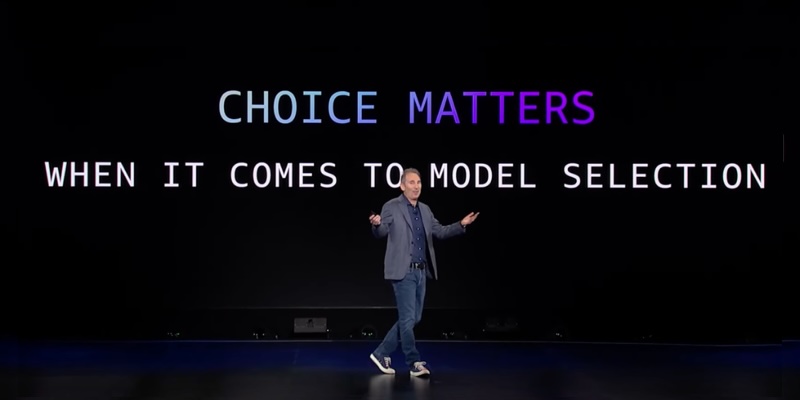
While specific commentary from OpenAI and Anthropic regarding the Bedrock implementation remains focused on technical collaboration, the broader industry reaction has been one of validation. Analysts at major technology research firms have noted that AWS’s "model-agnostic" approach remains its strongest competitive advantage. By not tying customers to a single proprietary stack, AWS provides the flexibility required for enterprises to hedge against the rapid pace of model obsolescence.
"The goal is no longer just to find the smartest model," an AWS spokesperson noted during a recent developer briefing. "The goal is to find the model that provides the necessary intelligence for a specific task at the lowest possible latency and cost. Our job is to build the infrastructure that makes that trade-off seamless for the builder."

Broader Implications for the Generative AI Ecosystem
The move by AWS to categorize and provide these models on Bedrock has several cascading effects on the wider technology sector:
- Standardization of "Agentic" Benchmarks: With the inclusion of models like Claude Opus 5.5, the industry is effectively establishing a new baseline for what constitutes an "agentic" model. Developers now have clear, industry-standard targets for measuring the reliability of autonomous systems.
- Increased Competition Among Model Providers: By placing OpenAI and Anthropic models side-by-side on the same management interface, AWS is fostering a competitive environment where model providers must continuously improve their cost-to-performance metrics to retain market share within the Bedrock ecosystem.
- Enterprise Adoption Hurdles: The primary barrier to AI adoption has shifted from technical capability to governance and cost control. By providing tools for observability and model selection, AWS is moving the industry toward a state where AI can be treated as a standard, predictable IT utility rather than an experimental research project.
Future Outlook and Observability
As these models continue to integrate into the enterprise, the focus is shifting toward observability—the ability to monitor, trace, and debug AI performance in real time. AWS has indicated that the next phase of its Bedrock development will prioritize deeper integration with native observability tools. This will allow administrators to track exactly which models are being invoked, the cost associated with each request, and the accuracy of the output in a unified dashboard.
For developers and systems architects, the takeaway is clear: the era of the monolithic model is drawing to a close. The future of enterprise AI lies in a modular approach, where the underlying "intelligence" is treated as a component that can be swapped, upgraded, or downgraded based on the evolving requirements of the business. As the AWS ecosystem continues to expand, the focus will remain on building the necessary abstractions to manage this complexity, ensuring that the promise of generative AI is matched by the reality of operational sustainability.
In conclusion, the addition of GPT-6 Sol, GPT-6 Luna, and Claude Opus 5.5 to Amazon Bedrock is more than just a list of new product launches; it is a strategic maneuver that defines the next phase of the AI gold rush. As the industry moves toward optimization, the infrastructure providers that offer the most flexibility, the best observability, and the most comprehensive model choices will likely define the standards for the next generation of cloud-native intelligence.
Related posts: