Introducing Amazon CloudWatch Omni: A Unified AI-Powered Observability Platform for Modern Engineering Teams.

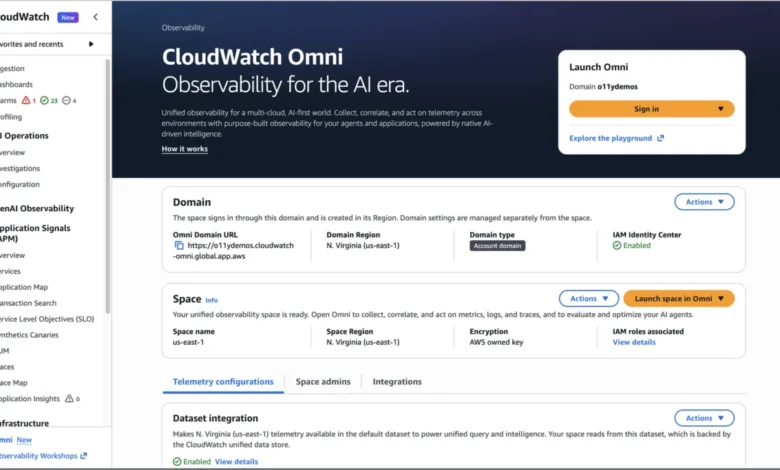
The landscape of cloud-native observability is undergoing a seismic shift as Amazon Web Services (AWS) introduces Amazon CloudWatch Omni, an advanced observability layer designed to consolidate fragmented monitoring workflows into a single, AI-powered experience. By integrating application monitoring and agentic workload oversight, AWS is addressing a critical pain point in the modern enterprise: the operational silos that frequently paralyze engineering teams during complex incident responses.
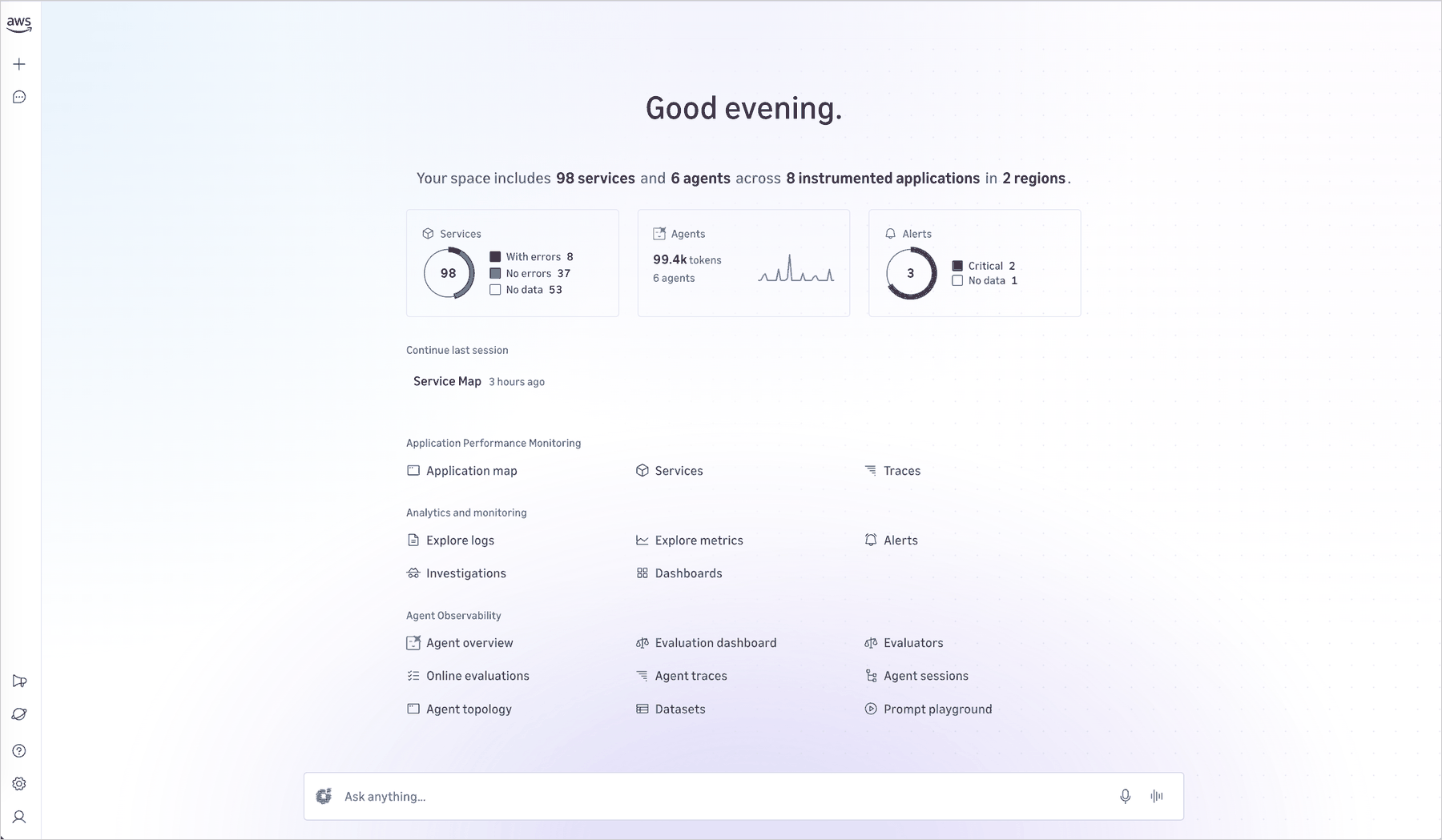
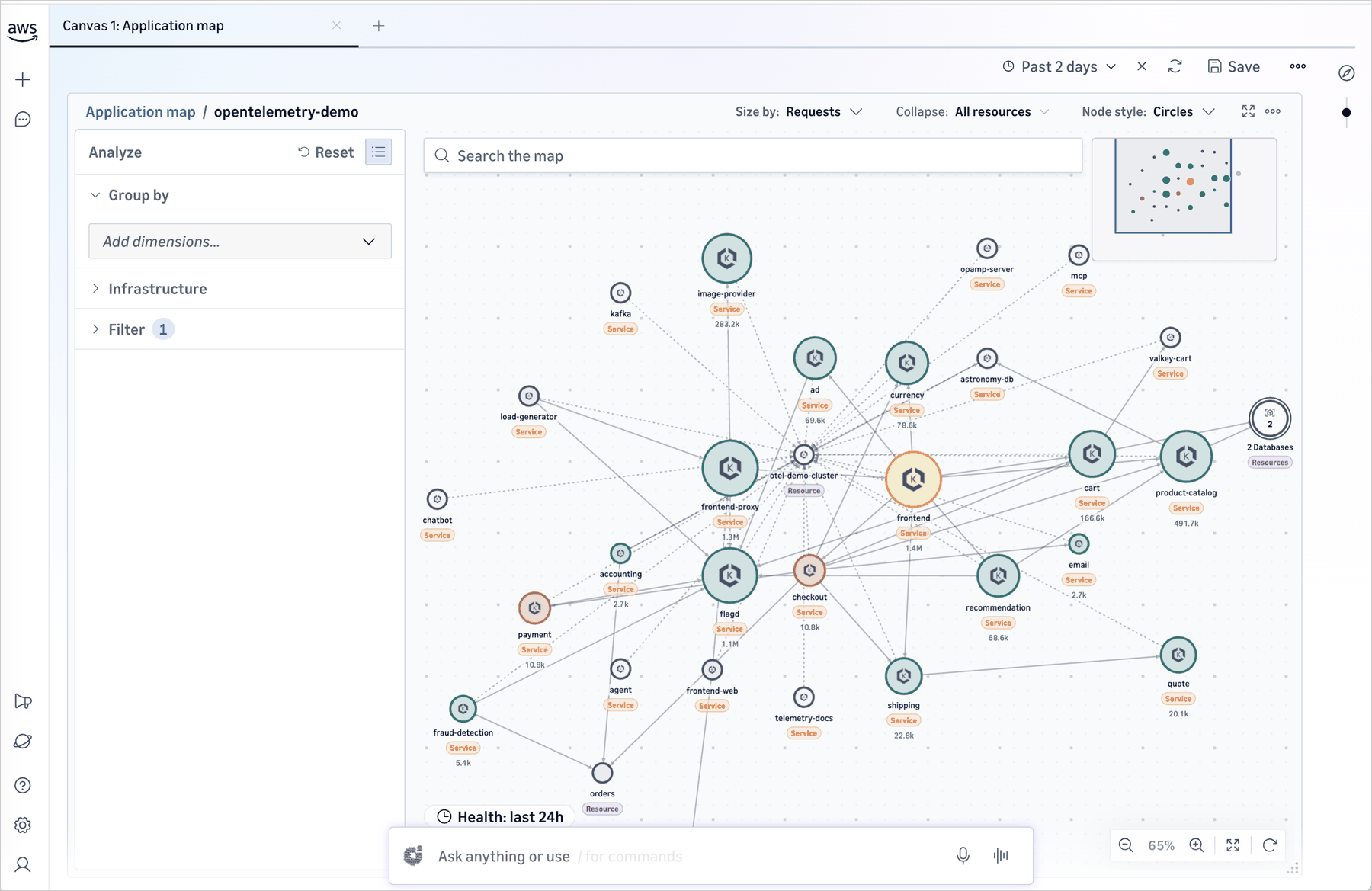
CloudWatch Omni represents a fundamental departure from traditional dashboard-centric monitoring. Rather than requiring engineers to manage a vast array of individual metrics, logs, and traces, Omni centers its architecture on the application itself. By leveraging OpenTelemetry standards, the platform automatically discovers service topologies, maps dependencies, and provides a collaborative "Space" where SREs, developers, and product managers can investigate system health in real time without needing access to the broader AWS Management Console.
The Evolution of Cloud Monitoring
To understand the significance of this launch, one must consider the trajectory of observability over the past decade. Initially, monitoring was confined to infrastructure—tracking CPU, memory, and disk I/O. As microservices architectures proliferated, the industry shifted toward APM (Application Performance Monitoring) and distributed tracing. However, the rise of Generative AI and agentic workloads has introduced a new layer of complexity. Modern applications now rely on non-deterministic models and multi-stage agent chains, which traditional static dashboards are ill-equipped to visualize.
Engineering teams have long reported "observability fatigue," a phenomenon where the time spent maintaining dashboards and tuning alert thresholds begins to outweigh the time spent actually improving code. Data suggests that in large-scale distributed systems, incident resolution is often delayed not by a lack of data, but by the "context switching" required to aggregate information from disparate tools. CloudWatch Omni is designed to mitigate this by serving as a unified source of truth, effectively automating the discovery and correlation processes that previously required manual intervention.
Core Features and Technical Architecture
At the heart of the Omni platform is the integration of the Amazon DevOps Agent, a sophisticated AI assistant that operates within the context of the user’s telemetry data. Unlike general-purpose AI tools, the DevOps Agent is grounded in the specific observability signals of the environment, allowing it to provide actionable insights rather than generic advice.

The platform’s architecture is built on three pillars:
- Enterprise-Grade Collaboration: Omni removes the barrier of AWS Management Console credentials. By utilizing IAM Identity Center, organizations can integrate their existing identity providers—such as Okta or Microsoft Azure AD—to grant engineers access to specific "Spaces." This ensures that when an incident escalates from an SRE to a backend engineer, the new participant enters a session already populated with the full historical context of the investigation.
- Dynamic Topology Mapping: Traditional monitoring tools often rely on static, manually created dashboards. CloudWatch Omni reverses this by treating the application as a dynamic entity. As developers deploy new services or modify existing ones, the platform automatically updates the dependency map. This ensures that the observability surface area always reflects the current state of production.
- AI-Driven Root Cause Analysis: When an alarm triggers, the DevOps Agent automatically correlates disparate events—such as a deployment window, a spike in latency from a downstream API, or an anomaly in a third-party gateway. By identifying these correlations, the agent guides the responder toward the root cause, significantly reducing the Mean Time to Resolution (MTTR).
A Chronology of Incident Response
In a typical pre-Omni workflow, an error spike in a checkout service would trigger a series of fragmented actions. An SRE would receive a page, look at a CloudWatch metric, jump to a separate log-searching tool, check a CI/CD dashboard to see if a deployment occurred, and finally attempt to contact the relevant service owner via Slack. Each step involves a loss of data fidelity and potential miscommunication.
Under the new Omni-enabled workflow, the process is streamlined:
- The Trigger: The checkout service reports an elevated error rate. An automated alarm opens an Omni session.
- Contextual Analysis: The DevOps Agent pre-populates the session with the service topology and highlights a deployment that occurred ten minutes prior.
- Correlation: The agent identifies that the errors are tied to a specific payment API latency, which is linked to a recent configuration change in an API gateway.
- Escalation and Resolution: The SRE invites the payments team to the same persistent session. The payments engineer sees exactly what the SRE saw, identifies the misconfigured gateway, and rolls back the change.
- Post-Mortem Automation: The entire history of the session is archived, effectively creating a real-time incident report without the need for additional documentation.
Impact on Generative AI and Agentic Workflows
The emergence of Generative AI has created a new category of "black box" problems. Because AI agents make decisions based on complex, non-linear reasoning chains, debugging them requires a different set of observability primitives. CloudWatch Omni provides specific capabilities for these workloads, including advanced trace exploration and evaluation frameworks. By placing AI agent logs and LLM performance metrics alongside traditional application data, Omni allows engineers to distinguish between a standard system failure and an error in the agent’s reasoning or prompt execution.
Industry Implications and Strategic Direction
The launch of CloudWatch Omni signals a broader trend toward "observability-as-a-service," where the value lies not in the collection of data, but in the synthesis of information. By adopting an OpenTelemetry-native approach, AWS is acknowledging that enterprises often operate in hybrid environments. Omni is not limited to AWS-hosted workloads; it includes connectors that allow teams to ingest telemetry from external environments, creating a centralized pane of glass for heterogeneous infrastructures.
For many organizations, this represents a significant cost-saving opportunity. By reducing the reliance on third-party observability platforms that charge per-ingest or per-host, AWS is positioning Omni as a high-value alternative that leverages the data already residing within the CloudWatch ecosystem.
Getting Started and Deployment
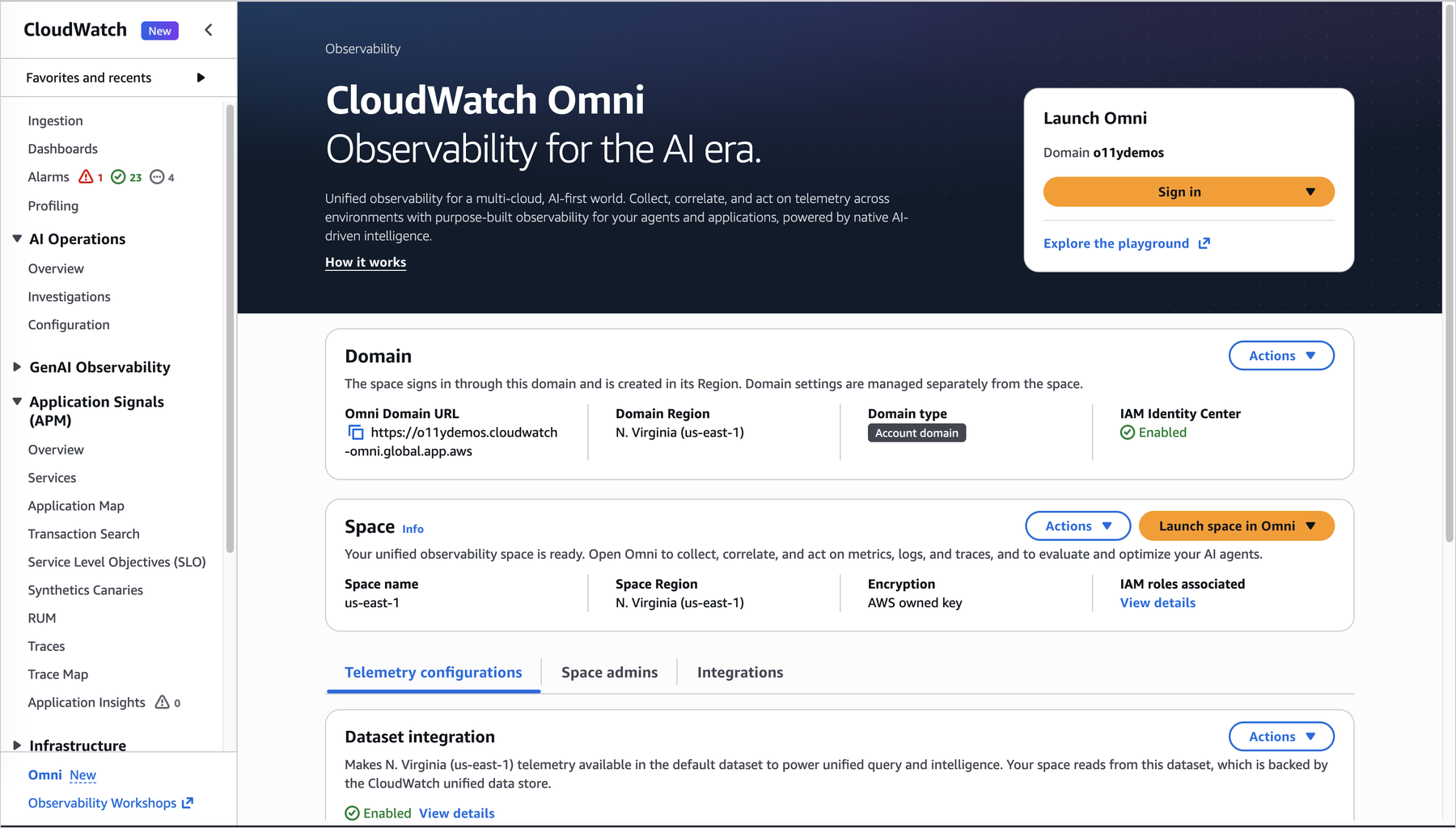
For existing CloudWatch customers, the transition to Omni is frictionless. There is no requirement to reconfigure data pipelines or move existing logs and metrics. By navigating to the CloudWatch console and selecting "Try CloudWatch Omni," administrators can immediately begin defining "Spaces."
The deployment process follows a logical structure:
- Domain Configuration: An admin connects an identity provider via IAM Identity Center.
- Space Creation: Teams are assigned specific Spaces, which aggregate the telemetry relevant to their application domains.
- Automatic Discovery: Once a Space is created, Omni utilizes AWS Config and existing telemetry to generate the initial service map.
The platform supports a gradual migration, meaning teams can continue to use traditional CloudWatch dashboards while transitioning to the collaborative workspaces of Omni.
Future-Proofing the Observability Stack
As software development velocity continues to increase, the complexity of managing cloud infrastructure will likely grow proportionally. The shift toward AI-powered observability is not merely a convenience; it is a necessity for maintaining operational stability in highly distributed environments. By removing the manual burden of dashboard maintenance and providing an intelligent agent that acts as a force multiplier for engineering teams, Amazon CloudWatch Omni sets a new standard for how enterprises monitor, debug, and understand their most complex systems.
For technical leadership, the implications are clear: the focus must shift from "watching" systems to "understanding" them. As Omni continues to evolve, the integration of deeper, domain-specific AI capabilities will likely further reduce the cognitive load on engineers, allowing them to focus on innovation rather than the mechanics of system recovery. With its immediate availability and deep integration into the AWS ecosystem, CloudWatch Omni is poised to become a cornerstone of the modern observability stack.
Related posts: