Massive 0ktapus Phishing Campaign Compromises Over 130 Organizations and Nearly 10,000 Accounts Through Sophisticated MFA Spoofing


The cybersecurity landscape has faced a significant reckoning following the unspooling of a highly coordinated, large-scale phishing operation dubbed "0ktapus." Threat intelligence researchers have revealed that a sprawling campaign leveraging sophisticated multi-factor authentication (MFA) spoofing techniques successfully compromised 9,931 individual accounts across more than 130 high-profile organizations globally. The operation, which heavily targeted identity and access management infrastructure, has laid bare the vulnerabilities inherent in traditional, legacy multi-factor authentication protocols, prompting urgent calls across the industry for a transition to hardware-based, phishing-resistant security standards.
The campaign first entered the public consciousness following targeted incursions against prominent technology and cloud infrastructure providers such as Twilio and Cloudflare. However, subsequent deep-dive investigations by cybersecurity firms, notably Group-IB, have exposed a far broader blast radius than initially understood. The operation’s moniker, 0ktapus, stems from the threat actors’ acute focus on exploiting the identity and access management provider Okta, whose authentication portals were meticulously cloned to harvest employee credentials and real-time MFA codes.
Anatomy of the Attack: From Telecom Reconnaissance to Credential Harvesting
According to comprehensive technical analyses released by threat intelligence researchers, the 0ktapus campaign operated with a high degree of strategic patience and methodological precision. The lifecycle of the attacks followed a distinct multi-phased trajectory designed to maximize access while minimizing early detection by corporate security teams.
The initial phase of the operation is believed to have targeted mobile operators and telecommunications companies. While threat intelligence analysts continue to piece together the exact vector used to compile target phone number databases, evidence recovered from compromised data indicates that the threat actors systematically harvested subscriber details from initial telecom breaches. These phone numbers formed the foundation of a targeted smishing (SMS phishing) campaign.
Armed with direct lines of communication to employees at targeted software-as-a-service (SaaS) and technology firms, the attackers deployed SMS messages containing hyperlinks crafted to look entirely legitimate. When clicked, these links directed victims to remarkably convincing replicas of their respective employers’ Okta authentication portals.
Once on the spoofed landing page, unsuspecting employees entered their primary corporate credentials alongside the time-sensitive multi-factor authentication codes generated by their security tokens or authenticator applications. Because the phishing pages acted as real-time proxies—capturing credentials and relaying them instantly to the actual corporate login portals—the attackers were able to bypass standard MFA checks seamlessly, acquiring active session cookies and complete account control before the victims realized they had been duped.
Global Scope and Impact on Targeted Enterprises
The geographic and industrial breadth of the 0ktapus campaign underscores the systemic nature of the threat. Group-IB’s forensic analysis identified direct impacts across 114 organizations based in the United States, with secondary victims scattered across 68 additional countries, encompassing sectors from finance and telecommunications to cloud services and consumer delivery platforms.
Roberto Martinez, a senior threat intelligence analyst at Group-IB, emphasized the unprecedented nature and elusive boundaries of the operation. "The 0ktapus campaign has been incredibly successful, and the full scale of it may not be known for some time," Martinez noted, pointing to the sprawling web of interconnected corporate supply chains that made the threat actors’ job significantly easier.
The primary objective of the adversaries was not merely immediate financial extortion, but rather lateral movement. By gaining administrative or high-level employee access to foundational SaaS platforms, the threat actors sought entry into internal corporate mailing lists, customer databases, and customer-facing support systems. This level of access effectively primed the pump for downstream supply-chain attacks, allowing the group to leverage trusted vendor relationships to compromise secondary and tertiary targets.
The real-world fallout of this methodology became glaringly apparent when food delivery giant DoorDash revealed it had been targeted in an incident bearing all the hallmark indicators of the 0ktapus playbook. In a public disclosure, DoorDash confirmed that an unauthorized third party utilized the stolen credentials of vendor employees to pierce internal operational tools. The attackers successfully exfiltrated sensitive personal information—including names, email addresses, telephone numbers, and delivery addresses—belonging to both customers and delivery drivers, highlighting the catastrophic downstream risks associated with third-party vendor compromises.
The Mirage of Legacy MFA: Industry Reactions and Expert Analysis
Perhaps the most alarming revelation of the 0ktapus campaign was the sheer volume of multi-factor authentication codes successfully intercepted and bypassed. Group-IB reported that the adversaries managed to harvest 5,441 distinct MFA codes during the lifecycle of the campaign.
This statistic has reignited a fierce debate within the cybersecurity community regarding the true security value of standard, software-based multi-factor authentication protocols. For years, organizations have treated MFA as a silver bullet against credential-based compromises, often assuring stakeholders that the implementation of two-factor checks renders traditional phishing obsolete. The 0ktapus campaign decisively shattered that illusion.
Roger Grimes, a data-driven defense evangelist at security awareness training firm KnowBe4, issued a stark assessment of the industry’s overreliance on easily spoofed verification methods. "This is yet another phishing attack showing how easy it is for adversaries to bypass supposedly secure multifactor authentication," Grimes wrote in an email statement. "It simply does no good to move users from easily phish-able passwords to easily phish-able MFA. It’s a lot of hard work, resources, time, and money, not to get any benefit."
Grimes and other industry analysts point out that traditional MFA implementations—such as SMS-based One-Time Passcodes (OTPs), push notifications, and standard software authenticator app codes—remain fundamentally vulnerable to adversary-in-the-middle (AiTM) phishing kits. Because these authentication factors rely on user interaction with a dynamic web page that can be easily replicated in real-time by an attacker, the human element remains the weakest link in the security chain.
Furthermore, security experts argue that organizations have historically suffered from a training deficit. While employees receive extensive education on how to identify suspicious links and construct complex passwords, they are rarely trained to recognize the specific mechanics of MFA-focused phishing attacks, such as domain spoofing, URL structure anomalies, and time-sensitive proxy redirection.
Recommended Mitigations and the Shift Toward Phishing-Resistant Standards
In the wake of the 0ktapus disclosures, cybersecurity researchers and standards bodies have accelerated recommendations for organizations looking to harden their identity and access management frameworks against advanced phishing syndicates.
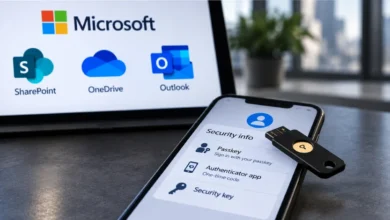
Foremost among these recommendations is the accelerated migration away from software-based and interceptable MFA methods toward hardware-backed, FIDO2-compliant security keys, such as YubiKeys or integrated platform authenticators like Windows Hello and Apple Touch ID. FIDO2 standards utilize cryptographic public-key cryptography tied directly to the origin domain of the authenticating website. Consequently, even if a user is tricked into visiting a sophisticated phishing replica, the hardware key will refuse to sign the authentication challenge because the domain does not match the legitimate enterprise asset, rendering AiTM phishing attacks completely ineffective.
Additionally, security architects recommend implementing stricter URL hygiene policies, deploying advanced endpoint detection and response (EDR) solutions to monitor anomalous session behavior, and enforcing continuous contextual access policies that evaluate device health, geographic location, and network reputation before granting session tokens.
Education remains a critical pillar of any robust defense strategy. As Roger Grimes noted, enterprises must fundamentally revamp their security awareness programs to address the evolving threat landscape. "Whatever MFA someone uses, the user should be taught about the common types of attacks that are committed against their form of MFA, how to recognize those attacks, and how to respond," Grimes advised. "We do the same when we tell users to pick passwords but don’t when we tell them to use supposedly more secure MFA."
Broader Implications for Enterprise Security Architecture
The 0ktapus campaign serves as a watershed moment for corporate cybersecurity, illustrating a fundamental maturation in the tactics employed by modern cybercriminal syndicates. No longer reliant on brute-force attacks or basic malware deployment, sophisticated threat groups are increasingly turning their attention to the human-to-system interface—specifically targeting the administrative friction points introduced by modern identity federations.
As enterprises continue to embrace cloud-first architectures, remote work models, and decentralized SaaS ecosystems, the perimeter of the corporate network has effectively shifted from physical boundaries to identity management platforms like Okta, Microsoft Entra ID, and Google Workspace. When these central identity stores are compromised through sophisticated credential harvesting, traditional perimeter defenses become entirely irrelevant.
The lessons of the 0ktapus campaign mandate a paradigm shift across the corporate landscape. Organizations can no longer afford to treat multi-factor authentication as a compliance checkbox or a monolithic security guarantee. Instead, cybersecurity leaders must adopt a zero-trust architecture rooted in phishing-resistant hardware credentials, continuous behavioral analytics, and rigorous vendor risk management to ensure that a single compromised text message does not cascade into a systemic enterprise catastrophe.
Related posts: