DirecTV to Acquire Dish TV and Sling TV in Landmark $1 Transaction Amidst Pay-TV Industry Consolidation

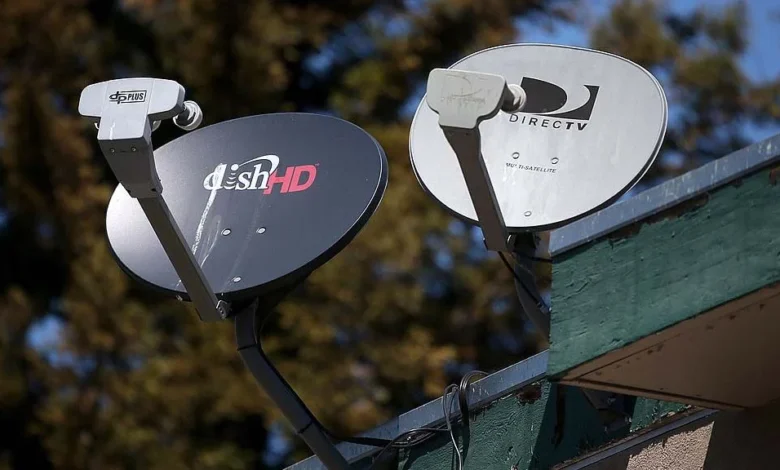
In a move that marks the most significant structural shift in the history of the American satellite television industry, DirecTV has officially entered into a definitive agreement to acquire the video businesses of EchoStar Corporation. The deal, which includes the acquisition of the legacy satellite provider Dish TV and the streaming-centric virtual multichannel video programming distributor (vMVPD) Sling TV, is valued at a nominal $1, though the transaction requires DirecTV to assume significant existing debt obligations held by EchoStar’s video division. This consolidation represents a desperate and long-anticipated attempt to stabilize the eroding pay-TV landscape, bringing together the two largest satellite providers in the United States to create a combined entity with a subscriber base of approximately 20 million users.
The announcement coincides with a broader corporate restructuring, as AT&T—which previously spun off DirecTV into a joint venture but retained a 70% controlling interest—announced the complete divestiture of its remaining stake to the private equity firm TPG. This transfer of ownership effectively disentangles the telecommunications giant from the satellite television business, placing the future of the newly combined DirecTV-Dish entity firmly in the hands of private equity management.
A Long-Awaited Convergence of Satellites
For industry observers and analysts, this merger is the culmination of nearly two decades of speculation. As far back as 2002, and repeatedly through the 2010s, the potential for a "Dish-DirecTV" merger was a frequent topic of regulatory and market discussion. However, past attempts were consistently thwarted by antitrust concerns. The Department of Justice and the Federal Communications Commission (FCC) historically viewed such a merger as a move that would significantly diminish competition, particularly in rural markets where satellite remains one of the few viable options for multichannel television.
The current regulatory climate, however, reflects a radically different media landscape. The explosive growth of streaming services—including Netflix, Disney+, Amazon Prime, and local broadband-delivered television—has fundamentally altered the definition of the "video distribution market." Regulators today are more likely to view the combined satellite entity not as a monopoly, but as a legacy player struggling to survive against Big Tech and massive content conglomerates. By combining, the two companies are betting that they can achieve the scale necessary to negotiate more effectively with content creators and programmers, a vital requirement in an era where carriage disputes and programming costs are rising while revenue per user is stagnant.
Financial Mechanics and Debt Refinancing
The structure of the deal is heavily dictated by the precarious financial position of EchoStar’s video business. The $1 purchase price is a reflection of the substantial debt load carried by Dish DBS. To facilitate this transaction and ensure the continuity of service, TPG Angelo Gordon, alongside co-investors and DirecTV, has committed $2.5 billion in financing. This capital injection is specifically earmarked to fully refinance the Dish DBS debt maturity scheduled for November 2024.
By clearing this immediate hurdle, the parties involved are preventing a potential default that could have sent EchoStar’s video division into bankruptcy. This financial maneuver is essential to the transaction’s viability, providing the new, unified management team the breathing room required to execute a complex integration plan. DirecTV leadership estimates that the combination will yield at least $1 billion in annual cost synergies. These efficiencies are expected to be realized fully by the third anniversary of the deal’s closing, which is currently projected for late 2025, pending customary regulatory approvals and closing conditions.
Leadership and Operational Strategy
Upon the finalization of the merger, the combined organization will remain under the leadership of DirecTV CEO Bill Morrow and Chief Financial Officer Ray Carpenter. The company will maintain its corporate headquarters in El Segundo, California.
In a prepared statement, Bill Morrow articulated the strategic rationale behind the deal, emphasizing the need for scale in a fragmented market. "DirecTV operates in a highly competitive video distribution industry," Morrow noted. "With greater scale, we expect a combined DirecTV and Dish will be better able to work with programmers to realize our vision for the future of TV, which is to aggregate, curate and distribute content tailored to customers’ interests, and to be better positioned to realize operating efficiencies while creating value for customers through additional investment."
The focus on "aggregation and curation" suggests a pivot toward a more hybrid business model. Rather than relying solely on the traditional satellite dish, the company is expected to lean heavily into the capabilities of Sling TV, which provides a flexible, internet-delivered platform. By integrating Sling TV’s infrastructure with the satellite backbone, the new DirecTV aims to transition its customers toward a more modern, cloud-based viewing experience while maintaining the high-margin, long-term contracts associated with traditional satellite subscribers.
The Macro View: A Shrinking Industry
The pay-TV industry in the United States has been in a state of terminal decline for over a decade, a phenomenon colloquially termed "cord-cutting." According to industry data, the number of households subscribing to traditional cable, satellite, or telco TV services has dropped from a peak of over 100 million in 2010 to roughly 60 million today.
The primary drivers of this exodus include:
- Rising Carriage Costs: Programmers continue to demand higher fees for sports and news channels, forcing providers to pass costs to consumers.
- Streaming Proliferation: The shift to direct-to-consumer apps has stripped away the necessity of the "cable bundle."
- Broadband-First Consumption: As high-speed internet becomes the primary utility, consumers are opting for cheaper, app-based alternatives.
By combining, DirecTV and Dish are attempting to optimize a legacy business model that is no longer growing. The goal is to reach a "steady state" where the combined company can survive as a niche, high-value provider for customers who either live in areas with poor broadband access or prefer the traditional "linear" television experience.
Implications for Consumers and Programmers
For the average consumer, the immediate impact of the merger is likely to be minimal. Both DirecTV and Dish have committed to maintaining service continuity during the transition. However, the long-term implications are significant. As the two companies merge their back-office operations, call centers, and technical support teams, the quality and accessibility of service will be tested.
For programmers—such as Disney, Warner Bros. Discovery, and NBCUniversal—the merger creates a singular, massive negotiating partner. While this gives the new DirecTV more leverage to push back against annual rate hikes, it also puts the programmers in a position where they cannot afford to lose access to 20 million households simultaneously. This dynamic will likely lead to more intense, high-stakes carriage negotiations in the coming years.
A Regulatory and Competitive Analysis
The path to closing will require intense scrutiny from the Federal Communications Commission and the Department of Justice. While the "competitor" argument is weaker than it was in 2002, regulators will likely focus on regional competition and the impact on rural residents who rely exclusively on satellite.
Analysts suggest that the deal might be conditioned on certain "conduct remedies," such as price freezes or commitments to maintain service in underserved areas. Furthermore, the inclusion of Sling TV in the merger might trigger concerns regarding the neutrality of the vMVPD market, as the combined entity would control both a massive satellite distribution network and a leading streaming platform.
Conclusion: The Last Stand of Satellite TV
The acquisition of Dish TV by DirecTV is a definitive signal that the era of aggressive satellite expansion has ended, replaced by an era of defensive consolidation. By stripping away the debt and combining the subscriber bases, the leadership team hopes to preserve a business that, while shrinking, still generates billions in cash flow.
As the industry looks toward the 2025 closing date, the success of this venture will depend on how efficiently management can integrate two aging, complex technological infrastructures. For the millions of Americans who still rely on the dish, the next few years will determine whether this consolidation provides a stable future for their television service or serves as a final, managed decline of the satellite medium. The transition from AT&T’s ownership to TPG’s private equity stewardship further reinforces that this is now a financial turnaround project, not a growth-oriented media venture. In the shifting tides of the digital age, this merger stands as a testament to the endurance of traditional television—even as it undergoes a radical, and perhaps irreversible, transformation.