AWS Expands Amazon Bedrock Intelligence Suite with New GPT-6 and Claude 5.5 Models to Optimize Generative AI Workflows

The rapid evolution of generative artificial intelligence has shifted the primary challenge for enterprise developers from assessing raw capability to mastering the economics of implementation. In a significant expansion of its Amazon Bedrock service, Amazon Web Services (AWS) has announced the immediate availability of OpenAI’s GPT-6 Sol and GPT-6 Luna, alongside Anthropic’s Claude Opus 5.5. This strategic rollout represents a deliberate move toward "right-sizing" AI deployments, allowing businesses to select models based on a precise balance of intelligence, operational cost, and latency requirements rather than relying on a one-size-fits-all approach.
The Strategic Pivot: Intelligence Versus Efficiency
The industry’s current focus on model proliferation has reached a critical juncture. For much of the last two years, the prevailing paradigm was to deploy the largest, most parameter-dense models available, regardless of the task at hand. However, as organizations move from experimentation to production-grade applications, the overhead of these "frontier" models—specifically in terms of inference costs and latency—has become a significant barrier to scalability.
The introduction of the GPT-6 series and the latest iteration of Claude Opus signifies a maturation of the AI marketplace. GPT-6 Sol is engineered specifically for high-stakes, recurring tasks such as complex software development, automated system operations, and multi-step reasoning processes. Conversely, GPT-6 Luna is optimized for high-volume, repeatable tasks, offering a streamlined architecture that provides sufficient intelligence while drastically reducing the token-based costs associated with GPT-5.6 legacy systems.
Anthropic’s Claude Opus 5.5 further complicates the competitive landscape by emphasizing "agentic" capabilities. This model has been specifically tuned to handle long-running workflows and complex coding tasks, boasting higher efficiency per token compared to its predecessor, Claude Opus 5. The ability to perform more intensive work with fewer computational resources suggests that Anthropic is aggressively targeting the developer productivity market.
Chronology of the Model Integration
The integration of these models into Amazon Bedrock follows a rigorous testing and validation period conducted by AWS in collaboration with its partners. The timeline of this rollout underscores the accelerated pace of the generative AI sector:
- Q3 2024: AWS announced initial plans to diversify its Bedrock model library, focusing on "specialist" models over general-purpose giants.
- Early January 2025: Beta testing for the GPT-6 architecture began among a select group of enterprise AWS customers, focusing on cost-efficiency metrics.
- Late January 2025: AWS finalized the infrastructure scaling necessary to support the high-throughput requirements of GPT-6 Luna.
- February 2025: Official deployment of GPT-6 Sol, GPT-6 Luna, and Claude Opus 5.5 to the Amazon Bedrock managed service, making these models available via API to all regions currently supporting the service.
Technical Implications and Cost-Benefit Analysis
The transition to these newer models is expected to have a tangible impact on the bottom line for enterprises running AI-integrated workflows. When evaluating the "intelligence-versus-efficiency" curve, developers now have granular control over their architecture.
For instance, companies previously utilizing GPT-5.6 for straightforward data classification or routine text summarization may see a significant reduction in their monthly cloud expenditure by migrating these specific workloads to GPT-6 Luna. Because Luna is priced lower than the 5.6 series while maintaining a higher standard of accuracy for repeatable tasks, the margin of efficiency improvement is substantial.
Furthermore, the "agentic" nature of Claude Opus 5.5 addresses a growing demand for autonomous software agents. Traditional LLMs often struggle with state management and long-context coherence during complex multi-stage coding tasks. Opus 5.5 addresses this by improving the "tokens-per-job" ratio, meaning it can maintain context over longer coding sessions without necessitating as many re-prompting cycles. This reduction in token consumption is a direct cost saver, as enterprise billing for these services is largely tied to token volume.
Industry Context and Competitive Dynamics
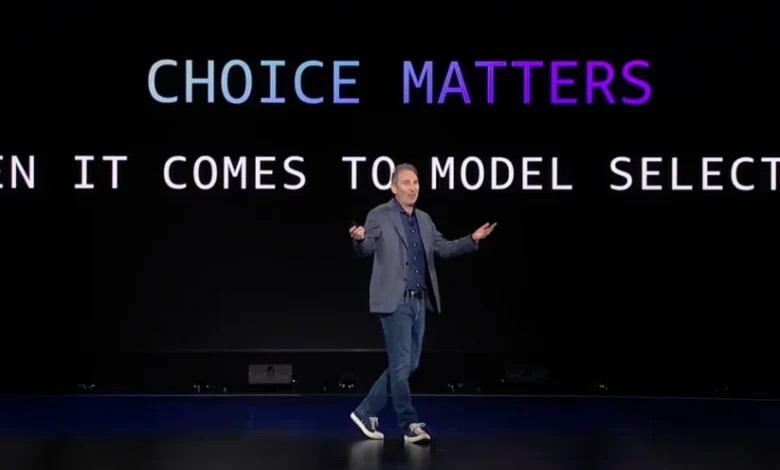
The decision by AWS to host these models reflects the company’s broader "choice-first" philosophy. Unlike proprietary cloud environments that attempt to lock customers into a single, vertically integrated model stack, AWS has consistently positioned Amazon Bedrock as a neutral platform for the industry’s best-in-class models.
Analysts note that this strategy is a response to the "model fragmentation" occurring in the industry. As startups like OpenAI, Anthropic, Mistral, and Meta continue to iterate on their architectures, enterprises are wary of becoming tethered to a single provider whose model might become obsolete or prohibitively expensive. By providing a unified API layer, AWS allows developers to swap models in and out of their existing infrastructure with minimal code refactoring.
While representatives from OpenAI and Anthropic have not issued formal policy shifts in response to this specific launch, both companies have indicated that their primary goal for 2025 is to drive down the cost of inference. The partnership with AWS serves as the primary distribution channel for these companies to reach enterprise-grade security and compliance standards, which are essential for industries like healthcare, finance, and government.

Broader Implications for the Developer Ecosystem
The arrival of these models also highlights a growing trend toward "observability-first" development. As agents become more complex, the ability to trace, debug, and monitor these models in production has become as important as the model itself. AWS has been simultaneously upgrading its observability tools to handle the nuances of these agentic systems.
Looking ahead, the market is expected to shift further toward specialized models rather than larger, more expensive general-purpose ones. The success of this strategy will depend on how effectively developers can utilize the new tooling provided by AWS to benchmark these models against their specific internal KPIs.
For many firms, the transition to GPT-6 and Claude 5.5 will be the first step in a larger consolidation process. By migrating disparate, unoptimized AI tasks into a more streamlined architecture, organizations can move beyond the "proof-of-concept" phase and begin realizing measurable return on investment. The ability to deploy the right model at the right cost is no longer a luxury; it is becoming a requirement for sustainable AI growth in the enterprise.
Future Outlook and Conclusion
As the industry moves through the remainder of the year, the focus will likely shift to fine-tuning and the integration of private, proprietary data into these pre-trained models. With the foundational layer of models like GPT-6 and Claude 5.5 now accessible on Bedrock, the next frontier will involve the deployment of "Custom Models" that retain the efficiency of the underlying architecture while offering the specialized domain knowledge required for niche industry applications.
AWS continues to facilitate this by providing the necessary compute infrastructure—utilizing custom silicon such as Trainium and Inferentia—to keep the costs of running these models competitive. For the developer community, the challenge remains to keep pace with these frequent updates, ensuring that their systems are not only intelligent but also architecturally flexible enough to accommodate the next wave of model releases. The current trajectory suggests that the era of monolithic, hyper-expensive AI development is rapidly giving way to a more nuanced, efficient, and performance-oriented ecosystem.
Related posts: