How Markus Eder’s The Ultimate Run is Revolutionizing AI Video Analysis Through Granular Metadata Architecture

The intersection of extreme sports cinematography and artificial intelligence has yielded unexpected technical insights into how modern video processing systems interpret visual media. Markus Eder’s critically acclaimed ten-minute skiing masterwork, The Ultimate Run, has recently emerged as a foundational case study for video infrastructure developers, specifically at Mux, where engineers are utilizing the seamless alpine descent to explain and refine complex artificial intelligence video workflows. Rather than treating a video file as a monolithic block of data, modern video AI architecture relies on a multi-tiered hierarchy of metadata—ranging from individual frames and contiguous shots to thematic scenes, key moments, and structural chapters. This granular approach addresses a fundamental computational challenge: balancing analytical depth with processing speed and financial cost in large-scale machine learning applications.
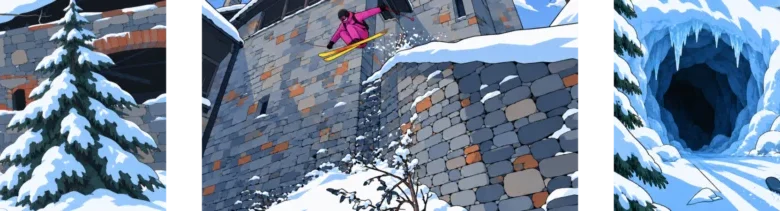
Released originally as a breathtaking showcase of freeride skiing, The Ultimate Run seamlessly stitches together disparate locations—moving from high-alpine powder fields and glacial ice caves through snow parks, historical stone castles, and finally into the bed of a moving truck. For human viewers, the video plays as a single, uninterrupted, adrenaline-fueled journey. However, for a computer vision model processing a standard video file at 30 frames per second, a ten-minute asset translates to roughly 108,000 individual images. Feeding every single frame into an advanced multimodal AI model is computationally prohibitive, highly inefficient, and financially unsustainable. Consequently, the core architectural problem facing modern video developers is determining how much of a video a model needs to analyze to accurately answer a specific prompt.
The Architectural Hierarchy: From Pixels to Narrative Structure
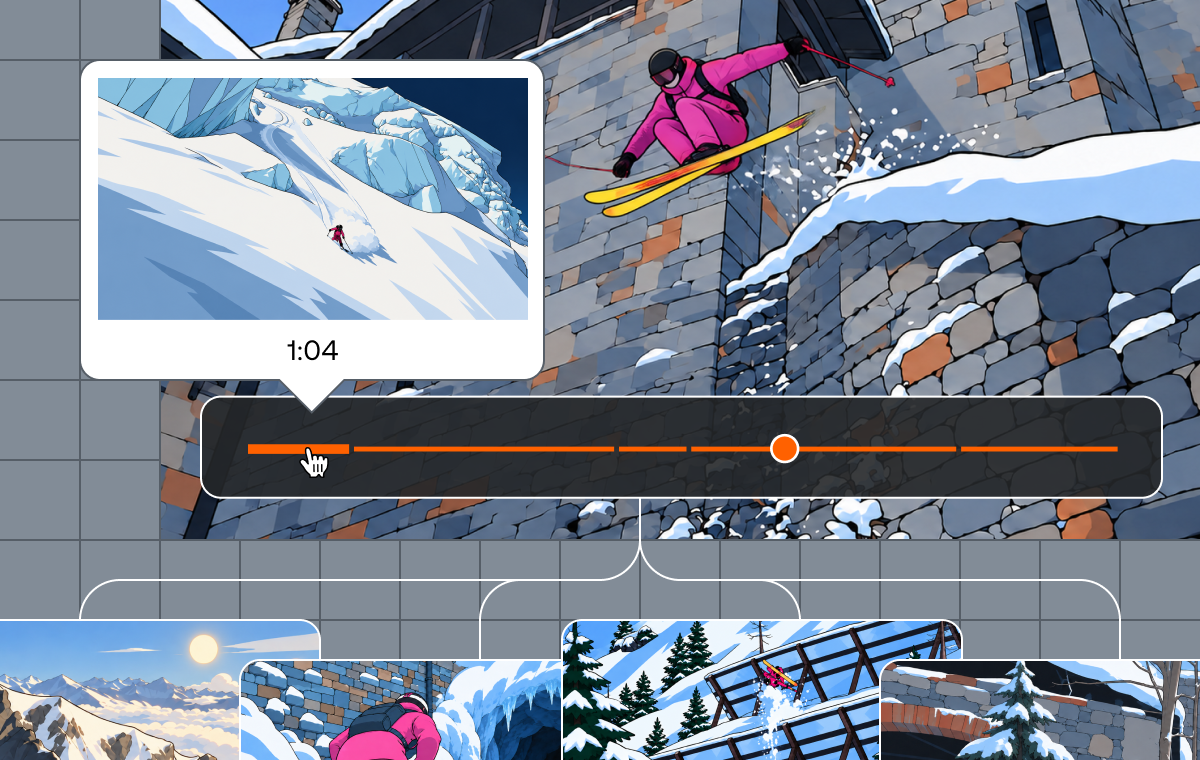
To solve the computational bottleneck of processing high-definition video at scale, engineers have developed tiered taxonomies that categorize video data based on temporal and visual granularity. This methodology allows automated workflows to interrogate a file using the least expensive analytical signal first, escalating to heavier multimodal models only when contextual depth is required.
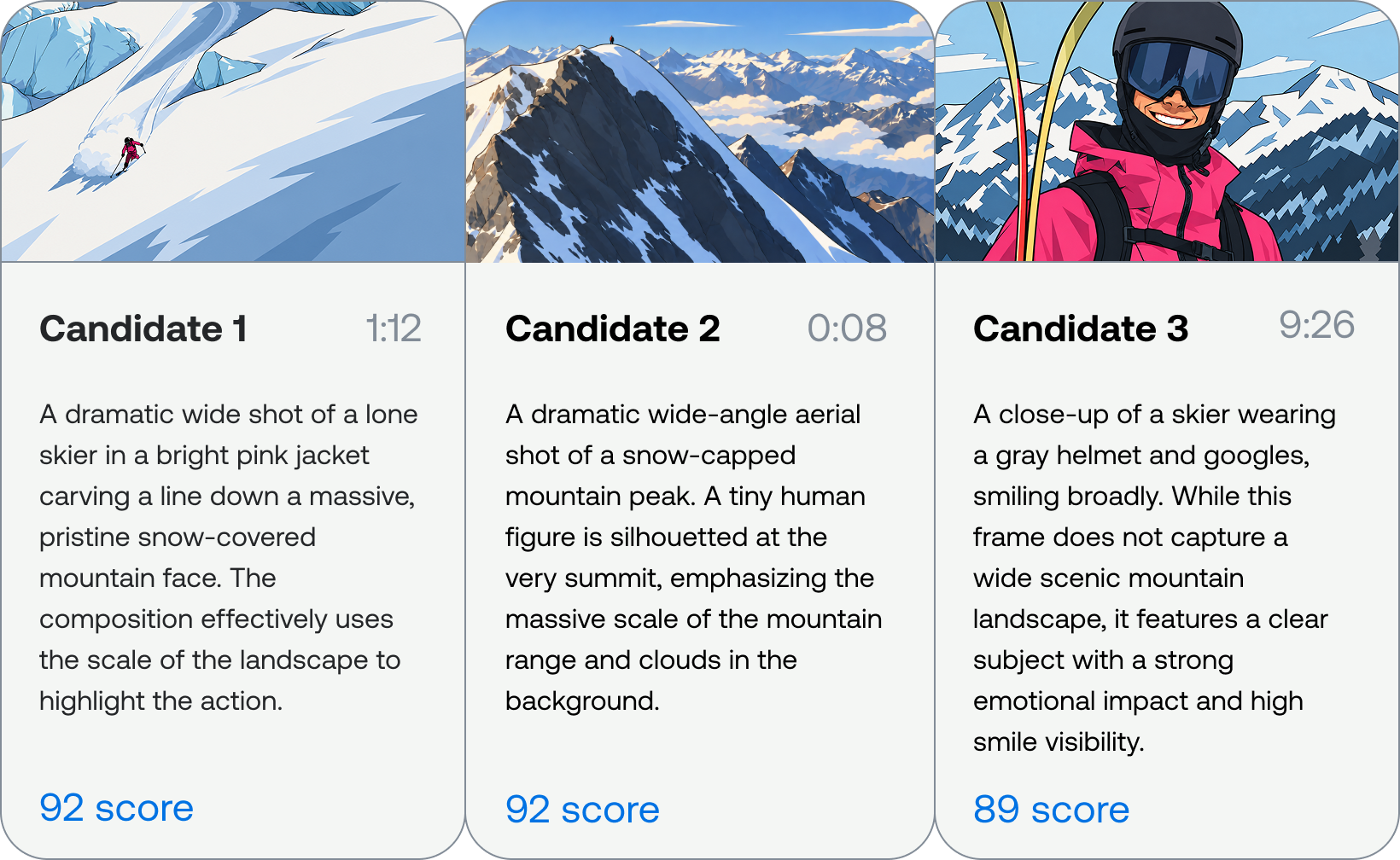
The foundational layer of this hierarchy is the individual frame. A single frame is sufficient for atomic queries—such as identifying whether a specific corporate logo is visible, checking for restricted or harmful content via automated moderation tools, or selecting an optimal thumbnail image. Systems like Mux Robots employ sophisticated scoring algorithms to evaluate candidate frames based on visual composition, clarity, facial detection, and action density. Yet, frames possess inherent limitations. A single image can capture Eder mid-rotation above a precipice, but it cannot confirm whether the landing was successful or how the skier entered a subterranean ice cave.
To capture movement and visual transitions without incurring the cost of frame-by-frame analysis, systems rely on the second tier: the shot. Defined as a continuous sequence of frames captured by a single camera without interruption, shot detection algorithms monitor pixel-level changes between consecutive frames. In fast-paced, highly dynamic content like The Ultimate Run—which features rapid camera angle cuts and abrupt terrain shifts—shot-aware sampling ensures that brief visual states are preserved rather than skipped by a rigid, uniform sampling interval. Nevertheless, while a shot indicates when a visual state changes, it lacks broader narrative context.

Bridging Visual Continuity and Narrative Meaning
Moving beyond individual shots requires synthesizing groups of neighboring segments into cohesive units known as scenes. Scene detection combines visual boundary detection with audible cues from transcript data and machine learning reasoning to establish where a distinct narrative sequence begins and ends. In the context of The Ultimate Run, which features minimal spoken narration, multimodal AI models must rely heavily on visual consistency to group diverse camera angles of the glacier sequence into a single, recognizable structural block.
This distinction between raw visual data and structured narrative becomes even more pronounced when examining user-facing features such as key moments and chapters. While a shot can capture a skier in midair, a key moment evaluates a continuous range of action—encompassing the approach, takeoff, execution, and landing—to produce a standalone clip that holds editorial value for a viewer. Conversely, chapters serve a navigation function, dividing an extended video asset into a structured table of contents. While chapters in lecture-style videos or podcasts are heavily informed by speech transcripts, multimodal workflows applied to action sports must successfully infer structural boundaries from visual transitions alone.

Broader Implications for Enterprise Video AI Workflows
The architectural principles demonstrated through the analysis of extreme sports cinematography carry significant implications for the broader enterprise video landscape. As industries ranging from e-commerce and media streaming to security and education adopt generative AI to automate content discovery, the demand for efficient, context-aware video processing continues to accelerate.
By avoiding the brute-force approach of analyzing every frame uniformly, modern video pipelines reduce latency, lower computational expenditure, and improve the precision of downstream tasks. Whether applied to automated content moderation, intelligent clip extraction, dynamic ad placement, or advanced embedding-based semantic search, the underlying rule remains consistent: successful video AI infrastructure must utilize the smallest piece of media that contains the necessary context to answer the user’s query.
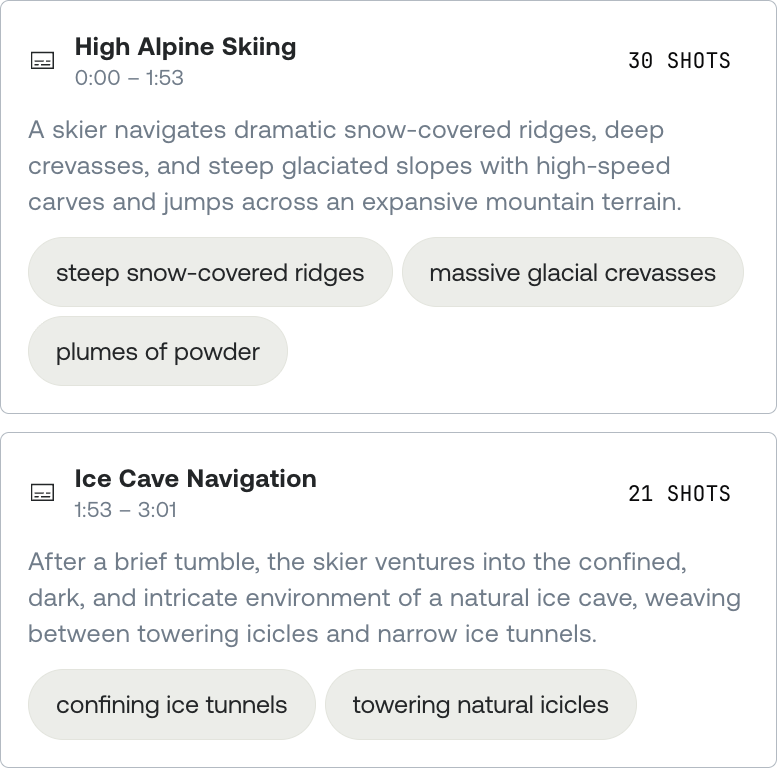
Ultimately, Markus Eder’s descent down the mountain illustrates the duality of digital media. To the human eye, it is a single, flowing masterpiece of athletic endurance and cinematic art. To an artificial intelligence workflow, it represents a complex mosaic of 18,000 curated frames, 159 distinct shots, 7 thematic scenes, 5 chapters, and multiple key moments. Engineering systems that can navigate these multiple layers simultaneously—adapting seamlessly to the unique characteristics of the underlying content—represents the next frontier in video infrastructure development.