YouTube Redefines the Living Room Experience by Bridging Mobile Interactivity and Big-Screen Viewing

The modern living room has undergone a dramatic technological evolution over the past decade, shifting from traditional cable-fed displays to connected, interactive digital hubs. Among the chief architects of this transition is YouTube, a platform that has firmly established the television set as its primary viewing canvas. Far from resting on its laurels as a dominant streaming giant, the tech platform is aggressively tearing down the traditional barrier between passive couch viewing and active mobile engagement.
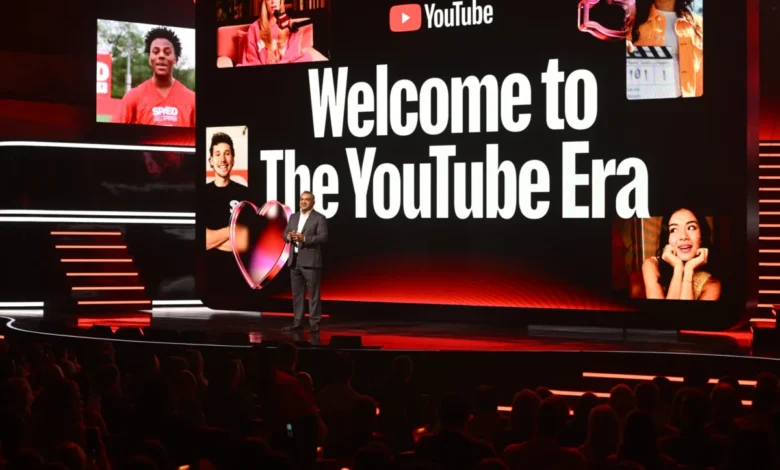
During its annual Made on YouTube event, company leadership unveiled nearly three dozen new product features tailored specifically for creators, brands, and viewers. CEO Neal Mohan highlighted that these updates represent a fraction of the roughly 3,000 product modifications rolled out across the ecosystem throughout the year. Among the most notable additions to the television interface are the ability to post and read comments, view creator text-and-image community posts, and binge-watch vertical video formats on the big screen. This strategic pivot challenges long-held assumptions about how audiences interact with entertainment in shared household spaces, proving that the future of television is not just cinematic, but deeply conversational.
The Evolution of Living Room Engagement
For years, the television viewing experience was characterized by passivity—audiences leaned back on their sofas, consumed scheduled or on-demand broadcasts, and engaged minimally with the medium. However, the rise of connected TVs (CTVs) and high-speed internet has fundamentally altered this dynamic. YouTube executives argue that consumer habits are no longer binary; rather, they flow seamlessly between passive relaxation and active participation.
According to Kurt Wilms, Senior Director of Product Management for YouTube on TV, the platform’s internal teams frequently debated whether mobile-first features belonged on a 55-inch living room display.
"Even inside the company, the reaction to the notion of adapting features from the mobile and web experience is often, ‘Is this meant for the TV?’" Wilms noted during a post-event press briefing in New York. "But we’re hearing viewers ask for it, and creators ask for it."
This consumer-driven demand has paid massive dividends. YouTube has maintained its position at the top of Nielsen’s streaming charts for three consecutive years. As of recent industry metrics, the platform commands roughly 14.2% of all television viewing time in the United States—a dominance fortified not only by its extensive content library, but by its accessibility as a free-to-watch service. By bridging the gap between social media interactivity and traditional broadcasting, YouTube has created a hybrid viewing experience that keeps users locked into the ecosystem regardless of which screen they happen to be facing.
Breaking Conventions: The Rise of Shorts and Microdramas on TV
Perhaps the most counterintuitive success story in YouTube’s recent history is the explosive growth of YouTube Shorts on television screens. Initially designed as a mobile-first response to short-form competitor platforms, vertical video seemed structurally ill-suited for horizontal living room displays. Yet, the data tells a radically different story. Viewers currently consume more than two billion hours of Shorts programming on televisions every month.
Industry analysts and company insiders attribute this phenomenon to a newfound communal viewing experience. While mobile phones are inherently private, personal devices, the living room television transforms short-form content into a shared social activity.
"The first thing everyone was telling me about Shorts on the TV is there was no good way to watch this content with friends or family," Wilms explained. "The TV unlocked communal viewing for Shorts in a way that just wasn’t possible before."
Capitalizing on this appetite for bite-sized, fast-paced media, YouTube has also leaned heavily into the booming sector of microdramas—serialized, action-packed narrative shorts that have long dominated digital entertainment ecosystems in parts of Asia. These rapid-fire productions have struck a chord with global audiences, generating over 6.5 billion views on the platform year-to-date, with television-specific consumption surging by roughly 90% year-over-year. As contemporary audiences increasingly seek out personalized, snackable content to fill gaps in their daily routines, microdramas have emerged as a cornerstone of YouTube’s broader strategy to capture fragmented attention spans.
Consumer Research and the Psychology of Viewer Modes
The systematic rollout of these unconventional features is not the result of corporate guesswork, but rather an extensive research initiative driven by direct consumer and creator feedback. Over the past two years, product development teams have systematically interrogated why certain formats—such as gaming streams, podcasts, and short-form clips—perform exceptionally well across diverse hardware.
When the platform first considered introducing comment sections to the TV application, product managers were initially skeptical.
"We were thinking, ‘Really?! You want to read the comments on the TV?!’" Wilms recalled.
Yet, customer research revealed an overwhelming demand. Today, the volume of users reading and engaging with comment threads on television displays rivals web-based engagement metrics. Similar research paths paved the way for creator community posts and interactive viewing tools.
Rather than categorizing audiences rigidly as either "lean-back" or "lean-in" consumers, YouTube’s behavioural research points toward the concept of user "modes." Depending on the time of day, household composition, or personal mood, a single user may shift fluidly through multiple distinct states of engagement:
- The Audio Mode: Utilizing the television setup as an advanced home stereo system for music streaming and ambient background listening during evening hours.
- The Communal Mode: Engaging in shared viewing sessions with family members, children, or guests, utilizing the television as a traditional entertainment centre.
- The Discovery Mode: Leaning into algorithmic feeds, microdramas, or Shorts when the viewer is undecided on what to watch but desires quick, stimulating entertainment.
- The Interactive Mode: Pausing a narrative program to check creator community posts, read through real-time viewer commentary, or pivot directly to a creator’s channel to explore related video essays.
This fluidity ensures that the television app functions not merely as a video player, but as a dynamic portal that adapts to the psychological needs of the household in real time.
Preserving Core DNA While Scaling Up
As YouTube approaches two decades since its founding in 2005—commemorated recently by reflections on the platform’s very first uploaded video, "Me at the Zoo," and its remarkably understated inaugural comment of "Lol"—the company faces the ongoing challenge of scaling its infrastructure without losing its distinct cultural identity.
The technological execution of bringing complex web architecture to diverse television operating systems—spanning smart TVs, streaming sticks, and gaming consoles—required meticulous engineering. The overarching mandate from leadership was simple: the app must never feel broken or sluggish when transitioned to the big screen. By maintaining high performance standards while layering on social features, YouTube has successfully translated the participatory ethos of early internet culture into a modern living room staple.
Strategic Implications for the Media Landscape
The broader industry implications of YouTube’s living room strategy are profound. Traditional broadcast networks and premium subscription streaming services have long relied on a strictly curated, passive viewing model. However, as younger demographics increasingly reject linear scheduling in favor of personalized, community-driven platforms, traditional media companies are forced to reconsider their own interface designs.
By proving that viewers actively want to read comments, engage with creator updates, and consume vertical short-form content in a shared living room setting, YouTube has raised the benchmark for user experience across the entire streaming sector. Advertisers and brands, too, must adapt to this blended viewing paradigm. With enhanced targeting capabilities and newly unlocked interactive touchpoints on television screens, marketing strategies must evolve to capture attention in environments where the line between viewer and participant has effectively dissolved.
As YouTube continues to iterate upon its product roadmap—backed by thousands of updates and an unyielding commitment to creator-viewer feedback loops—the living room TV will likely remain the primary battleground for digital media dominance. In this new era of television, the couch is no longer a place for passive relaxation, but the front row of an interactive global community.