Google Tests New Dive Deeper AI Feature in Discover Feed to Streamline Content Exploration


Google is currently testing a new interface feature within its Discover feed called "Dive deeper," designed to provide users with rapid, artificial intelligence-generated overviews of trending topics alongside curated links to original reporting, community reactions, and related media coverage. The experimental feature, which initially rolls out exclusively for video content, represents the latest iteration of Google’s ongoing efforts to integrate generative artificial intelligence deeply into its content discovery ecosystem.
Robby Stein, Vice President of Product for Google Search, formally announced the experiment in a post on the social media platform X. According to Stein, the company is exploring innovative methods to simplify the process of researching complex subjects and locating related web publications directly from the personalized Discover feed. By tapping the newly introduced "Dive deeper" button, users are greeted with a concise topic summary accompanied by prominent source cards that direct traffic toward original publishers, community discussions, and broader news coverage.
Understanding the Mechanics of the Dive Deeper Test
The underlying mechanics of the "Dive deeper" experiment bridge the gap between casual content consumption and active research. In the initial rollout phase, the feature appears beneath specific video content cards embedded within the user’s Discover feed.
To illustrate the functionality, Google shared visual examples showcasing how the interface operates on a mobile device. In the demonstration, a user encounters a local news weather video from KCRA 3 concerning a Northern California heat wave. Positioned directly beneath the video card is a succinct AI-generated summary detailing the meteorological event, complete with a standardized disclaimer noting that the text was "Generated with AI, which can make mistakes." Beneath this preliminary summary sits the "Dive deeper" button.
When a user taps the button, the interface transitions to an expanded overview screen featuring the Google branding, the original video content, a more comprehensive textual summary, and a horizontal carousel of source cards. The primary source card directs users to the originating publisher’s website, such as kcra.com. A subsequent screen within the feature, labeled "Explore more stories," aggregates short summaries categorized under specific sub-topic headlines. Each sub-topic is paired with direct source links and brief descriptions, allowing readers to examine multiple facets of a developing story without leaving the app environment.
At present, Google has not disclosed specific geographic regions, language markets, or user cohort sizes participating in the test. Furthermore, the company has not confirmed whether this specific experiment is being conducted through Search Labs—Google’s public incubator for experimental features—or if it is being deployed directly to a broader segment of live users.
Chronology and Evolution of Discover AI Integrations
The introduction of the "Dive deeper" button follows a steady progression of AI-driven enhancements to the Google Discover platform over the past several years. Google has systematically worked to transform Discover from a passive feed of algorithmic content recommendations into an interactive hub for topical exploration.
In October 2025, Google rolled out AI-powered previews on trending topics within the Discover sports and general feeds across the United States, South Korea, and India. These previews allowed users to expand brief informational cards to access deeper contextual details accompanied by direct web links. The feature marked a significant shift in how users interacted with breaking news and trending subjects on mobile devices, bridging traditional web search behaviors with personalized feed environments.
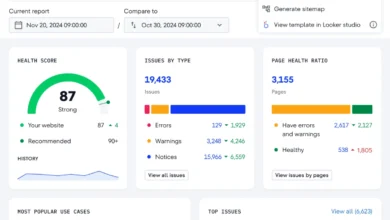
Concurrently, Google has adapted its analytical tools to help webmasters and SEO professionals track the visibility of their content within these new generative surfaces. On August 31, Google launched a dedicated generative AI performance report within Google Search Console specifically for Discover. According to official documentation updated in September, the report compiles impressions for links displayed within "generative AI features in Discover."
However, the integration of these features has introduced new complexities for digital publishers tracking referral traffic. The current Search Console reporting structure aggregates data by page, country, and date, but relies exclusively on impressions as its primary metric, without providing a granular breakdown of which specific AI feature—whether an AI preview card or a future "Dive deeper" overview—generated the visibility. Because the report currently groups all generative Discover impressions into a single category, publishers face challenges in isolating the exact traffic contributions stemming from experimental interface updates.
Strategic Implications for Digital Publishers and SEO
The deployment of the "Dive deeper" feature carries profound implications for the digital publishing ecosystem, content creators, and Search Engine Optimization (AI and traditional) strategies. As Google continues to interpose AI-generated summaries between users and original publisher websites, the dynamics of referral traffic and user engagement are undergoing structural transformation.
On one hand, proponents of the feature argue that the inclusion of prominent source links within the "Dive deeper" overview provides a direct pathway for users to discover original reporting, potentially driving targeted traffic to niche publications and local journalism outlets that might otherwise be overlooked in a standard algorithmic feed. By contextualizing community reactions and deep-dive reporting alongside mainstream media coverage, the feature aims to foster a more comprehensive understanding of complex news cycles.
Conversely, industry analysts and digital publishers have expressed ongoing concerns regarding user retention within Google’s proprietary interfaces. When users are provided with comprehensive AI-generated summaries and multi-source roundups directly inside the Discover application, the incentive to click through to an external publisher’s website may diminish. This phenomenon, often referred to in the SEO community as zero-click searches or zero-click discovery, places mounting pressure on publishers to optimize their metadata, establish strong brand authority, and ensure their content is recognized as a primary source worthy of inclusion in Google’s curated source cards.
Moreover, the lack of granular reporting within Google Search Console complicates the publisher’s ability to measure return on investment for content that feeds into these AI modules. If impressions from "Dive deeper" overviews are blended indistinguishably with other generative Discover features, website owners cannot accurately determine how effectively these summaries translate into meaningful audience acquisition.
Future Outlook and Next Steps
Google’s product leadership has indicated that the current deployment is strictly an exploratory phase. Robby Stein noted that the company plans to experiment with multiple design iterations in the weeks following the initial announcement, allowing the product team to gather user feedback and analyze engagement metrics before finalizing a permanent user interface.
As the test progresses, industry observers will be watching closely to see how Google addresses publisher feedback, whether the feature expands beyond video content to include standard text articles and imagery, and how reporting metrics within Search Console evolve to provide greater transparency. For now, publishers and SEO professionals must remain adaptable, monitoring their Discover traffic patterns closely as Google continues to reshape the landscape of modern digital information retrieval.