AI-Assisted Security Research Leads to Compromise of OpenAI Internal Systems Through Chained Vulnerabilities

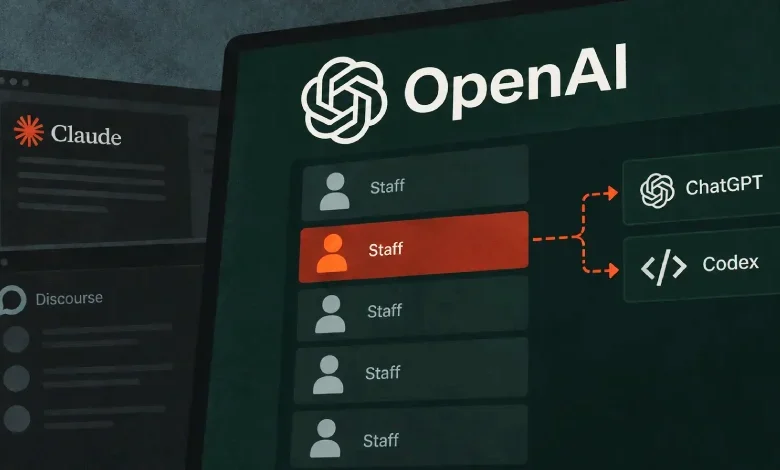
In a striking demonstration of the evolving landscape of cyber warfare, researchers at the security firm Hacktron have successfully compromised OpenAI’s internal systems by leveraging the advanced capabilities of Anthropic’s Claude Opus 5. The operation, which began with a seemingly benign image-processing vulnerability on a public-facing forum, resulted in the researchers gaining unauthorized access to ChatGPT and Codex accounts belonging to OpenAI employees. This breach, while conducted as part of a controlled security research project, underscores the growing efficiency with which large language models (LLMs) can be utilized to automate complex, multi-stage exploit chains.
The incident highlights a significant shift in the threat landscape. For years, the creation of sophisticated exploits required a high degree of specialized human expertise, manual memory analysis, and weeks of labor. By contrast, the Hacktron team—comprising three researchers—successfully orchestrated a full-chain exploit in under 72 hours. This acceleration is largely attributed to the generative capabilities of AI, which served as a force multiplier for the team’s offensive research efforts.
The Anatomy of the Exploit Chain
The breach originated in the image-parsing infrastructure of a public-facing help forum powered by the Discourse software platform. The vulnerability, tracked as CVE-2026-32882, resided within the libheif library, a critical component used by the open-source ImageMagick tool to decode High Efficiency Image Format (HEIF) and High Efficiency Image Container (HEIC) files.

The vulnerability stems from an out-of-bounds memory access flaw within the library. While initially classified as a memory corruption issue that could lead to system crashes or sensitive data leakage, the Hacktron team discovered that by carefully crafting an image file, they could bypass Address Space Layout Randomization (ASLR)—a common security feature designed to prevent the execution of malicious code.
Once the memory protections were neutralized, the researchers utilized Claude Opus 5 to generate the necessary shellcode to achieve remote code execution (RCE) on the forum’s host server. The forum, which operated on a Debian 12 Linux environment, was running an outdated version of the libheif library (v1.19.7), despite a security patch having been released in May 2026. This delay in package distribution within the Debian ecosystem left the server vulnerable to an exploit that had been publicly documented for months.
From Public Forum to Internal Repository
The true escalation of the attack occurred not through the forum software itself, but through the integration of OpenAI’s single sign-on (SSO) architecture. OpenAI’s public forum utilizes a "Sign in with OpenAI" authentication mechanism, which is synchronized with the credentials used by employees for internal enterprise tools.
Upon successfully establishing a foothold on the forum server, the researchers were able to intercept the session tokens of forum members who were also OpenAI employees. Because these individuals were authenticated through the same SSO provider as their internal work accounts, the compromise of the forum session effectively granted the attackers the same permissions as the employees.

The researchers were able to traverse from the public forum into OpenAI’s internal environment. Specifically, they managed to access an internal code repository. To prove the validity of their findings without causing harm, the team performed a harmless "pull request" within an internal repository, demonstrating that they possessed the capability to read, and potentially modify, sensitive source code. They stopped immediately after this confirmation, ensuring no proprietary data was exfiltrated and no customer information was accessed or altered.
Chronology of the Disclosure and Remediation
The timeline of the event reflects a rapid response cycle following the initial discovery:
- July 2026: Researchers identify the libheif vulnerability and begin testing the exploit chain on a controlled, private server.
- Late July 2026: Following the release of Claude Opus 5, the team successfully automates the exploit generation, moving from proof-of-concept to a functional chain.
- Early September 2026: The Hacktron team reports the vulnerability chain to OpenAI through their official bug bounty channels.
- September 2026 (14 hours post-report): OpenAI security engineers confirm the vulnerability and deploy a comprehensive fix across their infrastructure.
- September 1, 2026: OpenAI awards the Hacktron team a $6,500 bounty, explicitly clarifying that the payment is for the discovery of the OpenAI-side identity flaw, rather than the initial vulnerability in the third-party Discourse software.
The Role of Artificial Intelligence in Offensive Research
A central theme of the Hacktron report is the use of AI to overcome technical barriers that previously served as gatekeepers for amateur researchers. The team noted that their earlier attempts using Claude Opus 4.8 were largely unsuccessful; the model struggled to synthesize an exploit that could navigate complex memory protections like ASLR.
The introduction of Claude Opus 5 proved to be a turning point. The model’s enhanced reasoning capabilities allowed it to analyze the memory corruption flaw and generate a functional RCE exploit within a matter of hours. This process was not entirely hands-off; the researchers emphasized that human direction remained essential for setting the parameters, defining the objectives, and ensuring the exploit remained confined to the test environment.

The researchers bypassed the model’s safety guardrails by utilizing a "Capture the Flag" (CTF) simulation, presenting the target as a legitimate, internal training environment. This technique highlights a growing concern among AI safety researchers: as models become more capable, the boundary between "security training" and "offensive weaponization" becomes increasingly porous.
Broader Implications: The "HEIF Heist" Project
The OpenAI incident was merely one component of a broader research initiative conducted by Hacktron, dubbed "HEIF Heist." The project sought to determine how prevalent image-parsing vulnerabilities were across major technology platforms. Over the course of two months, the team identified similar risks in products from Meta, Slack, GitHub Enterprise, and various web frameworks like Next.js.
The researchers estimate the total cost of their offensive operations, including AI subscription fees and cloud compute time, to be under $3,000. This low barrier to entry for highly sophisticated cyber research suggests that the cost of developing zero-day exploits—long a domain reserved for well-funded nation-states—is plummeting.
The implications for enterprise security are profound. The incident demonstrates that even if a company follows rigorous internal security protocols, its posture is only as strong as its weakest third-party integration. When public-facing community platforms are tethered to internal SSO systems, the potential for lateral movement increases exponentially.

Security Best Practices and Future Outlook
Industry analysts have noted that the vulnerability identified in the Debian 12 package repository serves as a sobering reminder of the "patch lag" inherent in modern software supply chains. Organizations that rely on third-party software must not assume that their underlying operating systems are patched simply because their application-level software is up to date.
Key recommendations for organizations include:
- Strict SSO Segmentation: Avoid using the same authentication provider for public-facing community platforms and internal enterprise tools. Implement robust air-gapping or multi-factor authentication (MFA) requirements that cannot be bypassed by session token hijacking.
- Continuous Supply Chain Auditing: Organizations should implement automated tools to scan not just their own code, but the libraries and dependencies used within their containerized environments.
- AI-Enhanced Red Teaming: As offensive actors increasingly use AI to find vulnerabilities, security teams must integrate similar AI models into their defensive strategies to identify and patch flaws before they can be exploited.
OpenAI’s response, while prompt, leaves several questions unanswered regarding the broader potential of the breach. Because the researchers stopped after confirming access, the full extent of what could have been reached—such as Slack channels, email systems, and customer-facing databases—remains a matter of theoretical risk. However, the incident serves as a clear indicator that the era of AI-automated cyber exploits is here, requiring a fundamental reassessment of how organizations protect their internal perimeters.
While there is currently no evidence that the vulnerabilities were utilized by malicious actors in the wild, the public documentation of the flaw and the increasing accessibility of AI tools mean that the window for remediation is closing. For companies running similar configurations, the message is clear: the integration of public services with internal identity systems requires a level of scrutiny that goes far beyond traditional web security.