Department Stores Embrace the Upmarket Strategy as Premium Goods Drive Average Unit Retail Growth

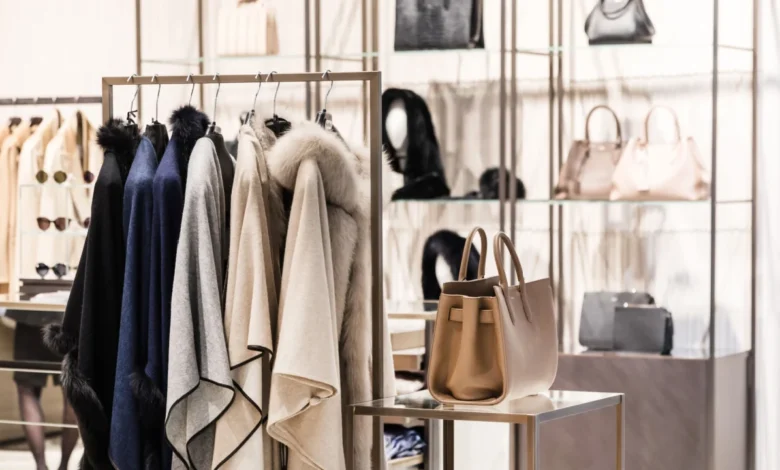
The retail landscape is undergoing a strategic recalibration as traditional department stores successfully pivot toward an upmarket retail model, encouraging consumers to spend more per transaction without fully crossing over into ultra-luxury territory. This calculated shift has allowed legacy department store giants like Macy’s Inc. and Dillard’s Inc. to navigate macroeconomic pressures by focusing on elevated product quality, premium brand partnerships, and higher-priced merchandise categories. By fine-tuning their inventory mixes—introducing genuine leather goods, high-end apparel brands, and luxury accessories—these retailers are capturing a more affluent or aspirational consumer base while traditional luxury houses face declining revenues globally.
The Genesis of the Upmarket Pivot
For years, the middle tier of American retail faced an existential crisis. Caught between discount retailers offering rock-bottom prices and luxury flagships catering to the ultra-wealthy, traditional department stores struggled to define their unique value proposition. However, the post-pandemic economic recovery, coupled with shifting consumer habits, presented a new opening. Retail strategists realized that a significant segment of shoppers was willing to pay more for quality, provided the value proposition justified the price point.
Rather than trying to replicate the exclusive, often intimidating environment of high-end European luxury houses, department stores chose a middle path: premiumization. This strategy involves curating existing store layouts to feature superior materials, upgrading private-label collections, and partnering with recognizable designer brands that carry strong consumer equity. The goal is to elevate the average unit retail (AUR) without alienating the core shoppers who rely on department stores for accessibility and variety.
Earnings Results Highlight the Success of Premiumization
Recent financial disclosures from the second quarter of 2026 illustrate the tangible success of this upmarket trajectory. During Macy’s second-quarter earnings conference call, CEO Tony Spring addressed analysts inquiring about the ongoing runway for brand elevation, confirming that the department store chain has substantial room to continue growing its average unit retail.
Spring attributed the consistent growth in AUR directly to improvements in product assortment. By replacing synthetic materials with higher-quality alternatives—such as genuine leather over faux alternatives—and leaning heavily into prominent brands like Ralph Lauren and Coach, Macy’s has successfully encouraged shoppers to trade up. Furthermore, categories traditionally associated with higher price points, such as fine jewelry and luxury watches, have experienced robust demand.
The financial metrics validate this strategy. Macy’s reported a 9% year-over-year increase in average unit retail during the quarter. Comparable sales performance reflected this momentum, with the core Macy’s nameplate posting a 1.1% increase, while its upscale sister brand, Bloomingdale’s, surged by an impressive 11.3%.
Similarly, Dillard’s second-quarter 2026 performance underscores a broader industry trend where transaction volume yields to transaction value. Dillard’s reported a 1% increase in overall comparable sales for the quarter. While total customer transactions declined by 6%, the average dollar amount per transaction jumped by 7%. A deep dive into Dillard’s sales mix reveals that categories with flexible price points drove this growth. Ladies’ accessories and lingerie posted the most substantial increases, followed by moderate gains in home goods, furniture, shoes, men’s apparel, and cosmetics.
Contrasting Fortunes: Department Stores Versus Luxury Houses
The success of the department store upmarket push stands in stark contrast to the headwinds currently facing the dedicated luxury goods sector. While Macy’s and Dillard’s are successfully convincing shoppers to spend slightly more, elite luxury conglomerates are navigating a contraction in consumer demand following years of aggressive post-pandemic price hikes.
Financial reports from the first half of 2026 reveal mounting challenges for top-tier luxury labels. Kering reported that Gucci’s revenue fell 5% on a comparable basis during the first half of 2026, driven by a 6% decline in directly operated stores. Although second-quarter comparable revenue showed a slight relative improvement, it remained down 2% year-over-year. Overall, Kering’s Fashion & Leather Goods division experienced a 1% comparable decline for the six-month period.
LVMH experienced a parallel trajectory, reporting a 1% organic decline in its Fashion & Leather Goods division during the first half of 2026 before registering a modest 1% recovery in the second quarter. Interestingly, pockets of resilience remained within luxury conglomerates, evidenced by LVMH’s Watches & Jewelry division posting a 9% organic growth rate for the half.
This divergence highlights a critical market dynamic: while consumers are pulling back on four-figure luxury purchases due to economic scrutiny, they remain willing to invest in premium, accessible-luxury goods available at traditional department stores. By positioning themselves as attainable sanctuaries of quality, department stores are effectively capturing market share from struggling luxury brands.
The Role of Retail Credit Cards in Maximizing Customer Value
Beyond merchandise curation, department stores are leveraging financial services and co-branded credit card programs to maximize the lifetime value of every customer relationship. Retail credit card programs have historically served as reliable secondary revenue streams, but in an era marked by shifting payment preferences and competitive rewards landscapes, they play an increasingly vital role in retail economics.
Macy’s reported $156 million in net credit card revenue for the second quarter of 2026, representing a 2% increase compared to the same period in the previous year. For the first half of the fiscal year, Macy’s credit card revenue climbed to $328 million, up from $306 million. These financial mechanics are governed by partnerships such as Macy’s alliance with Citigroup, where Citi owns the accounts and receivables while Macy’s receives revenue shares tied to portfolio performance and active spending at the register.
Dillard’s has experienced a similar financial boost through its co-branded card program with Citi. The retailer reported that its first-half alliance income rose to $21.1 million, up from $17.2 million in the previous year.
Industry data reinforces the strategic necessity of robust card programs. Research from PYMNTS Intelligence indicates that retail credit cards and sophisticated rewards structures directly influence consumer spending behavior. In a comprehensive survey of 70 card issuers and financial technology firms, 56% of respondents reported that their card rewards programs successfully increase the average spend per transaction. Furthermore, 61% noted that rewards drive higher overall spending, and 66% observed an increase in the frequency of card usage.
While these broader industry findings measure issuer metrics rather than direct behavioral data at Macy’s or Dillard’s checkouts, they illuminate why retailers view card programs as indispensable components of an upmarket strategy. When consumers are encouraged to purchase higher-priced items, having a seamless loyalty and financing mechanism at the point of sale removes friction and facilitates larger basket sizes.
Strategic Implications and Future Outlook for Department Stores
The pivot toward premiumization represents a fundamental evolution in how department stores view their addressable market. Rather than attempting a full-scale migration into elite luxury—a move that would alienate core demographics and require extensive, costly store redesigns—these retailers are successfully pushing the boundaries of what their existing customer base is willing to spend.
This strategy requires a delicate balance. Retailers must continually upgrade their inventory quality, securing partnerships with sought-after brands and incorporating premium materials without crossing the threshold into price points that induce sticker shock. The financial results from the first half of 2026 suggest that this balance is not only achievable but profitable.
As the retail sector looks toward the remainder of the year and beyond, the success of Macy’s and Dillard’s offers a blueprint for traditional brick-and-mortar operations. By focusing on targeted assortment enhancements, capitalizing on resilient product categories like fine jewelry and accessories, and supporting these sales with integrated financial services, department stores are proving that the middle tier of retail is far from obsolete. Instead, through strategic elevation, it is finding new ways to thrive in a complex economic environment.
Related posts: