The Combating Organized Retail Crime Act Poses Significant Policy Challenges as it Nears Final Congressional Approval

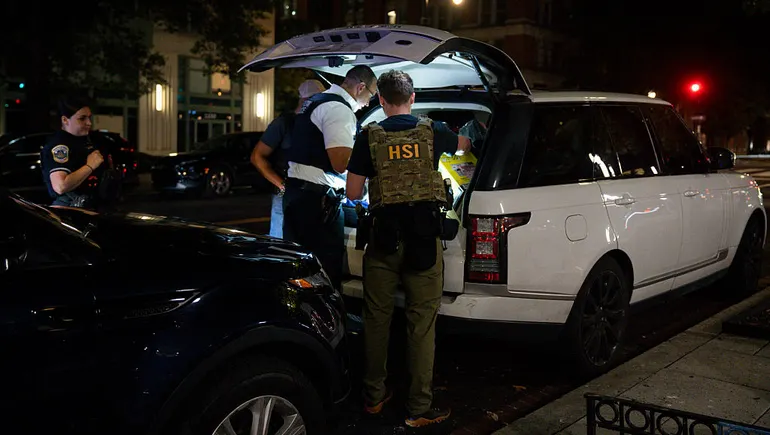
The Combating Organized Retail Crime Act (CORCA), a bipartisan legislative effort currently awaiting a final Senate vote, stands on the precipice of becoming law. While the bill has been championed by retail industry lobbyists as a necessary tool to address the rising tide of organized retail theft, its reliance on Immigration and Customs Enforcement (ICE) and the Homeland Security Investigations (HSI) unit has ignited a fierce debate. At a moment when federal law enforcement agencies are increasingly being repurposed for mass deportation initiatives, the potential integration of retail security with federal immigration enforcement has raised profound questions about the mission creep of the Department of Homeland Security (DHS) and the future of the retail-customer relationship.
The Legislative Path and Statutory Goals
The journey of CORCA through the halls of Congress reflects a deep-seated frustration among retailers regarding inventory shrink. Following its passage in the House of Representatives in May, the bill has gained momentum as a top priority for trade groups like the National Retail Federation (NRF) and the Retail Industry Leaders Association (RILA). If enacted, the legislation would mandate the creation of the Supply Chain Crime Coordination Center, a new bureaucratic entity housed within HSI.
The stated intent of this center is to facilitate seamless information sharing between private retailers, local law enforcement, and federal authorities. Proponents argue that organized retail crime—often characterized by sophisticated, large-scale thefts—has outpaced the capabilities of local police departments, which are frequently constrained by jurisdictional limitations. By centralizing data and investigative resources, advocates claim the center would provide a more robust response to criminal syndicates that move stolen goods across state and international borders. However, the legislation’s lack of a precise legal definition for "organized retail crime" remains a point of contention among legal scholars and policy analysts, who fear the broad language could lead to erratic application and overreach.
A Chronology of Policy Evolution
The pressure for federal intervention began to intensify following the 2020 pandemic-era surge in retail theft, which saw viral videos of store lootings dominate national headlines. By 2022, retail lobbying groups began pushing for a federal statutory framework to address the issue.
- 2023: The NRF faced significant backlash after it was revealed that their widely cited estimates of "organized retail crime" were based on conflated data that included losses from clerical errors, vendor fraud, and internal theft, rather than just external organized theft rings. The organization subsequently halted the publication of these specific assessments.
- May 2025: The House of Representatives successfully passed the current iteration of CORCA with bipartisan support, signaling a strong legislative appetite for a federal "tough on crime" approach to retail.
- Late 2025/Early 2026: Congressional leadership signaled that a final floor vote in the Senate is expected before the year concludes, placing the bill at the center of the current session’s closing agenda.
The Data Deficit and Investigative Challenges
A central critique of the proposed legislation is the absence of empirical data to support the necessity of a federalized response. Jeff Asher, a prominent crime analyst and co-founder of AH Datalytics, has repeatedly noted that the retail industry lacks a standardized, reliable metric to measure the actual scope of organized retail crime.
"We are building a massive bureaucratic infrastructure to address a problem we haven’t accurately defined or measured," Asher stated. The concern is that without a strong data foundation, resources will be allocated based on anecdotal evidence or marketing narratives rather than verifiable trends. Furthermore, the inclusion of cargo theft within the same legislative framework as retail theft complicates the picture; while both involve the loss of goods, the actors and the methods involved are often distinct, yet the bill treats them as a monolithic threat requiring a single federal solution.
The Role of ICE and the Diversion of Resources
Perhaps the most controversial aspect of the bill is its reliance on HSI, a component of ICE. According to research from the Cato Institute, an overwhelming majority of HSI agents—nearly 90% in the last fiscal year—have been diverted from their traditional investigative roles to support Enforcement and Removal Operations (ERO) for mass deportation mandates.
Critics argue that by establishing the Supply Chain Crime Coordination Center within this existing structure, the bill effectively "deputizes" retailers into the federal immigration apparatus. Jina John, senior policy counsel for the American Civil Liberties Union, warned that the structure of the new center would enable a level of data integration that effectively embeds retail stores into the immigration enforcement pipeline.
This transformation is occurring at a time when public sentiment toward ICE has soured. Recent polling data from YouGov indicates that over half of Americans harbor low or no confidence in the agency, while a separate PRRI poll found that 60% of respondents believe surges in ICE activity make their communities less safe.
Industry Reactions and Internal Dissent
The response from the retail industry has been bifurcated. While leadership at major trade organizations like the NRF maintain that CORCA is narrowly defined and provides essential congressional oversight, some within the retail development and loss prevention sectors have expressed alarm.
Nick Egelanian, president of the retail development firm SiteWorks, warned that the bill could lead to "unintended negative consequences" that risk alienating core consumer demographics. "This disproportionately affects lower-income and minority groups," Egelanian observed, suggesting that retailers may find themselves in the untenable position of being associated with aggressive immigration enforcement actions within their own stores.
When queried regarding these concerns, major retail organizations often sidestep questions regarding the intersection of their initiatives with current immigration policy. Evan Armstrong of RILA maintained that the bill does not grant ICE new immigration powers, yet this defense does little to soothe the fears of civil rights advocates who note that the functional reality of a department is often dictated by the political directives of the current administration.
Implications for Due Process and Community Safety
The legal community, particularly those specializing in immigration and due process, warns that the store environment could become a site of federal intrusion. If retailers are expected to feed information into a federal database managed by a department currently focused on mass deportations, the risk of data misusage—or the targeting of shoppers based on profiling—becomes a tangible concern.
Heidi Altman, vice president of policy at the National Immigration Law Center, emphasized that HSI is no longer "firewalled" from civil immigration enforcement. "You have this retail-crime enforcement mechanism that is within ICE, plunged into communities and working directly with retailers," Altman said. The implication is that a store manager, in attempting to report a petty theft or an organized crime incident, might inadvertently trigger a federal enforcement action that goes far beyond the scope of a shoplifting investigation.
Looking Toward the Final Vote
As the Senate prepares for a final decision, the debate over CORCA serves as a microcosm of the broader struggle between corporate security interests and civil liberties in the modern era. While retailers argue that they are simply seeking the tools to protect their employees and their bottom line, the chosen vehicle for that protection—a federal center under the auspices of ICE—has created a conflict that extends far beyond the aisles of a shopping center.
Legislators who initially supported the bill are now facing mounting pressure from constituents and civil rights groups who argue that the "Trojan Horse" nature of the bill could permanently alter the relationship between federal authorities and private businesses. Whether the final version of the bill will include safeguards to decouple retail security from immigration enforcement remains uncertain.
As it stands, the passage of CORCA would represent a significant expansion of the federal government’s role in retail operations. For many, the ultimate question is whether the potential to mitigate organized theft is worth the risk of fundamentally changing the role of the store from a public space of commerce into a potential node of federal surveillance and enforcement. The final vote in the Senate will likely be the deciding factor in whether the government proceeds with this controversial integration or whether it will be forced back to the drawing board to find a solution that does not rely on the infrastructure of an increasingly polarized immigration enforcement system.